Introduction
A note on sources and links
This book was originally prepared as an online publication, and many of its references were intended to point readers directly to source material. Where a live public link has been recovered and verified, it is included in the notes. Where no reliable live link is currently available, the note is retained as an archival citation trail: identifying the relevant book, newspaper, date, headline, document, page reference, archive item, or source description as far as the surviving record allows. Broken or unverified links have not been presented as reader-facing source links.
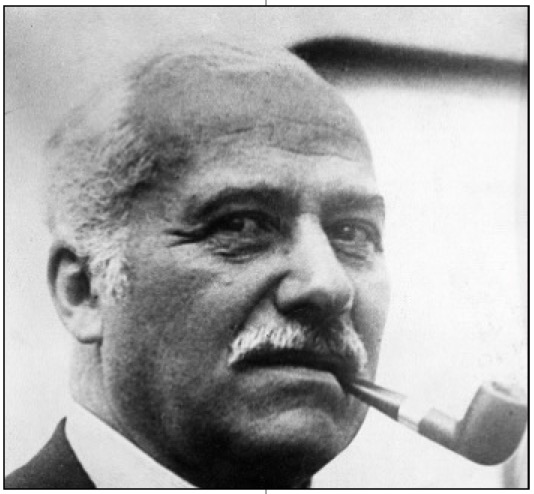

The first Shell logo1 appeared in 1901. According to an article published in June 2014, it is one of the 10 oldest company logos in the world.2 The iconic brand is used by the oil giant Shell PLC on tens of thousands of gasoline forecourts around the globe and as such, like the Nazi Swastika, is one of the world’s most instantly recognisable symbols. Some people might be aghast at me linking the famous Shell logo with the infamous Nazi symbol, but there was once a very strong connection. Shell has long been one of the world’s largest corporations.3 On the surface, it appears to be a respectable multinational operating within a set of self-imposed business principles.4 This book is a focused historical investigation into the relationship between Shell, its founder and long-time leader Sir Henri Deterding, and Nazi Germany. Its central case is that Deterding, and at times Shell itself through its German operations and decisions taken at group level, provided material and financial support that helped sustain Hitler’s movement and later the Nazi state. I want to make it plain from the outset that I am not a historian, neither am I impartial. Bearing these declarations in mind, I have provided much more verification evidence to confirm the information contained in this book than would normally be the case. Extraordinary allegations require extraordinary evidence. Most of the footnotes - there are several hundred - contain references to verification evidence, some of it stretching back several decades. Since the original research for this book began, later independent writers have also drawn attention to Shell’s Nazi entanglements, which makes the subject harder to dismiss as a private obsession or grudge.
I first stumbled across information about Shell’s close connection with Hitler and the Nazis because of Shell internal emails I obtained from Shell in response to what is known as a Subject Access Request (SAR) under the UK Data Protection Act. Under UK law, a UK company is legally obliged to supply to a SAR applicant all internal information mentioning the applicant’s name held in their electronic retrievable records. This includes internal documents and internal communications, such as emails. The company is allowed to redact the names of any third parties. Anxiety about the prospect of me reading a history book about Shell that was about to be published was expressed in a series of Shell internal emails starting in early March 2007, with the last email sent on 6 June 2007. Basically concern was expressed that I would scrutinise “the new Shell History (out on 5 July).” Naturally I was intrigued and when I did obtain the four-volume work – “A History of Royal Dutch Shell” – prepared by eminent historians paid by Shell, who had unrestricted access to Shell archives, I discovered that Shell’s fears about the work being a source of toxic information about the history of Royal Dutch Shell were well founded. One of the March 2007 Shell internal emails was marked as being “Legally Privileged and Confidential.” The first sentence stated: “Also D will be scrutinising the new Shell History (out on 5 July) and doubtless making all sorts of new allegations based on it.”5 (In the same internal email, Shell staff also discussed the advancing years of my father, expressing the hope that “his interest might wane” and also speculated about my determination.) The last email, on 6 June 2007, under the subject: “Online issue Management - Group Strategy” - anticipated “another broadside from Donovan when our History book comes out…”6 Buried within those volumes was material about Deterding, Rhenania-Ossag, the German subsidiary of the Royal Dutch Shell Group, anti-Semitic board changes, the relationship with Hitler, and Shell’s conduct in Nazi Europe that deserved much wider scrutiny. This book grew out of that discovery.
This book is based on fact, not fiction. Shell PLC has had advance sight of the manuscript and thus the opportunity to take legal action in respect of the content. Much of the evidence comes from the first two volumes of the aforementioned history of Royal Dutch Shell: A History of Royal Dutch Shell: Volume 1: From Challenger to Joint Industry Leader 1890 -1939” by Joost Jonker & Luiten van Zanden.7 A History of Royal Dutch Shell: Volume 2: Powering the Hydrocarbon Revolution, 1939-1973: By Stephen Howarth & Joost Jonker.8 For readability, references to key page extracts from both volumes are consolidated in the notes rather than repeated every time they are quoted. All four volumes were published in the UK in 2007 by Oxford University Press. The generally magnificent work of the eminent historians paid by Shell, all associated with Utrecht University, was supervised by the Research Institute for History and Culture and was also personally supervised by senior Royal Dutch Shell directors. Since this research began, later outside work, including James Marriott and Terry Macalister’s Crude Britannia, has reinforced the view that Shell’s Nazi entanglements were real and historically significant. The primary spine of this book, however, remains the contemporaneous material and the evidence preserved in Shell’s own archives.
Notes
1. Link to shell.com webpage “The history of the Shell logo” Source 1 ↩
2. Link to royaldutchshellplc.com webpage containing an article published 21 June 2014 by USA TODAY under the headline: “The 10 oldest company logos in the world.” Source 1 ↩
3. Link to 2013 CNNMoney/FORTUNE Global 500 article: “The 500 largest corporations in the world.” ↩
4. Link to Shell webpage entitled: “SHELL GENERAL BUSINESS PRINCIPLES” Source 1 ↩
5. Link to a pdf of a ‘Legally privileged and Confidential” Shell internal email dated 11 March 2007. ↩
6. Link to a pdf of a Shell internal email dated 6 June 2007 ↩
7. Link to "A History of Royal Dutch Shell: Volume 1: From Challenger to Joint Industry Leader 1890 -1939” by Joost Jonker & Luiten van Zanden. ↩
8. Link to “A History of Royal Dutch Shell: Volume 2: Powering the Hydrocarbon Revolution, 1939-1973” by Stephen Howarth & Joost Jonker. ↩