The Dark Side of Shell
Introduction
A note on sources and links
This book was originally prepared as an online publication, and many of its references were intended to point readers directly to source material. Where a live public link has been recovered and verified, it is included in the notes. Where no reliable live link is currently available, the note is retained as an archival citation trail: identifying the relevant book, newspaper, date, headline, document, page reference, archive item, or source description as far as the surviving record allows. Broken or unverified links have not been presented as reader-facing source links.
The first Shell logo1 appeared in 1901. According to an article published in June 2014, it is one of the 10 oldest company logos in the world.2 The iconic brand is used by the oil giant Shell PLC on tens of thousands of gasoline forecourts around the globe and as such, like the Nazi Swastika, is one of the world’s most instantly recognisable symbols. Some people might be aghast at me linking the famous Shell logo with the infamous Nazi symbol, but there was once a very strong connection. Shell has long been one of the world’s largest corporations.3 On the surface, it appears to be a respectable multinational operating within a set of self-imposed business principles.4 This book is a focused historical investigation into the relationship between Shell, its founder and long-time leader Sir Henri Deterding, and Nazi Germany. Its central case is that Deterding, and at times Shell itself through its German operations and decisions taken at group level, provided material and financial support that helped sustain Hitler’s movement and later the Nazi state. I want to make it plain from the outset that I am not a historian, neither am I impartial. Bearing these declarations in mind, I have provided much more verification evidence to confirm the information contained in this book than would normally be the case. Extraordinary allegations require extraordinary evidence. Most of the footnotes - there are several hundred - contain references to verification evidence, some of it stretching back several decades. Since the original research for this book began, later independent writers have also drawn attention to Shell’s Nazi entanglements, which makes the subject harder to dismiss as a private obsession or grudge.
I first stumbled across information about Shell’s close connection with Hitler and the Nazis because of Shell internal emails I obtained from Shell in response to what is known as a Subject Access Request (SAR) under the UK Data Protection Act. Under UK law, a UK company is legally obliged to supply to a SAR applicant all internal information mentioning the applicant’s name held in their electronic retrievable records. This includes internal documents and internal communications, such as emails. The company is allowed to redact the names of any third parties. Anxiety about the prospect of me reading a history book about Shell that was about to be published was expressed in a series of Shell internal emails starting in early March 2007, with the last email sent on 6 June 2007. Basically concern was expressed that I would scrutinise “the new Shell History (out on 5 July).” Naturally I was intrigued and when I did obtain the four-volume work – “A History of Royal Dutch Shell” – prepared by eminent historians paid by Shell, who had unrestricted access to Shell archives, I discovered that Shell’s fears about the work being a source of toxic information about the history of Royal Dutch Shell were well founded. One of the March 2007 Shell internal emails was marked as being “Legally Privileged and Confidential.” The first sentence stated: “Also D will be scrutinising the new Shell History (out on 5 July) and doubtless making all sorts of new allegations based on it.”5 (In the same internal email, Shell staff also discussed the advancing years of my father, expressing the hope that “his interest might wane” and also speculated about my determination.) The last email, on 6 June 2007, under the subject: “Online issue Management - Group Strategy” - anticipated “another broadside from Donovan when our History book comes out…”6 Buried within those volumes was material about Deterding, Rhenania-Ossag, the German subsidiary of the Royal Dutch Shell Group, anti-Semitic board changes, the relationship with Hitler, and Shell’s conduct in Nazi Europe that deserved much wider scrutiny. This book grew out of that discovery.
This book is based on fact, not fiction. Shell PLC has had advance sight of the manuscript and thus the opportunity to take legal action in respect of the content. Much of the evidence comes from the first two volumes of the aforementioned history of Royal Dutch Shell: A History of Royal Dutch Shell: Volume 1: From Challenger to Joint Industry Leader 1890 -1939” by Joost Jonker & Luiten van Zanden.7 A History of Royal Dutch Shell: Volume 2: Powering the Hydrocarbon Revolution, 1939-1973: By Stephen Howarth & Joost Jonker.8 For readability, references to key page extracts from both volumes are consolidated in the notes rather than repeated every time they are quoted. All four volumes were published in the UK in 2007 by Oxford University Press. The generally magnificent work of the eminent historians paid by Shell, all associated with Utrecht University, was supervised by the Research Institute for History and Culture and was also personally supervised by senior Royal Dutch Shell directors. Since this research began, later outside work, including James Marriott and Terry Macalister’s Crude Britannia, has reinforced the view that Shell’s Nazi entanglements were real and historically significant. The primary spine of this book, however, remains the contemporaneous material and the evidence preserved in Shell’s own archives.
Notes
1. Link to shell.com webpage “The history of the Shell logo” Source 1 ↩
2. Link to royaldutchshellplc.com webpage containing an article published 21 June 2014 by USA TODAY under the headline: “The 10 oldest company logos in the world.” Source 1 ↩
3. Link to 2013 CNNMoney/FORTUNE Global 500 article: “The 500 largest corporations in the world.” ↩
4. Link to Shell webpage entitled: “SHELL GENERAL BUSINESS PRINCIPLES” Source 1 ↩
5. Link to a pdf of a ‘Legally privileged and Confidential” Shell internal email dated 11 March 2007. ↩
6. Link to a pdf of a Shell internal email dated 6 June 2007 ↩
7. Link to "A History of Royal Dutch Shell: Volume 1: From Challenger to Joint Industry Leader 1890 -1939” by Joost Jonker & Luiten van Zanden. ↩
8. Link to “A History of Royal Dutch Shell: Volume 2: Powering the Hydrocarbon Revolution, 1939-1973” by Stephen Howarth & Joost Jonker. ↩
Key Dates
Common sense suggests that greater weight can be attached to information about Deterding published while he was still an extremely wealthy director of multiple companies within the Royal Dutch Shell Group, which he was until the day he died. Until then, he had the opportunity to publicly refute the veracity of allegations, news stories, statements, or comments made about him and, if necessary, take legal action. There is no evidence that he did so.
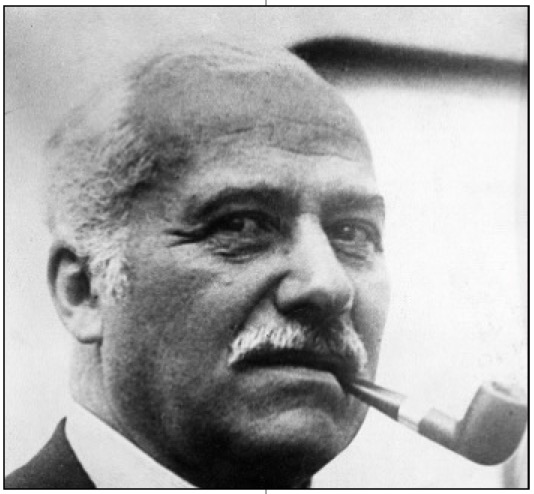
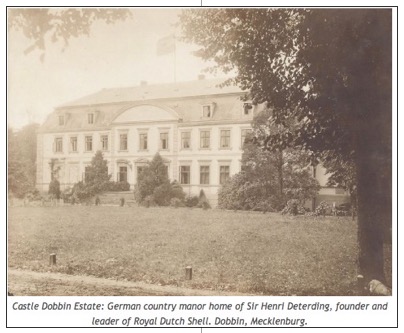
I have provided an index of some key dates. Henri Deterding served as chairman of the combined Royal Dutch/Shell oil company between 1900 and 1936.9 Press reports in January 1931 linked Deterding to discussions about a possible benzine monopoly in Germany. In or around 1931, Deterding bought a hunting estate in rural Mecklenburg, Germany.10 By 1932, Dutch newspaper coverage was already naming Deterding as a possible funder of the National Socialists while the Nazi Party was deeply in debt. The Reichstag fire, a pivotal event in the rise of Hitler, took place in January 1933.11 On 30 January 1933, Hitler was appointed as Reich Chancellor of Germany.12 13 Hitler’s appointment was welcomed by Deterding and by November 1933, Deterding said that he had met Hitler.14 Late in 1933, Rhenania-Ossag launched touring maps and promotional material stressing Shell’s contribution to the German economy and claiming that Germany had received 170 million Reichsmarks from the Shell Group. On 3 April 1933 the Nazi representatives of the works council of Rhenania-Ossag, the Shell subsidiary and operating company in Germany, presented management with demands for the immediate dismissal of all Jewish directors.15 In May and June 1933 the board of directors of Rhenania-Ossag was “thoroughly overhauled” with all Jewish members removed and a Nazi party member appointed, joining one already in place.16
The far-reaching changes to the Rhenania-Ossag board could not have taken place without the full consent of Royal Dutch Shell.17 Germany’s rearmament programme began in secret in 1934.18 On 26 October 1934, The New York Times published a Reuters article reporting that Deterding was the guest of Hitler during a four-day meeting at Berchtesgaden. Deterding was said to be keen on securing a monopoly position for petrol distribution in Germany.19 By September 1935, Jean Baptist August Kessler II,20 a senior Royal Dutch Group director, was worried about Rhenania-Ossag losing its position in the German gasoline market.21 Although Kessler had the remit for the Group’s German affairs, Deterding took a greater interest following the advent of the Nazi regime.22 From September 1935, the German Foreign Office seconded one of its staff to Deterding as a personal assistant for political matters.23 In October 1936, Dr. W. Kruspig, GM of Rhenania-Ossag,24 started negotiations with representatives of Farben and Jersey Standard Oil about a joint synthetic gasoline plant to be built at Politz. The Shell Group initially refused to move forward with the project, but by February 1937, reversed the decision. “Because the Group wanted at all costs to avoid its commitment to a synthetic gasoline plant becoming public knowledge, two banks fronted as shareholders in Hydrierwerke Politz.”25 According to research by Shell’s historians Sir Henri Deterding, by June 1936 “had effectively retired and gone to live in Germany,” though “he continued to meddle in Group affairs throughout the summer.”26
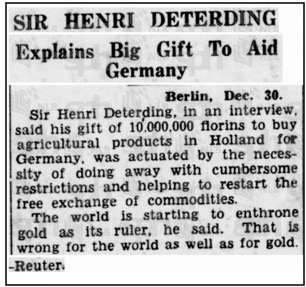
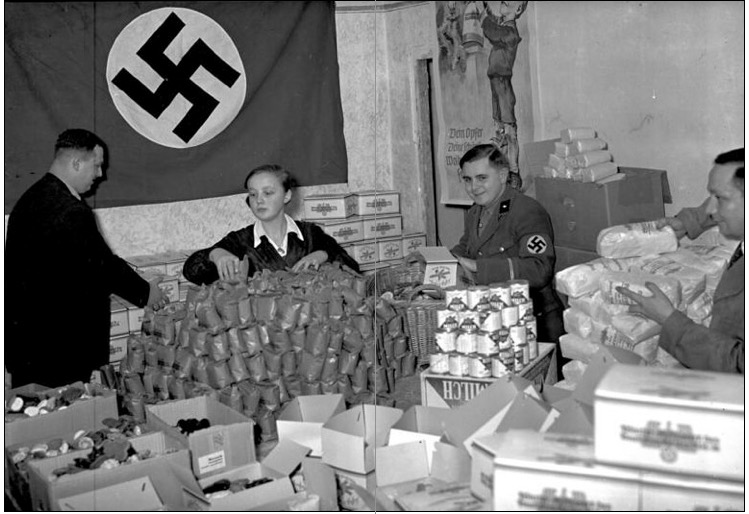
In December 1936 there were global news reports about Deterding’s food donations to Germany. Reuters had already reported the first massive donation on 20 December 1936, while Deterding was still Director-General, because his resignation did not take effect until 31 December 1936. According to Shell’s own records, Deterding donated 10 million guilders in surplus Dutch foodstuffs to the Winterhilfswerk27 (Winter Relief) organisation in Germany.28 The Winterhilfswerk scheme, involving donations of food, clothing and coal, allowed Nazi regime funds to be diverted to the military buildup. One account stated that 7,000 railway wagons were required for the first immense delivery. On 26 October 1936, the Daily Express reported his resignation29 as President of Royal Dutch Petroleum Company and correctly stated that he retained his seat on the board. This was later confirmed30 in an article published by The Times. After Deterding’s retirement as leader, the Royal Dutch/Shell Group continued to do business with the Nazis in a variety of ways under Kessler and his Royal Dutch director colleague, Jan Carel van Panthaleon Baron van Eck.31 From 1937 Deterding, still a Shell director, was influenced by a personal secretary with outspoken Fascist sympathies and helped to finance a paper published by a Fascist splinter group in the Netherlands.32 In June 1937, The New York Times published an article reporting that Deterding was sending more food to Germany.33 The publication of the book “The Most Powerful Man in the World: Sir Henri Deterding” by Glyn Roberts, took place in June 1938,34 while Sir Henri was still active, still a Royal Dutch Group director and still able to legally challenge the accuracy and truthfulness of the content.
In relation to the Politz project, “In February 1939, the Group received an ultimatum: if Rhenania-Ossag would not take its full share in the costs, the government would interpret this as an infringement of the company’s duty under law to act in the interests of the German people and the German State, and put it into administration.” This made Group managers capitulate and give Rhenania-Ossag permission to raise its financial commitment to Politz.35 Sir Henri Deterding died in St. Moritz, Switzerland on 4 February 1939 several months before the outbreak of the Second World War.36 His funeral took place on 10 February 1939.37 In January 1940, the Nazi government appointed a “Verwalter” or caretaker manager to take charge of Rhenania-Ossag, the operating company of Shell in Germany.38 39 DIRECTORSHIP DATES (Dates of Deterding Royal Dutch/Shell directorships from “A History of Royal Dutch Shell Appendices. Figures and Explanations, Collective Bibliography, and Index. Pages 93 to 99.)40 Sir Henri Deterding was the most senior executive of Royal Dutch from 17 December 1902 until 31 December 1936 and a supervisory director of multiple Royal Dutch Shell group companies until the day of his death, 4 February 1939. According to “A History of Royal Dutch Shell: volume 1”: – page 490, Deterding did not lose power over the business until his death.41 Sir Henri Deterding was a director of Shell Transport from 11 April 1907 until 1 January 1937. Sir Henri Deterding was General Managing Director of a Royal Dutch Shell Group company, Bataafsche Petroleum Maatschappij, from 28 June 1907 to 1 January 1937 and a supervisory director from 1 January 1937 until 4 February 1939.
Sir Henri Deterding was a General Managing Director of Anglo-Saxon Petroleum Company between 1 July 1907 and 31 December 1936 and a director between 1 July 1907 and 4 February 1939. In November 1955, The Shell Petroleum Company Ltd took over the assets of Anglo-Saxon, which ceased to function as a separate company. Sir Henri Deterding was a director of Asiatic Petroleum Company, renamed The Shell Petroleum Company Ltd in January 1946, from 8 July 1903 until 13 January 1937. Each of the directorships was held in his full name: Henri Wilhelm August Deterding. In practice, he was the leading executive director of multiple companies within the Royal Dutch/Shell Group until 31 December 1936 and remained a director of multiple Royal Dutch Group companies until his death on 4 February 1939.
Notes
9. Information from Wikipedia article “Henri Deterding” as of 12 July 2014. Source 1 ↩
10. Information from page 477 “A History of Royal Dutch Shell: Volume 1” ↩
11. Information from page 467 of “A History of Royal Dutch Shell: Volume 1” ↩
12. Link to Wikipedia article: “Adolf Hitler” - see section “Appointment as chancellor” Source 1 ↩
13. Information from page 465 of “A History of Royal Dutch Shell: Volume 1”: “The Nazi regime which came to power in January 1933…” ↩
14. Information from page 477 of “A History of Royal Dutch Shell: Volume 1” ↩
15. Almost verbatim extract from 469 of “A History of Royal Dutch Shell: Volume 1” ↩
16. Information from page 469 of “A History of Royal Dutch Shell: Volume 1” ↩
17. Verbatim extract from 469 of “A History of Royal Dutch Shell: Volume 1” ↩
18. Verbatim extract from page 472 of “A History of Royal Dutch Shell: Volume 1” ↩
19. Link to shellnews.net webpage containing a New York Times article published on 26 October 1934 under the headline: “REICH OIL MONOPOLY SOUGHT BY DETERDING” ↩
20. Link to Wikipedia article “Guus Kessler” Source 1 ↩
21. Information from page 471 of “A History of Royal Dutch Sell: Volume 1” ↩
22. Information from page 477 of “A History of Royal Dutch Shell: Volume 1” ↩
23. Verbatim extract from page 478 of “A History of Royal Dutch Shell: Volume 1” ↩
24. Information from page 464 of “A History of Royal Dutch Shell: Volume 1” ↩
25. Information from page 473 of “A History of Royal Dutch Shell: Volume 1”: Text in italics is taken verbatim from page 473. ↩
26. Information from page 486 of “A History of Royal Dutch Shell: Volume 1” ↩
27. Link to Wikipedia article: “Winterhilfswerk” Source 1 ↩
28. Information from page 483 of “A History of Royal Dutch Shell: Volume 1” ↩
29. Link to royaldutchshellplc.com webpage containing Daily Express article published 26 October 1936 under the headline: “Sir Henri Deterding, Oil King, To Resign” Source 1 ↩
30. Link to shellnews.net webpage containing The Times Obituary of Sir Henri Deterding published 6 February 1939 ↩
31. Information from page 485 of “A History of Royal Dutch Shell: Volume 1” ↩
32. Almost verbatim extract from page 483 of “A History of Royal Dutch Shell: Volume 1” ↩
33. Link to a royaldutchshellplc.com webpage containing an article published by The New York Times on 8 June 1937 under the headline: “Deterding to Distribute More Food in Germany” Source 1 ↩
34. See Time Magazine review published 27 June 1938 about the relevant book under the headline: “Ruddy Old Gent: THE MOST POWERFUL MAN IN THE WORLD: THE LIFE OF SIR HENRI DETERDING—Glyn Roberts—Covici-Friede ($3).”: ↩
35. Information from page 474 of “A History of Royal Dutch Shell: Volume 1”: Text in italics is taken verbatim from page 474. ↩
36. Link to shellnews.net webpage containing an article published by The New York Times on 5 February 1939 under the headline: “HENRI DETERDING DIES IN ST. MORITZ” ↩
37. Link shellnews.net webpage containing an article by The Times published on 11 February 1939 under the headline: : “SIR HENRI DETERDING’S FUNERAL” ↩
38. Information from page 78 of “A History of Royal Dutch Shell: Volume 2.” ↩
39. Information from page 22 of “A History of Royal Dutch Shell: Volume 2” ↩
40. Information sourced from pages 93 to 99 inclusive of “A History of Royal Dutch Shell Appendices. Figures and Explanations, Collective Bibliography, and Index.” ↩
41. Link to 38 pages, including page 490, from: “A History of Royal Dutch Shell: Volume 1” ↩
Chapter 1: Royal Dutch Shell and the Nazis
The founder and longest serving leader of the Royal Dutch Shell Group, Sir Henri Deterding, is presented here as having helped sustain the Nazi Party at a time of financial vulnerability and, personally and via Shell, as having provided significant support to Hitler’s regime. The Royal Dutch Shell Group became globally recognised as Shell, and for decades Deterding all but embodied that brand. Some directors had misgivings, but he ran the group in a highly personal, near-dictatorial manner and was referred to in the press as the “czar of the Royal Dutch Shell”42. Even after he was persuaded to retire as leader, he remained a director of multiple Royal Dutch Group companies until the day of his death on 4 February 1939. The case advanced in this book is not merely that Shell had an embarrassing founder with dangerous political sympathies. It is that Shell, under Deterding and through its German operations, became entangled with the Nazi project in ways that were financial, operational, and moral.
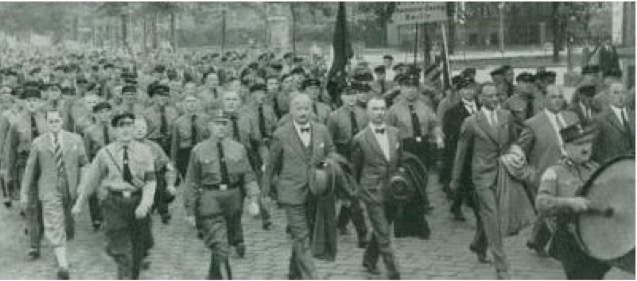
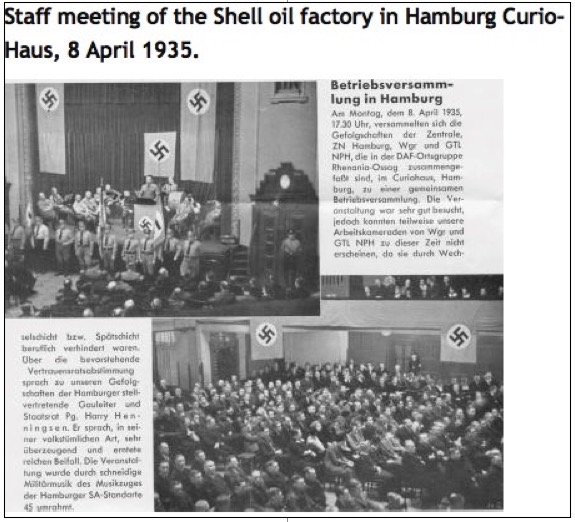
As was stated in the International Military Tribunal opinion after the end of World War II: “Hitler could not make aggressive war by himself. He had to have the co-operation of statesman, military leaders, diplomats, and businessmen.”43 Sir Henri was one of the most powerful oil men in the world, but he also became an ardent supporter of Hitler and an obsessive enemy of Soviet Russia. He was filmed exchanging a Nazi salute at a major sporting event.44 As we will see, he had a four-day meeting with Hitler as an honoured guest at Hitler’s mountain top retreat. An article published on 3 April 1933 by the Border Cities Star, a Canadian daily newspaper, reported allegations made in Pravda, the official political publication of the Soviet Communist Party in Russia, accusing Sir Henri Deterding, the “head of Royal Dutch Shell,” of funding Hitler. They described the Nazis as obedient agents of their benefactors, claiming: “Deterding orders-Hitler acts.”45 Even allowing for propaganda and exaggeration, the broad point of such contemporary reporting is important: Deterding’s support for Hitler was widely perceived at the time, not invented long after the event. The purpose of this book is to test that perception against the documentary record.
The relevant historians describe themselves as the researchers and authors of the work and say that what they produced was “the fruit of our independent research,” even though their progress was monitored by an editorial committee that included company representatives. Since the historians were paid by Shell and the project was supervised by senior Shell figures, complete independence is difficult to accept without qualification. Credit is due for the inclusion of damaging material in the published history at all. Yet the treatment of Deterding, Hitler, and the question of Nazi funding often softens, distances, or reframes the implications of the underlying evidence. That tension between archival disclosure and corporate spin is one reason why the subject required a separate investigation.
Notes
42. Link to royaldutchshellplc.com webpage containing an article dated Saturday 1 March 1930 published by The Sandusky Star-Journal under the headline: “Rise of Europe’s Oil King to Power Closely Parallels Life Story of Elder Rockefeller.” In the second paragraph of the article, Deterding was described as “czar of the Royal Dutch Shell.” ↩
43. Count in 9 pages of the Military Tribunals document dated 6 December 1947 inclusive of the first page, which has the heading “MILITARY TRIBUNALS”: United States of America Against Krauch and Others. It is a 108 page pdf le and although compressed, still takes a few minutes to load. ↩
44. Link to royaldutchshellplc.com webpage containing a YouTube.com video of a PBS TV Documentary adapted from Daniel Yergin’s book “The PRIZE: Epic Quest for Oil, Money and Power. Published in 1992 by FREE PRESS ISBN 0-671-79932-0 ↩
45. Link to royaldutchshellplc.com webpage containing an article published on 3 April 1933 on page 16 of The Border Cities Star, under the headline: “Soviet Paper In Bid for U.S. Trade.” The article contains the claim: “Deterding orders-Hitler acts.” ↩
Chapter 2: The Funeral
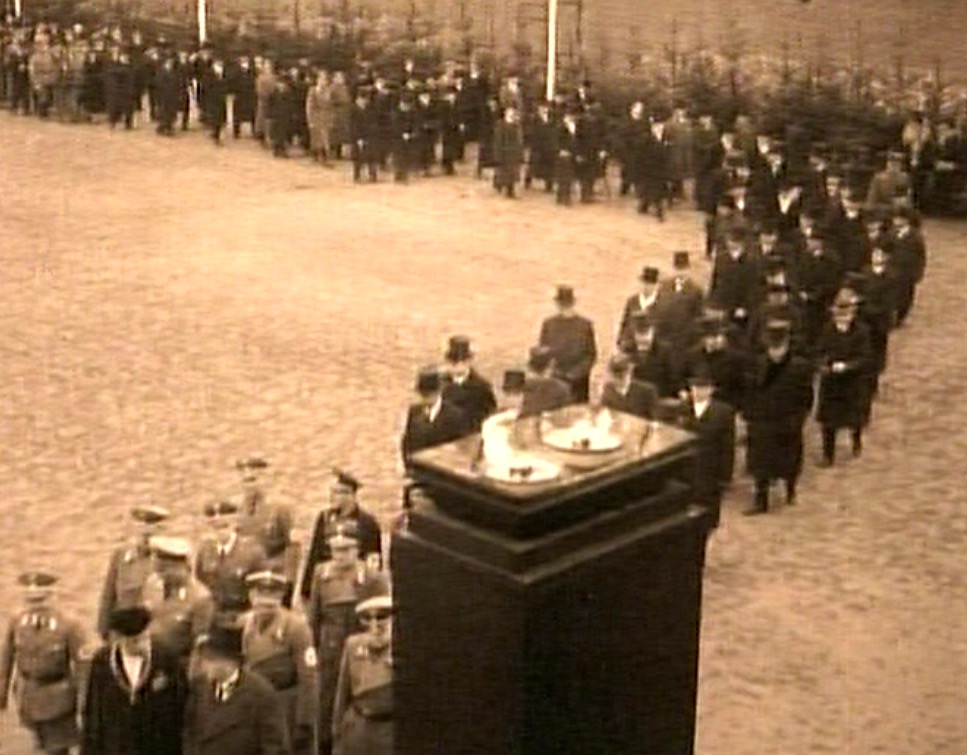
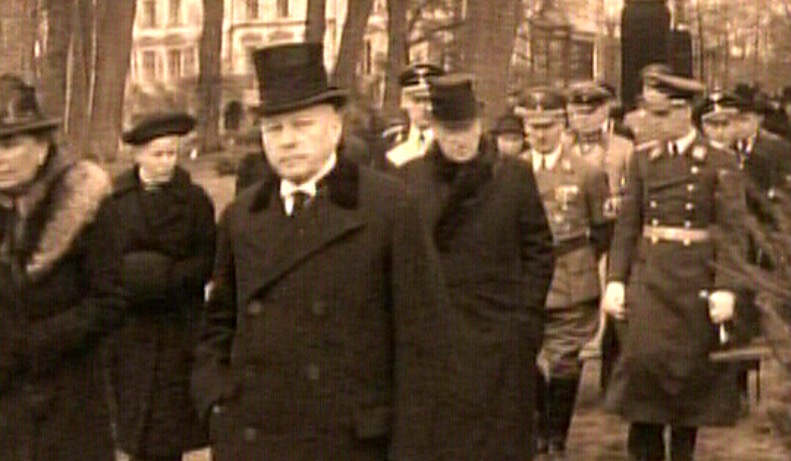
On 10 February 1939,46 a historic event with many of the trappings of a state funeral, was held at a private estate in Dobbin, Mecklenburg, Germany. The spectacle included a funeral procession led by a horse drawn funeral hearse with senior Nazis officials in attendance, Nazi salutes at the graveside, swastika banners on display and wreaths and personal tributes from Adolf Hitler and Reichsmarschall, Hermann Göring,47 who sent a group of officers of the air corps to convey his respects.48 The message accompanying the wreath from Hitler said: ‘In the name and on the instructions of the Fuhrer, I greet thee, Heinrich Deterding, the great friend of the Germans.’49 Hitler’s special envoy, Erich Hilgenfeld50 of the SS, laid the wreath on Hitler’s behalf (See page 478, History of Royal Dutch Shell Volume 1: 1890 -1939) The deceased person honoured in such an extraordinary fashion by Hitler and the Nazis was a Dutchman with a British title, Sir Henri Deterding. Sometimes described as “The Most Powerful Man in the World” or “The Napoleon of Oil”, Sir Henri founded the Royal Dutch Shell Group and during his remarkable 40 years with the Anglo-Dutch multinational, over 30 as absolute leader, built it into the oil giant best known as “Shell”.
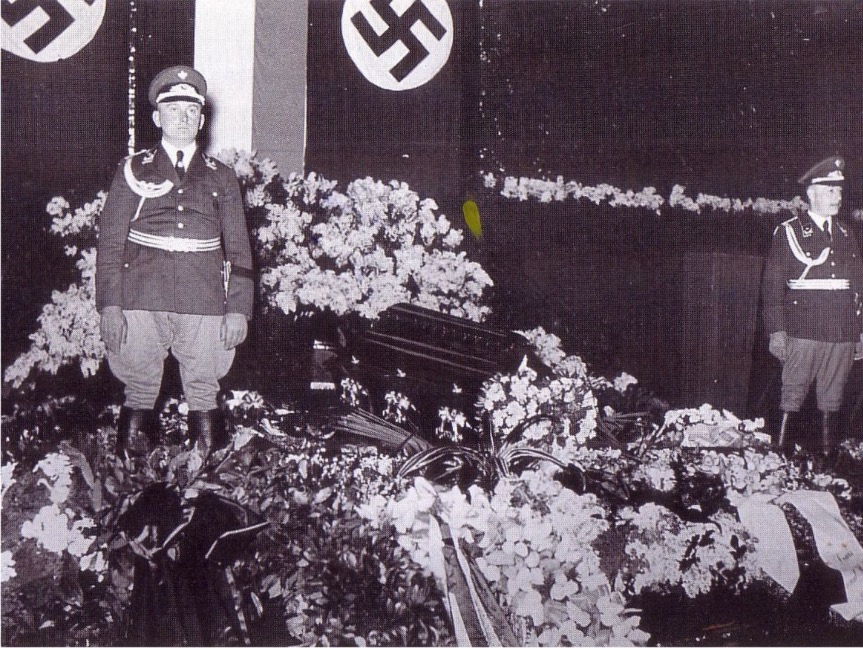
In 1935, a U.S. newspaper described him as “strong man of the billion dollar Royal Dutch Shell corporation….”51 In 1936, another U.S. newspaper described him as “principal founder52 of the Royal Dutch Petroleum Co.” In the 2013 “Fortune 500 Ranking by Revenue World’s Largest Corporations”,53 Royal Dutch Shell was ranked number 1 worldwide. Deterding, more than anyone else, was responsible for creating Royal Dutch Shell, building it into a global colossus and turning Shell into an iconic brand instantly recognisable around the world. Deterding’s public stature is hard to parallel in modern corporate life. He was a globally famous oil baron, a figure of controversy and mystery, and a man whose political interventions ranged well beyond ordinary business dealings. In April 1932, the Daily Express reported a “NEW ATTACK ON SIR H. DETERDING”.54 A French financial newspaper had accused him of being an enemy of France, “of withholding vital statements of his companies investments and of secret dealings…” My impression of Sir Henri is that he relished such controversy. Some powerful business leaders, especially after long years of near-unchecked authority, drift toward extreme political commitments. In Deterding’s case, the record assembled here suggests that he became increasingly drawn to Hitler and helped associate Shell with efforts to finance the Nazi Party at a critical stage. In May and June 1933 the board of directors of the Shell German subsidiary company Rhenania-Ossag was “thoroughly overhauled” with Jewish members removed and one Nazi party member appointed joining one already in place.55 The Nazi party had directors on the board of Rhenania-Ossag sitting alongside other Shell directors for 7 years until the Nazi Government’s appointment of a “Verwalter” in January 1940.56 Royal Dutch Shell, apparently anxious to remain aligned with the Nazi regime, acted with “undue haste” to implement an anti-Semitic policy against Jewish employees, some of whom later did not survive the war.57 Sir Henri had died suddenly on 4 February 1939 in St. Moritz. Links and extracts from reports of his death and funeral are provided in a later chapter: “Media coverage of the death of Sir Henri Deterding.” Royal Dutch Shell directors were present at the funeral along with Nazi representatives. According to information on page 490 of “A History of Royal Dutch Shell: Volume 1,” the occasion was stage-managed as an unmistakably Nazi spectacle, with swastika banners, wreaths from Hitler and Göring, tributes to the great friend of Germany, and Hitler salutes over the grave.58 On 1 October 1940, the son of Sir Henri, Lieutenant Henry Deterding, serving with the British Fleet Air Arm, was reported missing while on active service. News articles at the time published by the Glasgow Herald59 and the Daily Express,60 mentioned that Hitler had described his father as being a great friend of the Germans. A few days later, the Lethbridge Herald61 reported that Lieutenant Deterding had been made a prisoner of war. It was one of the darkest periods in modern history. Tens of millions of people perished as a consequence of the actions of the Nazi Party, led by Adolf Hitler and aided at crucial points by businessmen and institutions willing to support the regime. This book asks what moral responsibility attaches to Shell’s role in that history, and why the company has never addressed it in any sustained public way.
Notes
46. Link shellnews.net webpage containing an article by The Times published on 11 February 1939 under the headline: : “SIR HENRI DETERDING’S FUNERAL” ↩
47. Information from page 490 “A History of Royal Dutch Shell Volume 1.” ↩
48. Link to shellnews.net webpage containing New York Times article “DETERDING HONORED BY NAZIS AT FUNERAL”: Published 11 February 1939 ↩
49. Extract from page 188 of “A Century in Oil” by Stephen Howarth published in 1997 by Weidenfeld & Nicolson ISBN: 9780297822479 ↩
50. Link to Wikipedia article “Erich Hilgenfeldt” Source 1 ↩
51. Link to news.google.com webpage containing page 4 of the Meriden Record newspaper published 13 September 1935 under the headline: “Europe’s Oil Napoleon See Winner Over U.S. Rivals For World Trade As Ethiopian Concession Fades.” Quote is from first sentence of the article. ↩
52. Link to a shellnews.net webpage containing from a small article printed on page 4 of The Lethbridge Herald published Saturday 16 May 1936. Article states: “Lady Deterding, wife of Sir Henri Deterding, was granted a divorce at The Hague, Netherlands, on grounds of misconduct. The court will decide custody of the children June 16. Alimony has been arranged privately. Sir Henri Deterding K.B.E. was the principle founder of the Royal Dutch Petroleum Co, which operated oil wells in the Dutch East Indies. It merged later with the British Shell Oil Co., to form the Royal Dutch-Shell Co.” ↩
53. Link to money.cnn.com Fortune Global 500 webpage displaying rankings by revenue for 2013 with Royal Dutch Shell at No.1. ↩
54. Link to royaldutchshellplc.com webpage containing an article published by the Daily Express on 16 April 1932 under the headline: “NEW ATTACK ON SIR H. DETERDING” Source 1 ↩
55. Information from page 469 of “A History of Royal Dutch Shell: Volume 1.” ↩
56. Information from page 78 of “A History of Royal Dutch Shell: Volume 2.” ↩
57. Information from page 84 of “A History of Royal Dutch Shell Volume 2.” ↩
58. Information from page 490 of “A History of Royal Dutch Shell Volume 1.” ↩
59. Link to royaldutchshellplc.com webpage entitled Sir Henri Deterding described by Hitler as a ‘great friend of the germans’ - containing article published by The Glasgow Herald on 1 October 1940 under the headline: SON OF “NAZIS’ FRIEND” MISSING ↩
60. Link to royaldutchshellplc.com webpage containing article published by the Daily Express on 1 October 1040 under the headline: “Naval officer son of oil king missing” Source 1 ↩
61. Link to shellnews.net webpage containing an article published by THE LETHBRIDGE HERALD on Friday, 4 October, 1940, stating: “LONDON-Lieut. Henri Deterding, son of the late oil king, Sir Henri Deterding, is a prisoner of war, the admiralty informed his wife at her Daventry home today. Lieut. Deterding previously was reported missing while on active service with the eet air arm.” ↩
Chapter 3: Ardent Supporter and Financier of the Third Reich
This chapter examines the role of Royal Dutch Shell and its long-time leader, Sir Henri Deterding, as a supporter and financier of the Third Reich. The point is not to inflate every allegation to its most dramatic form, but to establish that Shell money, Shell influence, and Deterding’s political commitments mattered at a crucial stage in Hitler’s rise. The evidence assembled here suggests that Royal Dutch Shell Group funds directed by its Director-General and one of its founders, Sir Henri Deterding, helped sustain the Nazi movement at a moment when it was vulnerable. Declassified U.S. intelligence records later described Royal Dutch Shell as “a Nazi collaborator that used Hitler’s slave laborers”.62 Deterding won his knighthood in 1920.63 for Shell’s help to the British Admiralty, cleverly fooling German submarines in World War 1 by transporting oil not in tankers, but as ballast instead of water in ordinary ships.64 This was before Sir Henri became politically aligned with Adolf Hitler.65 He was later described as a fervent admirer of Hitler66 and “among the most notorious pro-Nazi…”.67
A New York Times article (published in 1946)68 reported that as early as 1929, the Nazis had begun to try and make friends in Britain and that a firm bond had been established with “Sir Henri Deterding, the oil magnate, and his associates.” In 1933, Sir Henri was said to be “currying favor with Adolf Hitler in the hope of winning oil contracts for Royal Dutch Shell.”69 In 1938 Sir Henri was openly described as being “pro-Nazi”70 and he was later referred to in The New York Times as “a Nazi supporter.”71 His support for Hitler stemmed in part from anti-communism, geopolitical ambition, and the search for oil advantage. Sir Henri, who was at the helm of the oil giant for over 30 years, was himself described at one time as “The Most Powerful Man in the World” – the title of a book by his biographer Glyn Roberts. According to Roberts, Deterding was able, at the height of his powers, to bind the Board of Shell without their knowledge and consent.72 Deterding was also known as an oil Napoleon.73 In practical terms, Deterding and Royal Dutch Shell were almost inseparable.
Deterding has also been described as a “despot.”74 A Time Magazine review75 about the launch of the Glyn Roberts book “THE MOST POWERFUL MAN IN THE WORLD: THE LIFE OF SIR HENRI DETERDING” states:“Roberts thinks his backing for Hitler and his admiration for Mussolini are based on his hatred of communism…” Deterding admired dictators and acted like one himself. “Deterding clearly liked the New Order represented by the Nazis. He considered the notorious Night of the Long Knives in June 1934, when Hitler had a large number of his suspected party opponents brutally murdered, as a necessary step, confessing that it had increased his respect and veneration for the Nazi leader, if such were possible.”76 Shell has itself recognised the potential danger of having a dominant leader. The following is an extract from an article published by Fortune magazine on 4 August, 1997 reporting on some “New Age” self-analysis therapy at Shell: What kind of company chooses a Herkstroter? One with a long history in Europe, where men with too much power have caused world wars. Shell executives say that archive films showing the birthday celebrations of Henri Deterding, Shell’s last strong, single master, are eerily reminiscent of Hitler’s rallies. Indeed, Deterding harbored Nazi sympathies; had he not retired from Shell in 1936, the company’s subsequent history might have been different. “We in Europe have always had a fear of the strong man,” says Shell managing director van den Bergh.77 As we will see, Sir Henri did not retire from Shell in 1936. He remained a director of multiple companies within the “Group” until the day of the death. “Sir Henri was a short, stocky man with an ambitious, energetic, and effervescent personality. His rather large head seemed closely set on his body. Despite a headful of white hair and a bristly, trimmed white mustache, he seemed younger due to his ruddy complexion and black flashing eyes.”78 Deterding had a gift for “financial manipulations”.79 He was also described as a “consummate schemer.”80 Deterding was an honoured friend and supporter of Hitler. He was a personal friend of Field Marshall Göring. They lived near each other in Germany and went shooting together. Deterding also had direct dealings with Dr. Alfred Rosenberg, the chief Nazi ideologue and leader of the Nazi party department for foreign affairs. A New York Times article81 published on 4 November 1934 reported a conversation between Deterding and Rosenberg, described in the article as “Chancellor Hitler’s mouthpiece.” Russia was a subject discussed. In a book published in 1934, “Nazism: An Assault on Civilization,”82 Rosenberg was described on page 223 as “Hitler’s chief of intrigue.” In September 1935, the German Foreign Office seconded one of its staff to Deterding as a personal assistant for political matters.83
In October 1940, The Glasgow Herald announced in its War Casualties column84 that the son of Sir Henri, Lieutenant Henry Deterding, had been reported missing while on active service with the Fleet Air Arm. It said he was the son of the oil king whom Hitler had described as the “great friend of the Germans.” The syndicated article also mentioned that Hitler had sent a wreath to the funeral of Sir Henri. The headline stated: ‘SON OF “NAZIS FRIEND” MISSING.’ The same article, but with a different headline, was published the same day in the Daily Express.85 Because of the volume of evidence assembled here, Shell’s close association with the Nazis is no longer confined to scattered archive articles and out-of-print books. It can be examined in one place. On Shell’s main website shell.com86 there is a “Our history” section and within that, a feature appearing under the headline: “The early 20th century.”87 There is no reference in this material to Shell’s financing of the Nazis, the close relationship between Shell’s supreme leader and the leaders of the Nazis, or Shell’s collaboration with the regime, including anti-Semitic policies against Shell’s employees in Germany. The effect is to leave one of the darkest chapters in the company’s history largely absent from its public self-presentation. Ironically, the driven ruthless man most responsible for the enterprise that later became Royal Dutch Shell Plc was also largely, though not completely, responsible for one of the darkest chapters in its long history.
Notes
62. Link to shellnews.net webpage containing Boston Globe boston.com article published 19 November 2001 under the headline: “CLOAKED BUSINESS” ↩
63. Link to Time Magazine article published 11 January 1937 under the headline: “GERMANY: Petticoat Philanthropy” ↩
64. Link to shellnews.net webpage containing the book “THE SHELL THAT HIT GERMANY HARDEST” by P.G.A. Smith published by “SHELL” Marketing Co. LTD (believed to be in 1920). Nearly 100 pages, with many graphics, so takes some time to load. ↩
65. royaldutchshellplc.com webpage containing an Andrew Rowell article by The Guardian newspaper published 15 November, 1997, under the headline: “Unloveable Shell, the Goddess of oil” Source 1 ↩
66. Extract from an article published by The Times on 23 April 2003 under the headline: “A very British kind of scandal: why Shell is no Enron”: “When the British Shell company merged with Royal Dutch in 1906 it was soon dominated by a single despot, Henri Deterding, a brilliant trader who became increasingly autocratic and ended up a fervent admirer of Hitler.” ↩
67. Extract from notes on page 61 of the book by Webster G. Tarpley and Anton Chaitkin “George Bush: The Unauthorised Biography” original edition 1992: Extract: “Confidential memorandum from U.S. embassy, Berlin, op. cit., chapter 2. Sir Henri Deterding was among the most notorious proNazis of the early war period.”: ISBN:0-943235-05-7 ↩
68. Link to shellnews.net webpage containing New York Times article published 10 January 1946 under the headline: “Propaganda Success in Britain Vaunted by Rosenberg to Hitler” ↩
69. Extract from Time Magazine article published 17 April 1933 under the headline: “GERMANY: Co-ordination”: “While still in Nazi good graces he went to London" called according to rumor by Sir Henri Deterding who was currying favor with Adolf Hitler in the hope of winning oil contracts for Royal Dutch-Shell.” ↩
70. Link to shellnews.net webpage containing New York Times book review by P. W. Wilson published 12 June 1938 under the headline: “Powerful Henri Deterding Who Rivals Standard Oil” He was described at the foot of the second column of the review as being: “pro-Nazi.” ↩
71. Link to shellnews.net webpage containing a New York Times review of a televised mini-series version of “The Prize,” a book by Daniel Yergin broadcast under the title ”The Epic of Oil, Catalyst Of Con ict.” The last sentence of paragraph 9 of the review: “It concentrates especially on the unlikely partnership, out of which was born Royal Dutch Shell, between Marcus Samuel, the Jew from the East End of London who became the Lord Mayor of London, and Henri Deterding, the dashing Dutch oil man who turned into a Nazi supporter in his old age.” ↩
72. Extract from page 369 of the 1991 book “The Prize” by Daniel Yergin: "Sir Henri's word is law,"observed a British official in 1927. "He can bind the Board of the Shell without their knowledge and consent." : ISBN 0-671-79932-0 ↩
73. Link to google news webpage containing an article published by the Meriden Record newspaper on 13 September 1935 under the headline: “Europe’s Oil Napoleon Seen Winner Over U.S. Rivals For World Trade As Ethiopian Concession Fades.” ↩
74. Extract from an article published by The Times on 23 April 2003 under the headline: “A very British kind of scandal: why Shell is no Enron”: “When the British Shell company merged with Royal Dutch in 1906 it was soon dominated by a single despot, Henri Deterding, a brilliant trader who became increasingly autocratic and ended up a fervent admirer of Hitler.” ↩
75. Extract from a Time Magazine review published 27 June 1938 under the headline: “Ruddy Old Gent: THE MOST POWERFUL MAN IN THE WORLD: THE LIFE OF SIR HENRI DETERDING— Glyn Roberts—Covici-Friede ($3).”: "Author Roberts thinks his backing of Hitler and his admiration for Mussolini are based on his hatred of Communism, which was born of frustration when he lost the oil of the Caucasus. And his second wife was a White Russian, his third a German." ↩
76. Extract from page 478 of “A History of Royal Dutch Shell: Volume 1:” “From Challenger to Joint Industry Leader 1890 -1939” by Joost Jonker & Luiten van Zanden published in the UK in 2007 by Oxford University Press. ↩
77. Extract from a Fortune Magazine article published 4 August 1997 under the headline: “WHY IS THE WORLD'S MOST PROFITABLE COMPANY TURNING ITSELF INSIDE OUT? ROYAL DUTCH/SHELL LOOKED AT THE FUTURE AND DIDN'T LIKE THE VIEW. NOW IT IS CHANGING EVERYTHING FROM THE WAY ITS MANAGERS ACT TO THE WAY IT DOES BUSINESS.” ↩
78. Extract from page 320 of “Who Financed Hitler,” a book authored by James and Suzanne Pool first published in Great Britain in 1979 by Macdonald and Jane’s Publishers Limited: ISBN 0 354 04395 1 ↩
79. Extract from page 475 of “A History of Royal Dutch Shell: Volume 1” ↩
80. Extract from page 476 “A History of Royal Dutch Shell: Volume 1” ↩
81. Link to shellnews.net webpage containing a New York Times article published 4 November 1934 under the headline: “PARIS PUSHES PLAN FOR STABLE EUROPE” ↩
82. Extract from page 223 of a book by multiple authors: “Nazism: An Assault on Civilization”: Published by Harrison Smith and Robert Haas. New York. Full extract: “Then there is the League for Ukrainian Independence, of which Hetman Skoropadski, the successor of Simon Petlura, is the chief, Alfred Rosenberg, Hitler's chief of intrigue the patron, and Messrs. Coty, Deterding and Rothermere the nanciers.” ↩
83. From page 478 “A History of Royal Dutch Shell: Volume 1”: Full extract: “From September 1935, the German Foreign Of ce seconded one of its staff to Deterding as a personal assistant for political matters.” A description of Sir Henri Deterding: ↩
84. Link to a royaldutchshellplc.com webpage containing an article published on page 3 of the The Glasgow Herald on 1 October 1940 under the headline:’ SON OF “NAZIS FRIEND” MISSING. ↩
85. Link to a royaldutchshellplc.com webpage containing a Daily Express page 3 article published 1 October 1940 under the headline: “Naval officer son of oil king missing” Source 1 ↩
86. Home page of shell.com ↩
87. Link to shellnews.net webpage containing copy of a webpage - “The early 20th century” from shell.com as of 15 September 2010. ↩
Chapter 4: “You Can Be Sure of Shell”…
The slogan “You can be sure of Shell” became one of the company’s best-known advertising lines. Bing Crosby sang it in later television advertising,88 and other singers recorded versions of it too.89 My research indicates that the slogan was first used in Great Britain in 1937,90 only months after the resignation of Sir Henri Deterding as leader of the Group, the man most responsible for the creation and global success of the Royal Dutch Shell Group. The timing matters. Whatever its commercial intention, the slogan appeared at precisely the moment when Shell had reason to reassure consumers and investors about the integrity of the brand.
In 1997 Mark Moody-Stuart used the same slogan as the title of a letter in The Guardian responding to criticism of Shell.91 The letter promoted Shell’s ethical framework and business principles, but did not engage with the company’s double-dealings with Hitler and Nazi Germany, which had also been raised. The omission is revealing. The slogan has long been used to signal trust and reassurance, even when the history behind the brand is far less reassuring.
Notes
88. Link to YouTube.com video “Shell TV ad with Bing Crosby” uploaded 30 March 2010 by Ogilvy- Museum. ↩
89. Link to YouTube.com video “Michael Holliday: The Shell Song TV Advert” uploaded 2 November 2008 ↩
90. Link to royaldutchshellplc.com article dated 31 March 2011 under the headline: “YOU CAN BE SURE OF SHELL: The biggest con dence trick in history” ↩
91. Link to royaldutchshellplc.com article published 14 March 2008 under the headline: “The Guardian: Unloveable Shell, the Goddess of Oil” Source 1 ↩
Chapter 5: Shell support for Nazis continued after Deterding retirement
The first news reports of the pending resignation of Sir Henri Deterding were published in October 1936.92 93 The close relationship between Royal Dutch Shell and the Nazis did not end with his retirement as leader of the Royal Dutch Shell Group on 31 December 1936, or even his death. From December 1936, Deterding made widely reported multi-million dollar food donations to Nazi Germany. Shell was well aware of his activities and allowed him to remain as a director. This is unsurprising bearing in mind that Shell also continued its partnership with the Nazis after his death. He was a non executive director of several companies within the Group from 1 January 1937 until 4 February 1939,94 the day he died.95 The following is an extract from “A History of Royal Dutch Shell”: Volume 1. Immediately after referring to the funeral of Sir Henri on page 485, it says: “However, as we have seen above the Group continued to do business with Germany, drawing lube oil supplies, ordering tankers, expanding the Rhenania-Ossag installations, and participating in the Politz works.”96 Rhenania-Ossag97 (Rhenania-Ossag Mineralölwerke AG), was the operating company of Royal Dutch Shell in Germany. During 1937 and 1938, the lube oil production facility of the Royal Dutch Shell German subsidiary – Rhenania-Ossag – was expanded and modernized.98 Anglo-Saxon, also part of the Royal Dutch Shell Group, had a total of seven large tankers built at German shipyards between 1935 and 1939, the largest number ordered outside the UK and the Netherlands during those years.99 In August 1936, the Nazis announced a Four Year Plan to make Germany independent of foreign gasoline imports. Initially Royal Dutch Shell Group managers refused to allow Rhenania-Ossag to participate in the project, but by February 1937, just weeks after the retirement of Sir Henri as chief executive, the Group reversed the decision.100 Royal Dutch Shell invested RM 27.5 million in the related “Politz” project involving partners, Standard Oil of New Jersey and IG Farben. Shell attempted to conceal its involvement. Extract: “Because the Group wanted at all costs to avoid its commitment to a synthetic gasoline plant becoming public knowledge, two banks fronted as shareholders in Hydrierwerke Politz.” 101 The Politz project, which involved making aircraft gasoline, turned into what was described as “a devil’s pact” with soaring costs and construction delays. The Nazi government demanded increased investment. Royal Dutch Shell Group initially refused to contribute. In February 1939, the Group received an ultimatum from the Nazis: if Rhenania-Ossag did not take its full share in the increased costs, the government would take this as an infringement of the company’s duty to act in the interests of the German State, and put the company into administration. Once again Royal Dutch Shell Group managers capitulated and gave Rhenania-Ossag permission to increase its financial commitment to the Politz project, which came on stream in 1940.102 In 1938, after the retirement of Deterding as chief executive, Royal Dutch Shell joined a consortium called Catalalytic Research Associates (C.R.A.). The Nazi controlled chemical company IG Farben, was a member of the consortium.103
Shell had entered into partnership with one of the most notorious corporate actors of the Nazi era, described in the 2008 book “Hell’s Cartel” as a “war monster”.104 IG Farben used slave labor, including concentration-camp prisoners, and became deeply implicated in the wider crimes of the Nazi war machine.105 One American newspaper article published a year after the death of Sir Henri alleged that Royal Dutch Shell financed fascist death squads collectively known as the Romanian Iron Guard “and helped to link it with Nazi interests in Berlin.” The Iron Guard carried out high-level political assassinations. The article featured below was published on 11 December 1940 by an American newspaper, “The Evening Independent,” located in Clearwater, Florida. It was displayed on page 18 – top far right column.106 GAMBLERS– The conflict between two vast oil empires–Standard and Dutch Shell–lies behind the internal turmoil that recently culminated in Rumanian riots, shootings and jailings–and an infiltration of Nazis into the harassed country in the Balkans. Oleaginous history simply repeated itself. The Royal Dutch Shell Oil company long headed by Henry Deterding and owned 50-50 by Dutch and British capital, is taking heavy punishment. Losses of extremely valuable oil properties in Russia transformed Deterding into a bitter anti-Bolshevik, and he labored for years to make Rumania a Fascist stronghold. His successor J. E. F. de Kok107–who in turn passed on last month–financed the Rumanian “Iron Guard,” and helped to link it with Nazi interests in Berlin. Both groups played with Rumanian politicos and intriguers who looked after Shell’s health. They opposed King Carol, who had lined up with the French. Standard Oil likewise cast its lot with Paris, and stands to suffer unless it falls in with the Dutch Shell party line. It is probable that neither Deterding nor De Kok contemplated or desired the political and international mess that the long-range scheming precipitated.
Both Shell and Standard will undoubtedly lose out in the end–as did the German and Italian industrials barons who financed and fostered their totalitarian masters, Hitler and Il Duce. The article fits the broader pattern of evidence suggesting that Royal Dutch Shell Group support for the Nazis continued long after the retirement of Deterding as leader of the oil giant in December 1936 and even after his death in February 1939.
Notes
92. Link to royaldutchshellplc.com webpage containing a Daily Express article published 26 October 1936 under the headline “Sir Henri Deterding, Oil King, To Resign” Source 1 ↩
93. Link to royaldutchshellplc.com webpage containing an article published by The Salt Lake Tribune on Tuesday 27 October 19936 under the headline: “Deterding to Resign As Royal Dutch Shell Head” ↩
94. Source: Lists of Royal Dutch Shell Executives/Directors pages 93 to 98: “A History of Royal Dutch Shell” Appendices. Figures and Explanations, Collective Bibliography, and Index (Volume 4) ↩
95. Link to shellnews.net webpage containing Obituary published by The Times newspaper on 6 February 1939: “Sir Henri Deterding Obituary” ↩
96. Extract from page 485 “A History of Royal Dutch Shell: Volume1” ↩
97. Name mentioned repeatedly in “A History of Royal Dutch Shell: Volume1” ↩
98. Information from page 465 “A History of Royal Dutch Shell: Volume1” ↩
99. Information from page 467 “A History of Royal Dutch Shell: Volume 1” ↩
100. Information from page 473 “A History of Royal Dutch Shell: Volume 1” ↩
101. Information from page 473 “A History of Royal Dutch Shell: Volume 1” ↩
102. Information from page 474 “A History of Royal Dutch Shell: Volume 1” ↩
103. From page 17, Fluid Catalytic Cracking: Science and Technology: John S. Magee (Author, Editor) Maurice M., Jr. Mitchell (Editor) (Amazon Page). ↩
104. Information from the back cover of “Hell’s Cartel: IG Farben and the Making of Hitler’s War Machine” by Diarmuid Jeffreys published in 2008 by Metropolitan Books Henry Holt and Company, LLC. ↩
105. Information from the Wikipedia article: “The Holocaust“. ↩
106. Link to royaldutchshellplc.com article: “Evidence that Royal Dutch Shell nanced fascist death squads” Source 1 ↩
107. Link to royaldutchshellplc.com webpage containing a 1938 photograph of J.E.F. de Kok. ↩
Chapter 6: Royal Dutch Shell Anti-Semitism
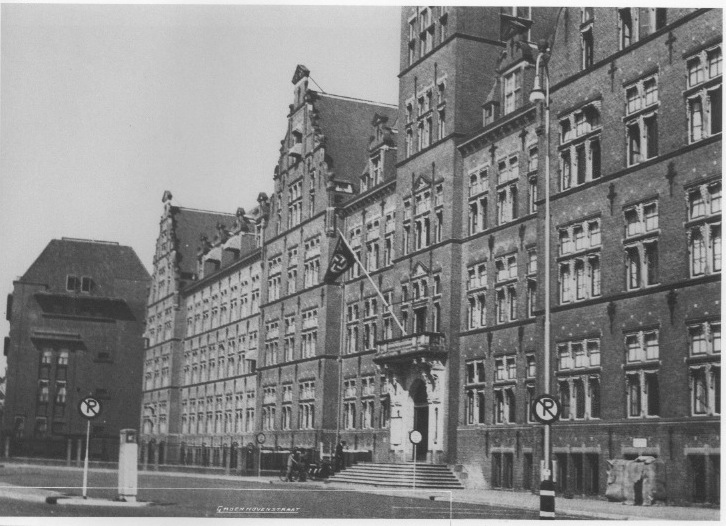
As Deterding’s sympathy for the Nazis became more explicit, he began making strongly anti-Semitic remarks in his correspondence.108 As we will see, Royal Dutch Shell adopted anti-Semitic policies in Germany and later in the Netherlands after occupation by the Nazis. A photograph109 shows the swastika flag flying at the head office of Royal Dutch Petroleum, 30 Carel van Bylandtlaan, The Hague, during the Nazi occupation of the Netherlands in World War II.
On 3 April 1933, the Nazi representatives of Rhenania-Ossag’s works council presented management with demands for the dismissal of all Jewish directors. At the time, outbreaks of violence against Jews had already started in Germany, together with demands for a national boycott of Jewish businesses. Although initially trying to downplay the seriousness of events, Rhenania-Ossag managers decided that it would be wise to align the company speedily with the policies of the Nazi regime. Jewish directors were replaced, in one instance with a member of the Nazi Party. In at least one case, a Jewish director’s resignation was not voluntary.110 Extracts from page 469 of “A History of Royal Dutch Shell” Vol 1: “In retrospect the remodelling of the senior management to suit the New Order would appear to have happened with undue haste…” “The far-reaching changes to the Rhenania-Ossag board could not have taken place without the full consent of Central Offices” “No questions of principle or moral judgements about the Hitler regime appear to have arisen and it bears pointing out that, whereas correspondence shows Group managers quick to identify and condemn Bolshevism, they appear not to have had the same sensitivity to Fascism or Nazism. This blind spot, quite a common affliction in the 1930s, may have impaired their vision when it came to perceiving the intentions of the unfolding Third Reich and the horrendous threat hanging over the Jewish employees in the Group’s care. We do not know the Group’s treatment of the staff members concerned, nor their fates.”111
Following the Nazi invasion of the Netherlands, Hauptmann Eichardt von Klass, the former research director of Rhenania-Ossag, was appointed in January 1940 as Verwalter to administer Royal Dutch and another company within the Royal Dutch Shell Group, Bataafsche. He is said to have forced Bataafsche to comply with the Nazis’ anti-Semitic policy.112 There were, in any event, Nazi sympathizers113 within the company. After the war, Royal Dutch dismissed fifty employees for collaboration with the Germans.114 Extracts: “In October 1941, the German authorities in the Netherlands issued a decree for the dismissal of Jewish employees from private companies. Philips set up a special department for its Jewish employees in December, hoping to keep them out of harm’s way by offering them work under the company’s protection. Bataafsche responded rather more slowly, in February 1942 sending a circular to its Dutch offices instructing them to have the staff complete an Arierverklaring, a form giving particulars about their descent. This survey resulted in forty people being classified as Jewish under the German laws. At least twenty of them did not survive the war.”115 For everything he did, von Klass remained heavily dependent on a handful of Bataafsche middle managers who sympathized with the Nazis….116 The result is stark: a Royal Dutch Shell group company instructed its own employees to declare personal information which, for some, exposed them directly to lethal persecution. As the source itself admits, at least twenty did not survive the war.
The record indicates that anti-Semitism existed within the Royal Dutch Shell Group at that time and was not confined to Henri Deterding alone. For the purposes of this book, the important point is the historical one: anti-Semitic conduct was not merely an external Nazi pressure imposed on Shell from outside. The record shows that Shell managers accommodated it, implemented it, and in some cases acted with alarming speed. That is the proper historical context for judging the company’s conduct in the 1930s and during the occupation years.
Notes
108. From page 481 “A History of Royal Dutch Shell Volume 1.” ↩
109. Link to royaldutchshellgroup.com webpage showing photograph of the Swastika flag flying on the classic Dutch facade of the head office of Royal Dutch Petroleum, 30 Carel van Bylandtlaan, The Hague, during the Nazi occupation of the in World War II (Image From Database Hague Municipal) ↩
110. Information from page 469 of “A History of Royal Dutch Shell: Volume 1” ↩
111. Information from page 469 of “A History of Royal Dutch Shell: Volume 1” ↩
112. Information from page 82 of “A History of Royal Dutch Shell: Volume 2” ↩
113. Information from page 32 of “A History of Royal Dutch Shell: Volume 2” (Nazi sympathizers) ↩
114. Information from page 82 of “A History of Royal Dutch Shell: Volume 2” (collaboration) ↩
115. Information from page 84 of “A History of Royal Dutch Shell: Volume 2” ↩
116. Information from page 86 of “A History of Royal Dutch Shell: Volume 2” ↩
Chapter 7: Evidence of Deterding/Shell financial support for the Nazis
This chapter may seem more like a reference index, but I wanted to provide an unprecedented volume of evidence within a single reference source. Extracts from relevant articles and books, many authored before World War II, are assembled here in date order and provide compelling evidence of what transpired all those years ago. This information, published by independent sources, confirms the financial support Royal Dutch Shell/Deterding provided to Nazi Germany. It was given in a variety of forms: investment, jobs, taxes, money, food donations, oil on long-term credit and revenues from Shell advertising in a Nazi newspaper. One point should be clarified at the outset. The authors of “A History of Royal Dutch Shell: Volume 1”117 described the food donations as a gesture after Deterding’s retirement. In fact, his retirement as Director-General took effect on 31 December 1936, while Reuters reported the first massive donation on 20 December 1936. As can be seen from numerous international news reports at the time, Sir Henri Deterding was still the Director-General/Chairman of the Royal Dutch Shell Group when the initial great donation of food was announced. He also remained a Shell director until the day he died. The scale of the undertaking was immense: one account stated that 7,000 railway wagons were required for the first immense delivery.
All of his financial support for Hitler and the Nazi party took place while he was a director of multiple companies within the Royal Dutch Shell Group. His Shell colleagues must have been well aware from all of the international publicity about the massive financial aid, yet let Sir Henri remain as a director. Section “A” on page 14 of a Military Tribunal document118 arising from the War Crimes Trials at Nuremberg Germany dated 6 December 1947, had the heading “Financial Support of Hitler and Nazi Party.” It mainly covered the financial support given to the Nazi Party at a critical time by Farben. It states on page 14 that “The financial support thus given by Farben along with other industrialists contributed to Hitler’s seizure and consolidation of power.” On the same page it makes direct reference to “….contributions to the winter aid scheme (Winterhilfswerk)…” as part of the “important contributions.” It seems proper to give extra credence to information published while Sir Henri was still alive and therefore had the opportunity to legally challenge any statement or allegations about him, which were inaccurate. As previously indicated, Sir Henri Deterding passed away on 4 February 1939.
Chronological extracts from 1931 onwards.
1931
Press reports in January 1931 linked Deterding to discussions in Berlin about a possible benzine monopoly. Even at that early stage, monopoly arrangements inside Germany were already being attached to his name.
1932
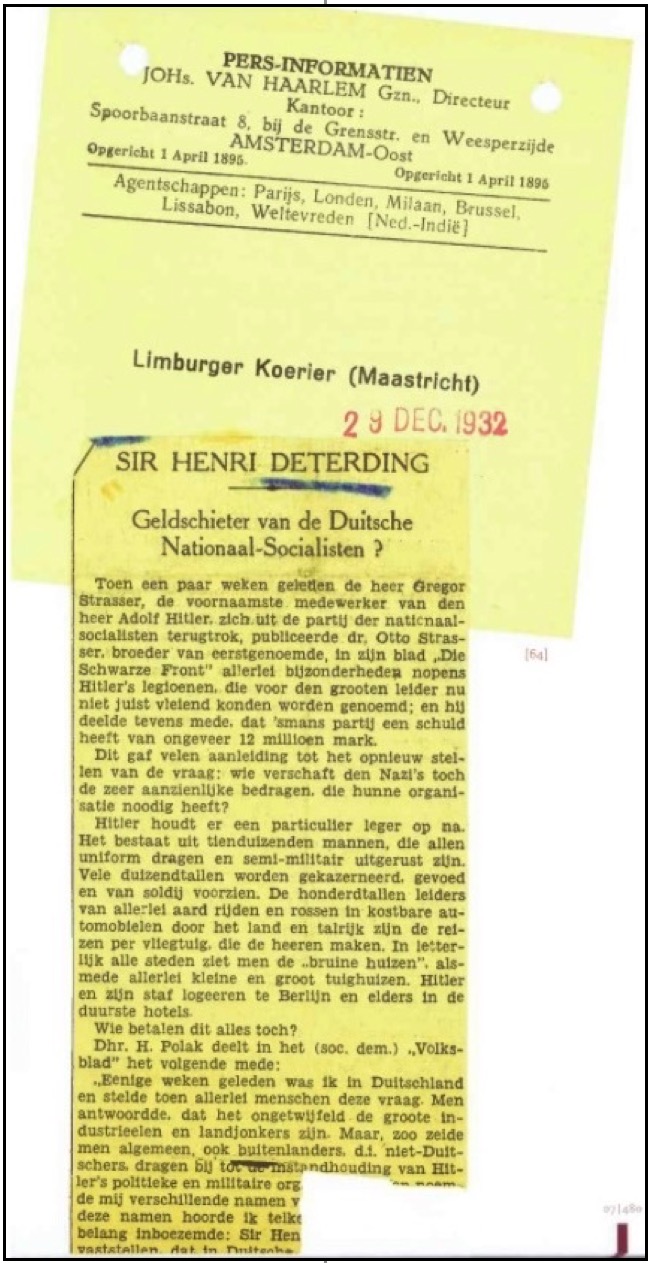
In April 1932, the Nazi party in Berlin reportedly dismissed the notion that Sir Henri Deterding, “head of the Royal Dutch Petroleum Company,” had donated money to the German fascist cause as a “shameless swindle”.119 This is one of the few examples I am aware of in which the Nazis issued a denial. Evidence from the Dutch newspaper Limburger Koerier comes from page 480 of “A History of Royal Dutch Shell Volume 1.” The text printed in red on page 480 states: “This extract from the Limburger Koerier of 29 December 1932 was only one of the many articles in the national and international press speculating about who might be funding the Nazi party, which was deeply in debt. Deterding’s name came up more than once.”
The graphics show a cutting of the Limburger Koerier article and a related receipt or note with a date stamp of 29 December 1932. The cutting is exactly as shown, with the rest of the article missing, conveniently, just when the name “Sir Hen” appears.120 The headlines state: SIR HENRI DETERDING Sponsor of the German National Socialists? The article revealed that the Nazi party was 12 million marks in debt. It listed examples of extravagant spending by Hitler and his private army, mentioning expensive houses, hotels, cars, horse riding and air travel. The article goes on to speculate who was funding it all. It makes reference to foreign industrialists contributing to Hitler’s political and military organization. The part substantiating the headline and sub-headline, which suggests exactly who was behind the funding, has been judiciously removed or censored by an unknown party.
1933
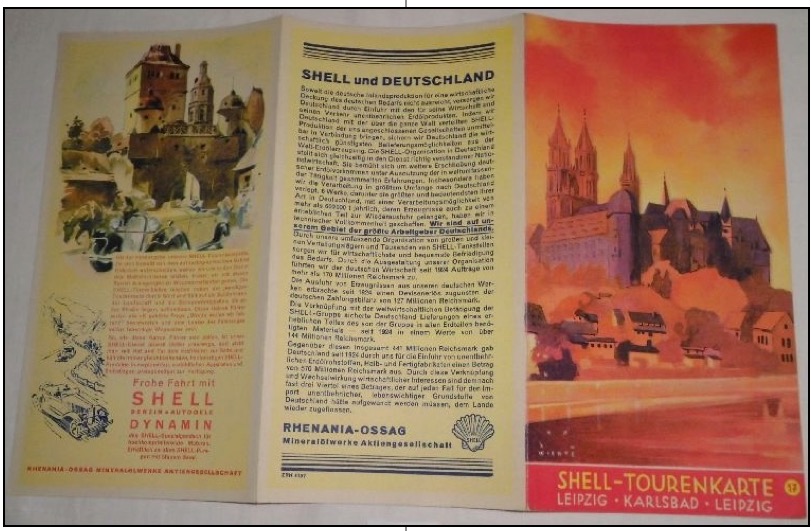
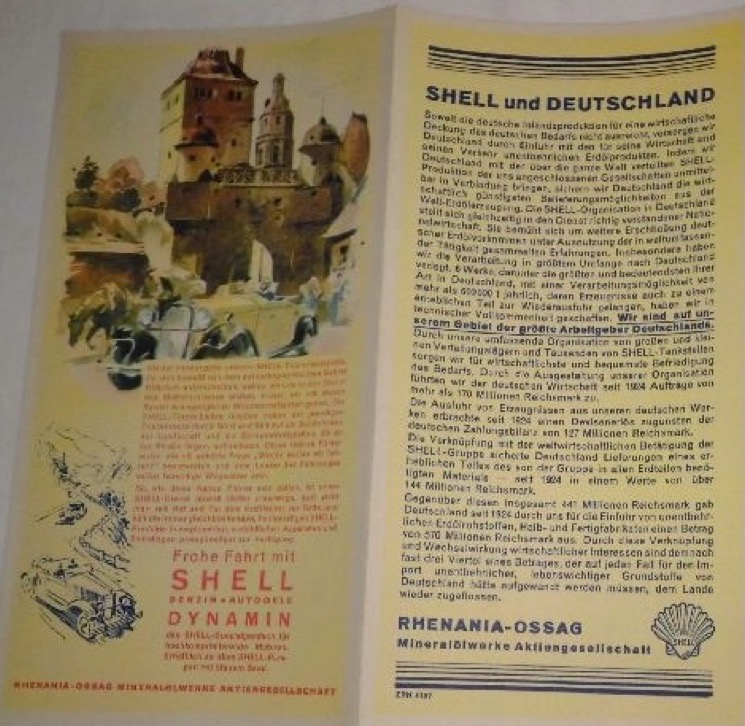
On 30 January 1933, Adolf Hitler was appointed Reich Chancellor.121 In the same year, the German subsidiary of the Royal Dutch Shell Group, Rhenania-Ossag, launched a series of motorists’ touring maps which boasted about Shell’s contribution to the German economy, in other words to the economy of the Nazi state. Extract from the text: Die SHELL-Organisation in Deutschland stellt sich gleichzeitig in den Dienst richtig verstandener Nationalwirtschaft. Sie bemuht sich um weitere ErschlieBung deutscher Erdölvorkommen unter Ausnutzung der in weltumfassender Tatigkeit gesammelten Erfahrungen Roughly translated, this means that the Shell organisation in Germany was utilising its global experience to support the German national economy.
An example map is displayed on page 470 of “A History of Royal Dutch Shell: Volume 1”122 The header text above the map states: Late in 1933 Rhenania set up an information office for motorists and launched a large series of motorists’ touring maps, emphasizing – despite some political doubts from The Hague – the importance of Shell as a contributor to the German economy. The wider “SHELL und DEUTSCHLAND” material went beyond vague patriotic language. It claimed that the German economy had received 170 million Reichsmarks from the Shell Group and listed still larger sums in other categories. The message was unmistakable: Shell wished Germany to understand how much economic value it claimed to bring to the Nazi state.
There are several references within this book to Johannes Steel, with extracts from his writings. He authored the book “Hitler As Frankenstein” published by Wishart & Co in 1933.123 Johannes Steel124 (born Herbert Stahl, 1908-1988) was the son of a German-Dutch landowner. When the Nazis took power in Germany he fled to the USA, worked as a journalist for the New York Post, and later became widely followed as a radio commentator. Extracts from his book, “Hitler As Frankenstein”: From page 22 Finance is Adolf Hitler’s personal prerogative. Funds are centralised under his direction and he is virtually the only person who can authorise disbursements. It is no concern of the mass of the brown shirts, in the view of their leader, to know where the money comes from or how it is spent. From pages 88 & 89 Dr. George Bell was present at several of these conferences as a delegate of Hitler and Deterding jointly. For Dr. Rosenberg, who at that time had been just two years naturalised in Germany, had become Hitler’s expert in foreign affairs, and he had advised Deterding, through the medium of Dr. George Bell, who brought about the contact, as to the attitude the Hitlerites would take in regard to the question of the Polish Corridor and the Soviet Ukraine, where there are rich supplies of oil. Rosenberg suggested to Deterding, through Bell, that at an appropriate moment unrest should be fostered in the Ukraine, and an attempt be made with the aid of Germany to wrest the Soviet Ukraine away from the Soviet Union and give it back to Poland, to whom it had belonged at the time of the ancient Polish kingdom. Germany in return should receive the Corridor back, so satisfying the Hitlerites’ nationalistic ambitions, and Sir Henri Deterding should be rewarded with mineral concessions for his efforts to persuade responsible British quarters to give tacit support to such an undertaking. Anyway, from the day of the Ukrainian Conference, Deterding has been supporting Hitler with considerable sums of money (which found their way into the Hitler exchequer through Dr. Bell), hoping that if the Hitlerites came to power, they would pursue an anti-Soviet policy.
On 1 December 1933, an American newspaper in Wisconsin, The Stevens Point Daily Journal, published an article under the headline: “Ex-Nazi Member ‘Opens” Mystery of Hitler Finances.”125 It contained reference to the Steel book, “Hitler as Frankenstein”: Extract: The book “Hitler as Frankenstein,” recently published by Wishart & Co., and written by Johannes Steel, a former member of the Nazi movement, although apparently not in the uniformed branch, contains some extraordinary facts about Nazi financing – if facts they are. If they are not, they ought to be proven untrue by those against whom the charges are made. Great Britain is listed in the book as one of the most productive fields for the Hitlerites’ money-collecting activities. The main contributor appears to have been Sir Henri Deterding, the untiring advocate and organizer of foreign action against Soviet Russia. The Nazi emissary Alfred Rosenberg persuaded him that the Nazis would help him to important concessions in Ukraine.
The following is a direct extract from a book by Edgar Ansell Mowrer, “Germany Puts The Clock Back,” first published in 1933 by Penguin Books Limited.126 From page 114.
Sir Henry Deterding was accused by unfriendly Germans of having put up a considerable sum for the 1932 presidential campaign in the hope, or on the promise, of being granted an oil monopoly in the Third Empire.
1934
In 1934, Johannes Steel published a further book, “The Second World War”127 Extract from page 99 …had been advocating foreign action against the U.S.S.R., saw great possibilities in this plan and from that day on Deterding supplied the Nazis with money. This money was transmitted by Dr. Bell, who was murdered by Storm Troopers in March 1933, when he tried to sever his connection with the Nazis.
On 8 November 1934, an American newspaper in New Brunswick, New Jersey, The Daily Gleaner, published instalment four of a serialisation of the Steel book, “The Second World War.128 Extract: Nazi foreign policy as a whole is based upon the plans of Alfred Rosenberg now the head of the Foreign Office of the National Socialist Party. As far back as 1926, Rosenberg through his secretary, Dr George Bell, a Scotchman naturalised in Germany, established contact with Sir Henri Deterding, the British oil magnate. He informed Sir Henri of the foreign political programme which the National Socialists intended to pursue when they achieved power. Sir Henri, as well as the directors of the Lena Goldfield, who for a long time had been advocating foreign action against the U.S.S.R., saw great possibility in this plan, and from that day on Deterding supplied the Nazis with money.
The World Diary129 by Quincy Howe, first published in 1934, contains information confirming that Deterding contributed to Hitler’s campaign funds. It also confirmed the role played in such transactions by Dr. George Bell, as an agent acting for Deterding in the relationship between Deterding and Hitler. (The publication contains nearly 400 pages and although the pdf file is condensed, still takes a few minutes to load. Also note that the first four pages are blank and there are more blank pages inside the book.) Extracts from pages 57, 41 & 59 While British industrialists were fighting against the same group of German industrialists whom Thyssen also opposed, the foremost British oil magnate gave funds to Hitler. His eyes, however, were on Russia rather than Europe. Sir Henri Deterding, director general of the Royal Dutch-Shell Oil Company, had married a White Russian wife and had lost valuable oil properties in Russia at the hands of the Bolsheviks. According to Antoine Zischka, author of The Secret War for Oil, a book that carries the endorsement of Francis Delaisi, Deterding maintained a special agent in Hitler’s camp, Dr. George Bell, a naturalized German of Scotch birth. “Through the hands of Bell,” wrote Zischka, “enormous sums of money flowed from Deterding and others as gifts to the National Socialist Party.” M. Zischka talked to Dr. Bell in Berlin in 1932 after Deterding had withdrawn his support because he had become “a little worried about Hitler’s Socialist tendencies.” Up to that time, however, Deterding gave money to the Hitlerites, all that his agent Bell asked for.” What did the Nazis have to offer Deterding? Hitler’s autobiography contains a passage that advocates attacking the Soviet Union, prying the Ukraine loose from Communist rule, and setting it up as a republic, financed and exploited by Germany. Alfred Rosenberg, Hitler’s chief adviser on foreign policy, had worked out the same scheme in greater detail in the plan that bears his name, and Deterding’s persistent hostility to Russia made the Nazis his natural allies. Page 334 The fact that Deterding had contributed to Hitler’s campaign funds accounted for his high opinion of Fascism as an aid to the industrialist. And his approval of Roosevelt’s attacks on the money changers provided still further evidence that the New Deal merely marked the rise of the industrial magnate and the fall of the financial magnate.
Extracts from Reuters reports published by The Singapore Press and Mercantile Advertiser on 15 December 1934:130 Berlin, Dec 11.
The recent visit of Sir Henry Deterding to Berlin is associated with a rumour that the Royal Dutch has combined with the Shell Company and offered the German Government a loan of 400,000,000 Dutch guilders. Berlin. Dec. 12. Following the denial of a report that the Royal Dutch had offered a loan to Germany, it is now alleged that an Anglo-Dutch-American group have proposed to pay 1,500,000,000 marks in three instalments for a thirty-year monopoly of petrol in Germany.
1935
Extract from page 4 of The Port Arthur News published 13 January 1935,131 Berlin insiders say that Sir Henry Deterding, of the Shell Oil combine, was in the capital incognito recently and offered the German government a 250 million dollar credit for oil purchases, over several years. The news leaked out and both the Dutch and the British governments have sat on the scheme hard. It goes to show what the wily Anglo-Dutchman and his friends think of the dangers of the I.G. Farben engineers experimenting further with synthetic gas.
Extracts from The Titusville (PA.) Herald published 11 February 1935:132 Rumors have circulated repeatedly during past months that Sir Henri Deterding, president of the Dutch company, is angling for a slice in the proposed monopoly. “Although great secrecy obtains,” said an official of questioned authority today, “it seems obvious that Deterding tried to come to some agreement concerning the position of Shell oil in Germany during his visit here this week.”
Information from the Meriden Record published 13 September 1935:133 Sir Henri is described in the article as the “strong man of the billion dollar Royal Dutch Shell corporation…” and was said to enjoy a monopoly in the Nazi state.
1936
Translation extracts from an article published in Dutch by The Nation; State and Literary newspaper: 28 December 1936:134 Sir Henri Deterding and Dutch agriculture Purchase for Germany Following reports in the press, be informed that Sir Henri Deterding, concerned with the difficulties which Dutch agriculture faces and impressed by the food shortages in Germany, has decided to make funds amounting to some millions of dollars available for the purchase of Dutch agricultural products which will go to Germany… The Advertiser (Adelaide, SA) Wednesday 30 December 1936 Page 11 Complete Article135 UNEXPECTED AID FOR GERMANY £1,000.000 Purchase Of Dutch Produce THE HAGUE. December 28. With a view to assisting Dutch farmers, Sir Henri Deterding, Director-General of the Royal Dutch Petroleum Co., has given £1,000.000 to purchase produce for export to Germany. The gift is said not to be concerned with politics. Sir Henri Deterding married a German, Fraulein Knaack, in June last year, and at present lives outside Berlin. His object is, as a Dutchman, to help both countries. He proposes to buy up vegetables and meat, unsaleable owing to over-production. The Dutch Government has agreed to issue special export licences. The Nation: Dutch State and literary newspaper: Sir Henri Deterding and Dutch agriculture: Purchase for Germany: 28 December 1936.136
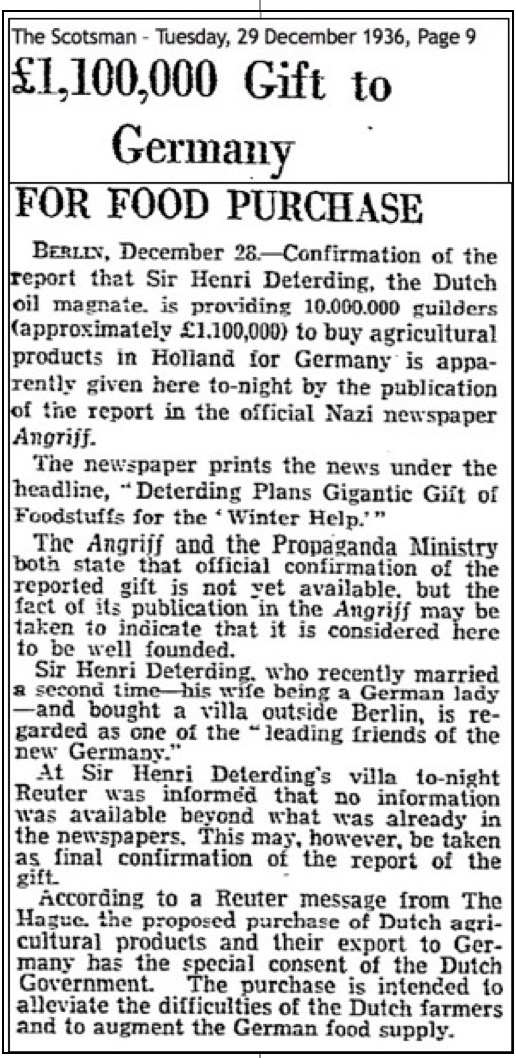
The Scotsman: £1,100,000 Gift to Germany FOR FOOD PURCHASE: 29 December 1936 (Contains confirmation of the report of the gift)137 The Manchester Guardian: £1,000,000 TO BUY FOOD: Helping Germany: SIR H. DETERDING PROVIDES MONEY: Tuesday 29 December 1936,138 Extract £1,000.000 TO BUY FOOD Helping Germany SIR H. DETERDING PROVIDES MONEY The report is published in the official Nazi newspaper “Angriff,” under the headline “Deterding Plans Gigantic Gift of Foodstuff for the “Winter Help.” THE TIMES: “DUTCH HELP FOR GERMANY”: 30 December 1936.139 Extract: Sir Henri Deterding has drawn up a scheme by which the entire surplus of Dutch agricultural products is to be bought and transported to Germany. There it will be sold in marks and the revenue will be handed over to the German Winter Help organization. The Straits Times, 30 December 1936, page 11:140 Extract Sir Henri Deterding And The Nazis. Berlin, Dec. 20. The Dutch oil king, Sir Henri Deterding, is giving 10,000,000 Dutch florins to buy agricultural products in Holland for Germany. The official Nazi organ, Der Angriff, describes the gift as a gigantic one of foodstuffs for “the winter help.”
Sir Henri has long been regarded as one of the leading friends of the new Germany.–Reuters Wireless. SAN ANTONIO EXPRESS: DUTCH SHELL HEAD TO BUY DUTCH FARM PRODUCTS FOR GERMANY: Wednesday 30 December 1936.141 Extracts: DUTCH SHELL HEAD TO BUY DUTCH FARM PRODUCTS FOR GERMANY The rise of a new agrarian party in the Netherlands, dominated by Sir Henri Deterding, may result from the oil magnate’s large-scale purchases of Dutch farm products for Germany, officials here said today. Another result may be preferential treatment for Sir Henri’s oil interests in a grateful Germany, these authorities indicated. Sir Henri, chairman of the Royal Dutch Petroleum Company, a Hollander recently married to a German woman, yesterday announced he was making available 10,000,000 guilders (about $5,400,000) to buy products of Dutch farms – which have had a hard time finding markets- for shipment to Germany, where shortage of foodstuffs is a serious problem. The Argus (Melbourne) Wednesday 30 December 1936 Page 1142 Extract: With the object of assisting Dutch farmers, Sir Henri Deterding has given £1,000,000 for the purchase of farm products for export to Germany. The Advertiser (Adelaide, SA Thursday 31 December 1936 Page 17: Complete Article143 DUTCHMAN’S GIFT TO GERMANY Communism And Trade Barriers Aimed At Australian Associated Pres. THE HAGUE, December 29.
Indicating that his gift of £1,000,000 to purchase produce for export to Germany was aimed at circumventing economic restrictions and communism. Henri Deterding, Director-General of the Royal Dutch Petroleum Co., said today: “The main object of the Communists is to prevent co-operation between nations. They therefore started to create trouble in Spain six years ago, and the result is now daily visible.” Britain, he said, could be thanked for her policy of non-intervention which had prevented greater trouble among other Powers whose further co-operation would be the quickest remedy against infectious Communism. Reviewing the economic conditions obtaining in Holland, Sir Henri Deterding said that the only solution was the diversion of surplus products to a country where they were wanted. Trade restrictions between Germany and Holland could then be safely cancelled. Criticising the present gold policy, Sir Henri Deterding declared that not gold but products of labour would have to serve as the means of exchange. He asked for financial and other support for his scheme under the motto, “Western Cooperation.” Meanwhile 30,000 pigs and 1,000 tons of bacon have already been bought with his gift, and a new industry has been founded at Haarlem. It is expected that Sir Henri Deterding’s scheme will slightly increase the prices of dairy produce in the United Kingdom, of which Holland is a substantial supplier. Australia will undoubtedly benefit to some extent, but the increase in British purchases from individual nations is likely to be small. Australian circles hope that a considerable part of the gift will be devoted to buying Dutch eggs, which strongly compete with Australian eggs. This would be marked assistance and would go far to ensure a successful Australian export season. Version published 31 December 1936 on page 10 of The Sydney Morning Herald.144 SIR HENRI DETERDING’S CAMPAIGN. Reason for £1,000,000 Gift. LONDON, Dec. 30. Sir Henri Deterding, director-general of the Royal Dutch Petroleum Company, and a director of the Shell Transport and Trading Co., Ltd., who has given £1,000,000 for the purchase of Dutch produce for export to Germany, apparently intends the gift as part of the campaign against economic restrictions and Communism. “The main object of the Communists is to prevent co-operation between the nations,” he says. “They therefore started to create trouble in Spain six years ago, and the result is now visible. “Britain can be thanked for her policy of non-intervention, which has prevented greater trouble among other Powers, whose further co-operation will be the quickest remedy against infectious Communism.”Reviewing the economic conditions of Holland, Sir Henri Deterding expressed the opinion that the only solution was the diversion of the surplus products to a country where they were wanted. Restriction on trade between Germany and Holland could then be safely cancelled. He criticised the present gold policy, and urged that not gold but the products of labour would have to serve as the means of exchange. He asked for financial and other support of his scheme under the motto,”Western Co-operation.” Already 30,000 pigs and thousands of tons of bacon have been bought with the gift. AUSTRALIA MAY BENEFIT. It is expected that Sir Henri Deterding’s scheme will slightly increase dairy produce prices in the United Kingdom, of which Holland is a substantial supplier. Australia will undoubtedly benefit to some extent, but the increase In British purchases from individual nations is likely to be small. Australian circles hope that a considerable part of Sir Henri Deterding’s gift will be devoted to buying Dutch eggs, which strongly compete with Australian eggs. This would be of marked assistance at present, and would go far to ensure a successful Australian export season. A new institute has been founded n Harlem, by which a periodical will be issued under the editorship of Dr Dyt, the administrator of Sir Henri Deterding’s large estates in Mecklenburg (Germany). The Tass Agency, Moscow, reports a big decline in Russo-German trade, because of the impossibility of obtaining full value in foreign exchange for goods exported to Germany. The statement is clearly intended to answer French complaints that Russia Is exporting raw materials to Germany for the manufacture of munitions. Official figures show that Russian exports of manganese to Germany fell from 130,000 tons in 1935 to 11,000 tons in the first 10 months of this year.
Reuters report published on page 1 of The Singapore Free Press and Mercantile Advertiser on 31 December 1936:145 SIR HENRI DETERDING EXPLAINS BIG GIFT TO AID GERMANY Sir Henri Deterding, in an interview, said his gift of 10,000,000 florins to buy agricultural products in Holland for Germany was actuated by the necessity of doing away with cumbersome restrictions and helping to restart the free exchange of commodities. The world is starting to enthrone gold as its ruler, he said. That is wrong for the world as well as for gold. Reuter From the book “Hitler, Volume 1” by Konrad Heiden: Publisher Eugen Prager, 1936 – Biography & Autobiography – 388 pages146 Extract from page 224 They showed such exact knowledge that the agency of wire-pullers was immediately suspected, until in 1929 Hitler positively denied any financial connection with the East-Elbe Brown Coal Syndicate. On the other hand, financial connections with Sir Henry Deterding, head of the Koninklijke Shell Oil concern, owner of Russian oil wells confiscated by the Bolsheviks, and the main instigator of the anti-Bolshevik campaign, were never denied either directly or indirectly. Extract from The Aryan Path, Volume 7, Issue 6: Indian Institute of World Culture: Theosophy Co (India) Ltd 1936,147 Extract from page 262 Deterding, Director-General of Royal Dutch Shell, gave funds to the Hitler movement and even French munitions makers contributed to Hitler’s war chest.
1937
Time.com: “GERMANY: Petticoat Philanthropy?” Monday, Jan 11, 1937.148 Extract: Sir Henri, who was knighted by King George V in 1920, has for many years had his chief residence in London’s swank Mayfair, but last week he was sitting in his new house near the German capital and showed signs of developing into a good Berliner. His big Germanic gesture as 1937 opened was to place 10,000,000 Dutch guilders ($5.475,000) at the disposal of Dutch farmers…
Entry in the diary of Joseph Goebbels made on 12 January 1937.149 “Hilgenfeld says WHW Deterding has donated 40 million.” This was a reference to a 40 million Reichsmark donation made by Deterding to the German Winter Help Work, also known as the Winter Fund, a food donation scheme known by the acronym “WHW”. Part of the funds received were diverted by Goebbels for other purposes, for example to build a giant factory for Volkswagen. Background material on the organisation150 indicates that, in the prewar years, one of its largest revenue streams came from donations by companies and organisations, making the Winter’s Fund an important financier of Nazi welfare structures. As previously mentioned, Erich Hilgenfeld151 was a special envoy of Hitler. He was also Chief Director of the WHW, and became head of the associated Nationalsozialistische Volkswohlfahrt/People’s Welfare Organization (NSV) and in 1939, a Brigadeführer in the Waffen-SS.
The Advertiser (Adelaide), Saturday 23 January 1937 page 23152 Extract from page 23 Awaiting Goering’s Return Reports from other sources suggest that while Germany would undoubtedly welcome tentative conversations at present regarding possible economic readjustments, she will not allow any interference with her military Four-Year plan. She may even for that reason refuse Sir Henri Deterding’s offer to buy £1,000.000 worth of foodstuffs from Holland for Germany. Extracts from a New York Times article “Deterding to Distribute More Food in Germany published 8 June 1937:153 Some months ago he spent 10,000,000 florins on agricultural produce that could not be sold by normal means because of clearing regulations. He gave this to the German Winter relief. Sir Henri’s action met much criticism. It was said, for instance, that Germany’s situation was largely caused by her rearmament policy… Ignoring all criticism, the famous oil magnate announced today he would soon devote another large sum to the purchase of agricultural surplus, mainly vegetables, for distribution in Germany. Extracts from a New York Times article published 31 December 1937 under the headline “DETERDING AIDS REICH AS WAY TO BAR REDS”154 Wireless to THE NEW YORK TIMES AMSTERDAM. The Netherlands. Dec. 30.–In a statement appearing in the leading newspapers here, Sir Henri Deterding, chairman of the Royal Dutch Petroleum Company explains his plan to purchase about 10,000,000 guilders’ worth of Netherland cattle and agricultural products for the German food supply.
1938
Extracts from the book “The most powerful man in the world: The Life of Sir Henri Deterding”: By Glyn Roberts155 Extract from page 305. But Deterding was impressed, and the Dutch press reported that, through the agent Georg Bell, he had placed at Hitler’s disposal, while the party was “still in long clothes,” no less than four million guilders. This huge subsidy came at a decisive moment in the history of the growing Nazi movement. Let there be no doubt that, had it not been found, the whole racket might have collapsed and the history of Germany and of Europe might have had a different complexion. Extracts from page 317 The Daily Telegraph quoted the Vienna Arbeiter Zeitung which said that Bell was liaison officer between the Hitlerites and a big international magnate who had contributed much money to the Nazi cause. “Last year Dr. Bell with the Hitlerite leader Rosenberg met the magnate in London, and big credits for the Nazis followed.” The German writer Johannes Steel, who had had unique opportunities of studying from the inside the growth of the Nazi movement, its true aims and the sources of its financial and diplomatic backing, gave evidence, though his name was not used. Steel had worked as director of Germany’s Economic Intelligence Service, and knew all about the Nazis and their friends. He offered to explain to this body exactly where the Fascists who controlled Germany were getting money from in England; the man whose part he wished to reveal was Sir Henri Deterding. Extract from page 320 Sir Henri Deterding did not layoff the Nazis; he did not cease to praise their aims and achievements in public and in private, and he did not cease to assist them financially. Extract from page 322 The Nazi “bulwark against Bolshevism” had to be kept up; in 1931 reports were denied of a Deterding loan of £30,000,000 to be made in exchange for a petroleum monopoly. In the Presidential election of 1932, in which the two leading candidates were Adolf Hitler and Paul von Hindenburg, Deterding was accused, as Edgar Ansell Mowrer testifies in his “Germany Puts the Clock Back, of putting up a large sum of money for the Nazis on the understanding that success would give him a more favored position in the German oil market. On other occasions, figures as high as £55,000,000 were mentioned. Extract from page 322 running on to page 323 Sir Henri knew that Germany was on the brink of starvation, that wages were low and nutrition lower; he knew that unless every good friend of the Nazi regime was prepared to help to prop it up, it would very soon collapse in the face the wrath of the working people of Germany and the administrative incompetence of its heads. Food was the crux of the problem. Germany had little, and much of what she had was of poor quality and frequently made of chemicals or substitutes. Holland, on the other hand, had a large surplus. Extract from page 323 Sir Henri had a grand idea. All Holland’s agricultural surplus, itself at times an economic problem, should go to Germany, into the hands of the German Government, which would be that much further away from bankruptcy and the sack. Who would pay for it? Why, he would. It was worth it. Sir Henri had always been prepared to payout real money to prevent Bolshevism from making another conquest in Europe. His initial contribution to this scheme was quoted as being $5,500,000. Extract from page 324 The Nazis were doubtless delighted to receive an initial delivery of the bacon of thirty thousand pigs; and soon much more followed. One report spoke of “millions of tons” of bacon. Seven thousand railway wagons were used in the first immense delivery. Book reviews of “The Most Powerful Man in the World” in 1938. Information from a pdf of a New York Times book review by P.W. Wilson of “The Most Powerful Man in the World” by Glyn Roberts published 12 June 1938:156 Review based on information in the book states that Deterding married a German and became pro-Nazi and according to reports that Roberts believed to be trustworthy, gave a large sum to the Hitler movement to obtain a favoured position in the German oil market.
Extracts from A.F.P. book review of the Glyn Roberts biography of Sir Henri Deterding - “The Most Powerful Man in the World” - published on Sunday 12 June 1938 by The Milwaukee Journal under the headline: “Sir Henri Deterding Is the Arch-Villain in This Biography”:157 Two years ago Sir Henri Deterding, the Anglo-Dutch oil king and head of the Royal Dutch-Shell Group, retired as director general of the Royal Dutch unit, at the age of 70, though he remained on the board of directors. In his semiretirement, Sir Henri will feel flattered that his dear enemies, the leftists, still regard him as “the most powerful man in the world,” and they charge him with financing Hitler, admiring Mussolini and generally propping up “decadent capitalism: all over the world. Sir Henri is not merely a fascist, he is the cause of fascism in others, the paymaster and wet nurse of a dictatorship. Extracts from a book review of the Glyn Roberts biography of Sir Henri Deterding - “The Most Powerful Man in the World” - published on Sunday 12 June 1938 by The Galveston Daily News under the headline: “BIG OILMAN” A leftist Life of Sir Henri Deterding of Royal Dutch Shell:158 The author believes that the enormous financial and political power wielded by a really big-shot capitalist like Deterding is a very dangerous influence in world affairs – and particularly when such power is used, as Deterding, according to the author, used it in the post-war years to organize the forces of fascism in Europe, to wage an unremitting propaganda campaign against Soviet Russia and to subsidize the nazi movement in Germany. Besides subsidizing the nazis in the hope that Hitler will launch a crusade against Soviet Russia, Deterding, says the author, also admired Mussolini, sides with Franco, has his doubts about democracy, believes that youth should be “disciplined” and all “idlers” shot. As a businessman, his life has been an astonishing success, and his achievements in building up gigantic financial structures have been prodigious. The author readily admits all this, but grows alarmed because Deterding is on the fascist side – as if such a man could be on any other side! – and concludes his book by saying: “And we have seen the world which he, in many ways the most powerful man in it, has produced.
BOOK REVIEW BY JOHN B. CLARK OF MERCER UNIVERSITY159 of the book “The Most Powerful Man in the World. BY GLYN ROBERTS. (New York: Covici-Friede. 1938. Pp. 448. $3.00.) EXTRACT Deterding, though pretending to remain free from politics, has always been a political factor. His has been a crusade for capitalism. He has poured millions of dollars into the hands of Franco and the Fascist cause in Spain; has aided Hitler and the Nazi program in Germany; has admired Mussolini; and has given unstinted financial support to White Russia. All of the above information was published prior to the death of Sir Henri Deterding 4 February 1939 when he had the opportunity and ample funds to take legal action if defamed. 1939 Extract from the 1939 book “ARMIES OF SPIES”: By JOSEPH GOLLOMB160 George Bell, a Scotch engineer, was also a minor figure, but he was the agent of Sir Henri Deterding, the British oil king. Sir Henri and Adolf Hitler have had in common a plan to help themselves to Soviet Russia’s oil fields. Their alliance went back to the time when Hitler had not yet become Chancellor but was first getting there. Sir Henri, sensing an ally, contributed 4,000,000 gulden to Hitler’s growing party. The Alliance was so unsavoury to a large public and the contribution so heavy that Sir Henri used an intermediary the little known George Bell. 1940 Extract from page 21 of the WINNIPEG FREE PRESS, published Wednesday 12 June 1940 under the headline “FIFTH COLUMN”161 It had been said that powerful financial groups with Canadian connections had contributed to the Nazi movement in Germany, he said. Among those was Sir Henri Deterding of the Shell Oil company. Mr Caldwell emphasized he was dealing only with established facts.
The book “War in the Twentieth Century”: By Willard Waller162: Extract from page 350 The British oil magnate, the late Sir Henri Deterding, contributed to Hitler’s campaign funds because he saw in the Nazi movement an instrument to attack the Soviet Union and to regain his petroleum wells that the Russians had confiscated. Collected Works of Michal Kalecki: Volume VI: Studies in Applied Economics163 FROM PAGE 173 Subsequently, apparently not unfounded revelations have surfaced that Deterding had given large subsidies to Hitler who more than once has extended his offer in the role of the future conqueror of the Soviet Union in the services of international capitalism. An integral part of Hitler’s programme is forcing the separation from the USSR of the Ukraine and the Caucasus with its oilfields. Deterding’s subsidies for Hitler must have been large since, not content with these lofty dreams about the future triumphs of German arms, Deterding is said to have received much more concrete pledges from Hitler: the Nazi leader supposedly promised that after he comes to power, he will give Deterding the German oil monopoly in exchange for a payment of £1.5 million and a 20% share in the profits of the monopoly. 1942 Extract from the book “PATENTS FOR HITLER” by Günter Reimann164 Extract from page 22 Sir Henri Deterding had built up Royal Dutch Shell as his private world empire. He was respected and protected by foreign governments as the sovereign manager of that gigantic enterprise. He was interested in discovering and fostering those forces which would eliminate once and for all the danger of social or colonial revolutions. Therefore he was one of the earliest financial backers of the Fuehrer – long before Hitler came to power. In later years, when Nazi Germany rearmed, he was an ultra-appeaser. He made great donations (at the expense of Shell) to the Nazis, and he personally offered to supply the Third Reich with foodstuffs and vital raw materials, the acquisition of which was to be financed by foreign credits which he would undertake to arrange. On 25 October 1942, The Los Angeles Times published a review by Conrad Rank of a book authored by reporter Marquis Child’s, entitled: “I WRITE FROM WASHINGTON”.165 Child’s is described in the review as “trying to be eminently fair” in his appraisal of public figures. During his research, he had discovered “startling facts”, some relating to Shell and Sir Henri. Child’s said in his book: “…Sir Henri Deterding of Royal Dutch Shell was not himself innocent of working with Hitler. Sir Henri backed him with a huge sum when the Nazi party was about to fall; and it was the oil man’s objective to get Hitler to attack Russia so that Sir Henri might take over the Baku oil fields.” 1943 The Book “Way for America” by Alexander Laing166 EXTRACTS FROM PAGE 241 & 242 Edgar Ansel Mowrer published in 1933 a book entitled “Germany Puts the Clock Back.” In it he said (p. 146), “Sir Henri Deterding was accused by unfriendly Germans of having put up a considerable sum for the 1932 presidential campaign in the hope (or on the promise?) of being granted an oil monopoly in the Third Empire.” FROM PAGE 242 Deterding made it plain that he too considered Hitler’s dictatorship a stabilizing influence which could join in an orderly removal of the blunders of Versailles. If he was secretive about his early backing of the Nazis, later he came out as an earnest advocate of a scheme which greatly eased Hitler’s problems. Deterding put his own estate manager in charge of the Western Cooperation plan, under which benevolent Dutchmen bought up the Dutch food surplus and gave it to German organizations. Public acknowledgment of Deterding’s own first contribution to the scheme placed it at a sum which converts to more than five million dollars. This was after Hitler and his henchmen had committed some of their most loathesome brutalities.
From page 244: He is alleged to have spent millions helping Hitler to power. Whether he did or not, he expressed over and over again his admiration for Fascist methods and for a kind of international cooperation on his own terms. PAGE 245 Sir Henri was an unashamed admirer of Fascism. PAGE 247 Recalling these circumstances, ask yourself whether the opinion of the “most powerful man in the world” -the praiser of Mussolini and backer of Hitler-the announced hater of the Soviets–the autocrat of the second largest oil company in existence-had a decisive effect upon the course of the British government. PAGES 249 & 250 In desperate recognition of their mistake in backing the more dangerous of two tyrants, most Britons began to oppose the Hitler regime as much as they dared. Sir Henri then indicated where his own sympathies still lay by moving his headquarters from the house near Windsor Castle to another which he had recently purchased between Berlin and Rostok. He was buried on his German estate. The bishop who delivered the funeral oration said (according to the New York Times) that the oil man had fought Bolshevism with the “boldness of a Napoleon and the will-power of a Cromwell.” Placing the last wreath, an official emissary added, “In the name of Adolf Hitler, I greet you, Henri Deterding, the great friend of the Germans.” From the book “Maxim Litvinoff: Arthur Upham Pope”:167 Extract from page 173 …influential figure in the background was the rabidly reactionary Sir Henry Deterding, later a friend of Adolf Hider, who beyond doubt lavishingly financed a good deal of anti-Soviet propaganda.
1944
From the book “The Gentleman Talk of Peace”: By William B Ziff:168 Extract from page 337. The German Fuehrer had risen to power with the indirect assistance of powerful reactionary British groups. Industrial giants such as Henri Deterding, head of the vast Shell Oil combine, and the immensely wealthy Guinness family, are said to have contributed heavily to the Nazi war chest.
1945
Extract from a New York Times article published 19 October 1945 under the headline: U.S. FIRMS FUELED GERMANY FOR WAR:169 Extract Standard Oil and the Anglo-Netherland Royal Dutch Shell group also aided I.G. Farben in 1934 and 1935 to purchase large quantities of mineral-oil products, the report said. These products, including airplane benzine and lubricants, were bought for a market price of $20,000,000 and stored as reserve stocks.
From the book “The Plot against the Peace: A Warning to the Nation!”:170 Extract from page 100 “*Other international financial backers of Nazism in its early years included Sir Henri Deterding, Anglo-Dutch chairman of the oil trust Royal Dutch Shell;”
1946
From The New York Times article: “Propaganda Success in Britain Vaunted by Rosenberg to Hitler”: 10 January 1946,171 Extracts “NUREMBERG, Germany, Jan. 9- One of Alfred Rosenberg’s reports to Adolf Hitler on his work in winning friends for Nazism in foreign countries came to light today”: Rosenberg also told Hitler that “a firmer bond” had also been established between Rosenberg’s British division and Sir Henri Deterding, the oil magnate, and his associates’ From the book “Earth Could Be Fair: A Chronicle”: By Pierre Van Paassen:172 Extracts from pages 393 and 394 That fellow Hitler is the God-given leader Europe has needed for a long time. He is going to straighten things out a little. To begin with, he will get us the Baku oil fields back. That’s as certain as tomorrow’s sunrise. Deterding and Colijn are supporting him, and every decent businessman in the land. 1949 From the book “THE LIFE AND DEATH OF THE LUFTWAFFE”:173 The book makes reference to a portrait found in the country home of Sir Henri Deterding, signed by Hitler and containing the following inscription: “Sir Henry Deterding – in the name of the German people, for your noble donation of a million Reichsmarks.” 1954 From the book “Tycoons & Tyrant”:174 Extract from pages 110 and 111: It is generally believed that Sir Henry Deterding, the Dutch oil king, who owned an estate in Mecklenburg and supported all anti-communist movements, helped Hitler in a big way. It is alleged he gave as much as ten million marks in the course of the years. I have been unable to find concrete evidence to prove this point. Footnote on page 111:
Walter Gorlitz and Herbert A. Quint in their Adolf Hitler-eine Biographie (Stuttgart, Steingruben Verlag, 1952), p. 279, merely refer to Deterding as one of a number of financial backers.
1957
From the book “German-French Unity, Basis for European Peace.”175 Extracts From page 113 More illuminating than Dodd’s entry in his diary is an entry in a German diary, according to which General von Schleicher, while Chancellor, said early in January, 1933: Hitler must be, arrested, his Party dissolved and outlawed, the whole scandal of the Nazis’ revenues brought to light, their connection with the armaments industry abroad, with Deterding, with Ivar Kreuger made public. Pages 114 & 115 In the early thirties, Deterding regarded the struggle against the Communists as “the only task left for him to accomplish.” 24, He was, thus, a natural ally of Adolf Hitler. In 1932, the Netherlands’ press reported that the Dutchborn Sir Henri had subsidized the NSDAP with 4,000,000 gulden, a statement that was allegedly never denied. Immediately after the Reichstag fire, February 27, 1933, Bell brought Dr. Gerlich several important documents, one of which was a contract of the NSDAP, represented by Chief-of-Staff Roehm, with the English-Dutch petroleum King Deterding, concerning the financing of the SA in the years before the seizure of power, against the assurance to favor his oil interests after the seizure of power. Page 116 Deterding had also been a good friend of Hermann Göring ever since the latter’s early days. It is noteworthy that E. A. Mowrer heard “unfriendly Germans” accuse Deterding of having put up a considerable sum for the 1932 presidential campaign in the hope (“or on the promise?” Mowrer inserted) “of being granted an oil monopoly in the Third Empire.” When Sir Henri Deterding died in February, 1939, the German press was instructed not to mention that he had been a sincere friend of Nazi Germany. Extracts from page 117 If Sir Henri was thought liberal enough to give the weak British Fascist leader two million marks, it may be safety concluded that his contributions over the years to the Hitler movement, infinitely more important to him, comprised a good many millions of marks. He may surely be considered the largest single foreign financial backer of the NSDAP. One of these was Fritz Thyssen, who also mentioned to Mr. Emery Reves, the editor of his book I Paid Hitler ( New York, 1941), that Sir Henri Deterding was one of the foreigners who gave financial aid to Hitler. Page 180 These principles decreed by the victors in 1945 and 1946, lead logically to the conclusion that, for instance, Viscount Rothemere as an influential moral supporter, and Sir Henri Deterding as an outstanding financial supporter of the Hitler movement were Offenders, ranking as Activists, and would have been liable to the severe sanctions under Article IX. 1964 From the book “The Gestapo: a history of horror”:176 Page 29 In fact the S.S. settled bloody accounts, liquidated their adversaries and the accomplices of the old days who had become dangerous. They murdered the engineer, George Bell, who had acted as intermediary in the financial transactions between Hitler and Sir Henri Deterding: 1975 From the book “THE SEVEN SISTERS: THE GREAT OIL COMPANIES AND THE WORLD THEY MADE”177 Page 96
His influence on the company was erratic and as one Shell veteran recalls: ‘Deterding’s interventions were like thunderstorms; suddenly flattening a field of wheat, while leaving other fields un-scathed.’ The stately managers of Shell began to have the worrying impression that their Director-General was going mad, and still worse, going pro-Nazi. Page 97 He died six months before the outbreak of war: memorial services were held in all Shell offices in Germany and Hitler and Goering both sent wreaths to the funeral on his estate. 1979 Extracts from the book “WHO FINANCED HITLER” (The Secret Funding of Hitler’s Rise to Power): Published in 1979:178 Reference source for pages 319, 179 & 512 below From page 319 Deterding was one of the wealthiest men in the world. His clandestine meetings with Hitler’s representative gave little indication of the plots, intrigues, and secret transfers of money that were taking place between Deterding and Hitler. From page 323 The Dutch press stated that Deterding sent to Hitler, through Georg Bell, about four million guilders. Some said Sir Henri gave the Nazis money in exchange for their agreement to give him preferred standing in the German oil market when they came to power. In 1931, it was reported that Deterding made a loan of £30 million to Hitler in return for a promise of a petroleum monopoly. Some claimed the loan was as much as £55 million. Louis Lochner, former foreign correspondent and authority on the relation between Hitler and big business, mentioned an alleged “ten million marks” contribution by the Dutch oil lord to the Nazis. With so many sources agreeing on the matter, there can be little doubt that Deterding financed Hitler.
1983
From the book “The Windsor Secret - - New Revelations of The Nazi Connection”:180 Extracts from page 42: In mid-1933 Rosenberg made a second and last visit to Britain. He spent an entire weekend at the palatial home at Ascot of Sir Henry Deterding. Several newspapers gave reliable accounts of the visit. Reynolds Illustrated News wrote: “In the light of the present European situation, this purely private talk between Hitler’s foreign adviser (Rosenberg) and the dominant figure in European oil politics is of profound interest.” The meeting between Rosenberg and Deterding was significant because Deterding was one of the wealthiest men in the world, and it is a fact that in the 1930s he loaned Hitler between 30 and 55 million pounds. His clandestine meetings with Rosenberg, though, gave little indication of the plots, intrigues, and secret transfers of money that were occurring between Hitler and Deterding.
1984
Annual, Volumes 19-20: Obshtestvena kulturno-prosvetna organizat͡ sii͡ a na evreite v Narodna republika Bŭlgarii͡ a. T͡ Sentralno rŭkovodstvo: Published 1984.181 From page 165: According to the American journalist and historian P. Lockner, Henry Deterding alone had subsidized Hitler with 10,000,000 marks. (Henry Deterding was an English Petroleum tycoon.) From the book “The Blood of His Servants”:182 On page 63, Deterding is described as “a maniacal genius.” Extract from page 128 Ever since Sir Henry Deterding’s death in Berlin in 1939, the ties with Shell and its banker Mannheimer had dissolved. Even more, now that the war was going badly for the Nazis, Shell wanted to disassociate itself from Deterding’s fanatic devotion to Hitlerism.
1985
From Intercontinental press publication: 1985.183 Extract from page 325 One of Hitler’s earliest foreign financial backers was Sir Henri Deterding, head of the giant Royal Dutch/Shell oil company.
1988
Toward an American Revolution: Exposing the Constitution and Other Illusions:184 Extract from page 129 Sir Henry Deterding, Chairman of Royal Dutch Shell, pointed out in 1932, the “Nazis are a great stabilizing force which would come in handy against Soviet Russia.” 1992 Extract from the book “The Prize” By Daniel Yergin185 From page 369: For there was a risk that the Group could pass under the Nazi sway. The heart of the problem was Henri Deterding, the grand master of the company. He had continued to dominate the Group through the 1920s. “Sir Henri’s word is law,” observed a British official in 1927. “He can bind the Board of the Shell without their knowledge and consent.” In the mid-1930s, as he entered his seventies, Deterding had developed two infatuations. One was for his secretary, a young German woman. The other was for Adolf Hitler. Page 370 Deterding died in Germany in early 1939, six months before the war began. Strange and deeply disturbing rumors immediately reached London. Not only had the Nazis made much of his funeral, but they were also trying to take advantage of the circumstances of his death to gain control of the Royal Dutch/Shell Group.
From the book: “The Mexican petroleum industry in the twentieth century”:186 EXTRACT FROM PAGE 97 Accordingly, Deterding-who was certainly sympathetic to fascism–channeled cash to Hitler (“thanks to English money Hitler conquered Germany”), in the hope that Hitler would revalidate Royal-Dutch’s lost Caucasian concessions Extract from the book “George Bush: The Unauthorized Biography”:187 From page 47 Shell’s chairman, Sir Henri Deterding, helped sponsor Hitler’s rise to power, by arrangement with the royal family’s Bank of England Governor, Montagu Norman.(3) From the book “A CENTURY OF WAR”: “ANGLO-AMERICAN OIL POLITICS AND THE NEW WORLD ORDER”:188 From page 83 running on to page 84 The final London visit of Alfred Rosenberg was in May 1933, this time as one of the inner figures in the new Hitler government. He went directly to the country home in Buckhurst Park in Ascot of Sir Henri Deterding, the head of Royal Dutch Shell and arguably the world’s most influential businessman. According to English press accounts, the two had a warm and eventful discussion. Rosenberg had first met Deterding during his 1931 London trip. Royal Dutch Shell had intimate contact with, and provided support for the German NSDAP. Though the details were kept secret, reliable British reports of the day were that Deterding had provided substantial financial support to the Hitler project in its critical early phases.
1993
New York Times: Review/Television; The Epic Of Oil, Catalyst Of Conflict:189 Extract from the article: It concentrates especially on the unlikely partnership, out of which was born Royal Dutch Shell, between Marcus Samuel, the Jew from the East End of London who became the Lord Mayor of London, and Henri Deterding, the dashing Dutch oil man who turned into a Nazi supporter in his old age. See related article about the same PBS documentary published under the headline: “Film of Royal Dutch Shell founder Sir Henri Deterding giving a Nazi salute”190 The New York Times published an article in August 1933,191 reporting that the international financier J.P. Morgan had taken exception to an allegation in the Steel book, “Hitler as Frankenstein,“ that his firm had contributed to Nazi funds. The book was temporarily withdrawn and slip inserted stating: “The publishers are informed that this statement is without the slightest foundation in fact and that neither Mr Morgan nor the firm of J.P. Morgan & Co, nor any individual partner of the firm every make any contribution to Hitler or any other German organization.” There is no evidence of which I am aware of Deterding or Shell taking any such action in response to this or any other book on similar grounds. With regard to J.P. Morgan, many allegations about the firms’ alleged pandering to the Nazis have continued to be published over the years, up to current times; just Google “J.P. Morgan and the Nazis” on the web and within “Google Books”.
1997
From the book “The Trial of the Germans:192 Page 229 Some support of Hitler came from foreign countries. The Dutch oil magnate Henri Deterding, who had an estate in Mecklenburg, made sizable contributions. From the book “A Century In Oil”: The ‘Shell” Transport and Trading Company 1897-1937 by Stephen Howarth: Published in 1997,193 Page 187 Deterding had become increasingly right-wing, bordering, some said, on the megalomaniac. The Nazis, eager even after his death to exploit the publicly-avowed support of this world-famous individual, virtually hijacked his funeral: Field Marshal Goering, chief of the German air force, sent a wreath; so did Hitler… From an article by Andrew Rowell published on 15 November 1997 by The Guardian under the headline: “Unloveable Shell, the Goddess of Oil”:194 “After it merged in 1907 with its rival Royal Dutch, the Royal Dutch Shell company was formed; its first chairman was the Dutchman Henri Deterding. By the 1930s, Deterding had become infatuated with Adolf Hitler, and began secret negotiations with the German military to provide a year’s supply of oil on credit. In 1936, he was forced to resign over his Nazi sympathies.”
1998
From the book: “Hitler+Geli“240 According to information on pages 187 and 188, Ernst Rohm, head of the SA, entered into a secret agreement with Sir Henri Deterding, described as “an oil tycoon with a controlling interest in Royal Dutch Petroleum and the Shell group.” From an article published by The Observer: Oil behemoth that must evolve: 20 December 1998 (Page 34)195 Unfortunately, Deterding was also an authoritarian who was strongly attracted by the ideas of first Mussolini and then of Hitler’s Germany. The scandal forced Deterding to resign in 1936. 2000 Extract from the book “DOING BUSINESS WITH THE NAZIS”:196 From page 149 The American consul in Hamburg reported in 1934 that Deterding, because of his fear of the Soviet Union, was favourably inclined toward the German government as a necessary safeguard against the spread of communistic ideas in western Europe. The consul added: Sir Henri had contributed fairly large sums to the National Socialist treasury before the advent of the Party into power and since Herr Hitler’s assumption of the Chancellorship; he had offered to supply the Reich with all their oil requirements in return for payment in blocked reichsmarks …
Extracts from a book by F. William Engdahl “Anglo-American Oil Politics and the New World Order” published 21 February, 2001:197 EXTRACT FROM PAGE 100 OF THE BOOK On January 30, 1933 Adolf Hitler became Chancellor of the Reich. The final London visit of Alfred Rosenberg was in May 1933, this time as one of the inner figures in the new Hitler government. He went directly to the country home in Buckhurst Park in Ascot of Sir Henri Deterding, the head of Royal Dutch Shell and arguably the world’s most influential businessman. According to English press accounts, the two had a warm and eventful discussion. Rosenberg had first met Deterding during his 1931 London trip. Royal Dutch Shell had intimate contact and support to the German NSDAP. While the details were kept secret, reliable British reports of the day were that Deterding had provided substantial financial support to the Hitler Project in its critical early phases. 2002
From the book “Hidden Agenda: How the Duke of Windsor Betrayed the Allies”:198 Extract from pages 19 & 20 This is significant because Deterding was one of the wealthiest men in the world, and it can hardly be a coincidence that after Rosenberg’s visit in the early 1930s, Deterding loaned Hitler almost £55,000,000. From the book “Fathoming the Holocaust: A Social Problems Approach”:199 Extract from page 34 The party also solicited money from beyond German borders. Hitler himself went on several fund-raising tours in Switzerland, Austria and Czechoslovakia. Italian dictator Benito Mussolini had his government provide support. Through Rosenberg the party received money from wealthy British oilman Sir Henri Deterding.
Extract of a book review of “Sir Henri Deterding and Royal Dutch-Shell: Changing Control of World Oil 1900-1940”:200 When he died early in 1939 and his wife, against family wishes, had him buried in that country, the regime exploited the burial as a propaganda coup, and the Foreign Office in London incorrectly feared lest his Shell shares might fall into German hands. 2003 From the book “The Hitler/Hess deception: British intelligence’s bestkept secret of the Second World War”:201 Extracts from pages 206 & 207 After meeting the persuasive Rosenberg, Deterding would loan Hitler the enormous sum of £55 million. 2005 From the book “The Weimar Republic”:202 Extract from page 115 Germans in foreign countries, and some magnates such as Ford, Deterding and Kreuger, provided the NSDAP with large sums, partly from ideological motives (anti-Semitism) and partly from political and economic calculation. 2006 From the book “Energy for the 21st Century: A Comprehensive Guide to Conventional and Alternative Sources”:203 Extracts from page 156 Deterding became a Nazi sympathiser because of their determination to rip communism out root and branch. Deterding would not be the only industrialist, statesman, monarchist, or church leader to support the Nazis for this reason. The board of directors removed Deterding from his position in 1936 by forcing him to retire, and he died six months before the war started. 2007 There is also a considerable volume of information of the Shell/Deterding financial support for Nazi Germany in the “History of Royal Dutch Shell, volumes 1 to 3,” published in 2007. 2008 Extract from a review of F. William Engdahl’s book “A Century of War” by Stephen Lendman204 The Weimar government was weak, the scheme was to topple it, and it made Hitler Reichschancellor on January 30, 1933. On August 2, 1934 he seized absolute power as Fuhrer. British interests backed him, Royal Dutch Shell financed him, and the Bank of England “moved with indecent haste to reward” him with a vital line of credit. Information from a book published in 2008 “The Nazi Hydra in America: Suppressed History of a Century: Wall Street and the Rise of the Fourth Reich”205 According to this book, Johannes Steel testified during an inquiry to Deterdings financial support for the Nazis. The book also says that Deterding made a 20 million pound loan to Hitler: Extracts from pages 48/49 “At the inquiry into the Reichstag fire, Johannes Steel, a former agent of the German Economic Intelligence Service, testified to Deterding’s financial support for the Nazis. The Dutch press reported that Deterding had given Hitler about 4 million guilders. By the 1930s, Deterding began secret negotiations with the German military to provide a year’s supply of oil on credit. In 1931, Deterding made a 20 million pound loan to Hitler, allegedly for a promise of a petroleum monopoly once the Nazis were in power. In May 1933, Alfred Rosenberg, Hitler’s representative, met with Deterding, confirming the close link between big oil and the Nazis. 2009
From the book “Shadow Rulers: The Euro-American Trojan Horse”:206 Page 401 Another Bank investor that came aboard the Hitler boat was Sir Henry Deterding. Head of Royal Dutch-Shell Oil, whose motives, according to Marrs, arose from the Fuhrer’s Mein Kampf disclosures of a plot to regain the oil field assets of Baku, Grozny and Maikop, through the subjugation of Russia.
Publisher: iUniverse.com (11 Oct 2009) 207 pages: ISBN-10: 1440122962 ISBN-13: 978-1440122965
2010
From the book “Wall Street and the Rise of Hitler”:208 Extracts from pages 101 and 102 There is circumstantial evidence that Deterding was pro-Nazi. He later went to live in Hitler’s Germany and increased his share of the German petroleum market. So there may have been some contributions, but these have not been proven. (The author, Mr. Sutton, had apparently not seem some the evidence accumulated herein, for example in the form of contemporaneous news reports of Deterdings huge donations of food to Nazi Germany while he was a Shell director seeking a monopoly position in the German petroleum market.) 2011 From Fortune Magazine, an article by Christian Stadler “5 ways to keep your company alive”:209 Published 7 March 2011.
In the years before World War II, Shell was very much a one-man-band led by Sir Henri Deterding. Under Deterding’s firm control, the group prospered but also flirted with disaster as he saw Adolf Hitler as the man most likely to preserve Europe from Communism. Luckily for Shell, Deterding retired in 1936 before he could make any disastrous commitments. In fact, as previously pointed out a number of times, Deterding remained a director of multiple companies within the Royal Dutch Shell Group until the day he died in February 1939. And the evidence shows that he did make spectacular donations to Nazi Germany reported around the world. Shell funded adverts in a Nazi Newspaper, Volkischer Beobachter.210 Quote from page 478, History of Royal Dutch Shell Volume 1: 1890 -1939 Even before Hitler’s appointment as Chancellor, Deterding’s fervent anticommunism and opinions about general economic policy had received favourable treatment in the Volkischer Beobachter, the Nazi newspaper which also sported conspicuous advertising for Shell products.
Cyrano article reporting on Funeral of Sir Henri Deterding (translated from French to English)211 Deterding, the financier of Hitler Sir Henri Deterding, the tycoon of the oil industry, Anglo-Holland, had a fine funeral. All the press praised, appropriately, the great captain of industry, the tycoon and financier of an Almighty City. But there is one aspect of his life that went unspoken: Sir Henry Deterding was one of Hitler’s financial secrets. On many occasions, he made huge sums available to the German Führer. Only recently – in 1937 – he made a donation of 200 million francs to the Hitler’s government. Sir Henry was a passionate admirer of Hitler, with whom he had frequent interviews. His covert mission, in favour of the Reich, was to improve business relations with Britain, and was of great importance. It explains some of England’s complacency towards Hitler. The Fuhrer has not been ungrateful. On the death of Sir Henri Deterding he ordered expressions of sympathy. His special envoy, Hilgenfeld, laid a beautiful wreath at the Tomb of the potentate of Royal Dutch, saying: On behalf of the Fuhrer Adolf Hitler, I salute you Henrich Deterding, great friend of the Germans A monument will be erected in Mecklenburg, to Sir Henry, and will bear the simple inscription: A friend ( from / of / to ) Germany Flag, no flag TWO CARTOONS Heading on first cartoon: TEGEN OORLOG EN FASCISME (AGAINST WAR AND FASCISM):212 A young Dutchman, Marinus van der Lubbe, was found guilty of starting the Reichstag fire213 which took place in 1933 and was executed in 1934. The blaze was widely believed to be a result of an international conspiracy – provocative arson – involving Deterding, Hitler and Johannes Bell. Heading on second cartoon: “VAN DER LUBBE’S MEDEPLIGHTIGEN (VAN DER LUBBE’S ACCOMPLICES):214 All three – Deterding, Hitler and Johannes Bell – were depicted as accomplices in the Reichstag fire. Both cartoons made it plain that Deterding was Hitler’s paymaster. There is no evidence that Sir Henri, then Director-General of Royal Dutch Shell, took issue with these assertions. Both cartoons, from the International Institute of Social History, can be viewed on page 477 of “A History of Royal Dutch Shell: Volume 1”: The following extracts come from the same source. Extract from page 483 The grand gesture Deterding made after his retirement illustrates how he liked to use his money. In December 1936 he donated, with much fanfare, 215 million guilders from his personal fortune to set up a fund for buying up surplus foodstuffs in the Netherlands and selling them in Germany, purportedly to ease the plight of Dutch farmers and German consumers, equally hit by the trade barriers and exchange restrictions between the two countries. The proceeds of this deal would be donated to the Nazi charity Winterhilfswerk. Extracts from page 485 Moreover, Deterding was widely reported as making rash promises to German officials. In June 1934, during the negotiations between the oil companies and the government over bulk installations, the British Ambassador to Germany, Sir Eric Phipps, heard information that Deterding had promised Hitler to have the Group supply one year’s worth of products on credit to Germany should its economic situation become desperate. No records corroborating Sir Eric’s information have been found in the company archives. However, Rosenberg noted in his diary that he had made a deal with Deterding in May 1934 that the Group would stock one million tons of oil products in underground tank farms built by the Group, only to see the transaction founder on red tape in German departments. Whether true or not, the story reached Deterding’s board colleagues, feeding a nagging suspicion about the soundness of his judgement.
Notes
117. Information from pages 481 and 482, “A History of Royal Dutch Shell: Volume1” ↩
118. Military Tribunals Document from the Nuremberg War Crimes Trials. This document United States of America Against Krauch and Others (Case VI). Part 1. See index page and page marked as “14.” “Krauch” is Professor Dr. Carl Krauch, head of a section at I.G. Farben later given key roles in the German government. See page marked “23” ↩
119. Link to pdf of an Associated Press report published by the New York Times on 18 April 1932 ↩
120. Evidence from Dutch Newspaper “Limburger Koerier”. The quoted text printed in red and associated receipt and newspaper article are all displayed on page 480 of “A History of Royal Dutch Shell Volume 1” ↩
121. Link to Wikipedia article: “Adolf Hitler” - see section “Appointment as chancellor” Source 1 ↩
122. Information from page 470 of “A History of Royal Dutch Shell: Volume 1” ↩
123. Link to shellnews.net webpage containing a number of pages, including pages 22, 23, 46, 47, 87, 88, 89, 90, 91, 92 and 93 from the book “Hitler As Frankenstein” published by Wisart & Co in 1933. ↩
124. Link to Wikipedia article “Johannes Steele” Source 1 ↩
125. Link to royaldutchshellplc.com webpage containing page 4 of Stevens Point Daily Journal published Friday, 1 December 1933 and the article: “Ex-Nazi Member ‘Opens’ Mystery of Hitler Finances” ↩
126. Link to shellnews.net webpage containing preliminary pages and page 114 from a book by Edgar Mower first published in 1933 by Penguin Books under the title: “GERMANY PUTS THE CLOCK BACK” ↩
127. Extract from page 99 of the book published in 1934 “The Second World War” authored by Johannes Steel. ↩
128. Link to royaldutchshellplc.com article “The Second World War by Johannes Steel” published by The Daily Gleaner newspaper on Thursday 8 November 1934 Source 1 ↩
129. Link to shellnews.net webpage containing pdf copy of the publication by Quincy Howe published in 1934 by Robert M McBride and Company in USA under the title: “WORLD DIARY 1929 - 1934” ↩
130. Link to a royaldutchshellplc.com webpage containing an article published on page 2 of The Singapore Free Press and Mercantile Advertiser on 15 December 1934 under the headline “Petrol Monopoly” ↩
131. Link to royaldutchshellplc.com webpage containing an article published by The Port Arthur News Editorial page (page 4) on 13 January, 1935 under the headline: Sidelights on Foreign Affairs” ↩
132. Link to royaldutchshellplc.com webpage containing a Associated Press article published Monday 11 February 1935 on page 5 of The Titusville (PA.) Herald under the headline: “Oil Interests Are Worried” ↩
133. Link to google.com search webpage containing an article published on page 4 of the Meriden Record on 13 September 1935 under the headline “Europe’s Oil Napoleon Seen Winner Over U.S. Rivals For World Trade As Ethiopian Concession Fades” ↩
134. Link to royaldutchshellplc.com webpage containing 53. Also Google translation. ↩
135. Link to royaldutchshellplc.com webpage containing text of an article published 28 December 1936 by The Advertiser newspaper in Adelaide Australia under the headline: “ UNEXPECTED AID FOR GERMANY” Source 1 ↩
136. Link to royaldutchshellplc.com webpage containing copy of original article published on 28 December 1936 by The Nation: Dutch State and literary newspaper. ↩
137. Link to royaldutchshellplc.com webpage containing copy of original article published 29 December 1936 by The Scotsman newspaper. ↩
138. Link to royaldutchshellplc.com webpage containing copy of original article published 29 December 1936 by The Manchester Guardian newspaper. ↩
139. Link to shellnews.net webpage containing a copy of an article published by The Times newspaper on 30 December 1936 under the headline: “Dutch Help For Germany.” ↩
140. Link to a royaldutchshellplc.com webpage containing am article published on page 11 of The Straights Times on 30 December 1936 under the headline; “Sir Henri Deterding And The Nazis” Source 1 ↩
141. Link to royaldutchshellplc.com webpage containing a copy of an article published on 30 December 1936 by the San Antonio Express newspaper under the headline: “DUTCH SHELL HEAD TO BUY DUTCH FARM PRODUCTS FOR GERMANY.” ↩
142. Link to royaldutchshellplc.com webpage containing news summary text of an article published 30 December 1936 by The Argus newspaper in Melbourne Australia. ↩
143. Link to royaldutchshellplc.com webpage containing text of an article published 31 December 1936 by The Advertiser newspaper in Adelaide Australia under the headline: “DUTCHMANS GIFT TO GERMANY” ↩
144. Link to royaldutchshellplc.com webpage containing text of an article published on page 10 of The Sydney Morning Herald on 31 December 1936 under the headline: “SIR HENRI DETERDING’S CAMPAIGN” Source 1 ↩
145. Link to royaldutchshellplc.com webpage containing a Reuters report published on page 1 of The Singapore Free Press and Mercantile Advertiser on 31 December 1936 under the headline: “SIR HENRI DETERDING EXPLAINS BIG GIFT TO AID GERMANY” ↩
146. Extract from the book “Hitler, Volume 1” by Konrad Heiden published by Eugen Prager in 1936 ↩
147. Extract from The Aryan Path, Volume 7, Issue 6: Indian Institute of World Culture: Theosophy Co (India) Ltd 1936 ↩
148. Extract from an article published by Time Magazine on Monday 11 January 1937 under the headline: GERMANY: Petticoat Philanthropy” ↩
149. Entry in the diary of Joseph Goebbels made on 12 January 1937: Elke Fröhlich: The Diaries of Joseph Goebbels, all fragments, Munich, New York, London, Paris 1987, Part 1, Volume 3, page 8 ↩
150. Link to Google translated Wikipedia article “Deterding” Then click on “Winter Relief” link within last bullet point in section “Financial support of National Socialism”: Extracts as of 9 July 2014. ↩
151. See Wikipedia article “Erich Hilgenfeldt” Source 1 ↩
152. Link to royaldutchshellplc.com webpage containing text of an article on page 23 of The Advertiser Newspaper (Adelaide) published on Saturday 23 January 1937 ↩
153. Link to a royaldutchshellplc.com webpage containing an article published by The New York Times on 8 June 1937 under the headline: “Deterding to Distribute More Food in Germany” Source 1 ↩
154. Link to a royaldutchshellplc.com webpage containing a New York Times article published 31 December 1935 under the headline: “DETERDING AIDS REICH AS WAY TO BAR REDS” Source 1 ↩
155. Extracts from the book “The most powerful man in the world: The Life of Sir Henri Deterding”: By Glyn Roberts: Published in June 1938 by Covici Friede Publishers, New York ISBN 0-88355-301-5 ↩
156. Link to pdf of a New York Times book review by P.W. Wilson of “The Most Powerful Man in the World” by Glyn Roberts published 12 June 1938 published under the headline: “Powerful Henri Deterding Who Rivals Standard Oil” ↩
157. Link to pdf of an A.F.P. book review of the Glyn Roberts biography of Sir Henri Deterding - “The Most Powerful Man in the World” - published on Sunday 12 June 1938 by The Milwaukee Journal under the headline: “Sir Henri Deterding Is the Arch-Villain in This Biography”: ↩
158. Link to royaldutchshellplc.com webpage containing a book review of the Glyn Roberts biography of Sir Henri Deterding - “The Most Powerful Man in the World” - published on Sunday 12 June 1938 by The Galveston Daily News under the headline: “BIG OILMAN” A leftist Life of Sir Henri Deterding of Royal Dutch Shell” ↩
159. Link to shellnews.net webpage containing extract from a 1939 review of the Glyn Roberts book “The Most Powerful Man in thee World: Sir Henri Deterding” published in June 1938. ↩
160. Link to shellnews.net webpage containing an extract from page 51 of the book “ARMIES OF SPIES” by JOSEPH GOLLOMB published by THE MACMILLAN COMPANY, NEW YORK, IN 1939 ↩
161. Link to a royaldutchshellplc.com webpage containing an extract from page 21 of an article headline:“FIFTH COLUMN” ↩
162. Extract from page 350 of The book “War in the Twentieth Century”: By Willard Waller:. Publisher: Dryden Press. Publication: New York: 1940. ↩
163. Link to amazon.com webpage containing information about the book “Collected Works of Michal Kalecki: Volume VI: Studies in Applied Economics” by Michal Kalecki, Jerzy Osiatynski 1927-1941 ↩
164. Extract from the book “PATENTS FOR HITLER” by Günter Reimann Copyright 1942 PRINTED IN GREAT BRITAIN BY RICHARD CLAY AND COMPANY, LTD., BUNGAY, SUFFOLK. See also Guenter Reimann obituary published in the guardian newspaper 1 March 2005 ↩
165. Link to shellnews.net webpage containing a review by Conrad Rank of a book authored by reporter Marquis Child’s, entitled: “I WRITE FROM WASHINGTON”. ↩
166. Link to shellnews.net webpage containing extract pages from The Book “Way for America” by Alexander Laing Published in 1943 by Duell, Sloan and Peace: 378 pages ↩
167. Extract from the book “Maxim Litvinoff: Arthur Upham Pope”: Published by L B Fisher in 1943: 530 pages ↩
168. Extract from the book “The Gentleman Talk of Peace” By William B Ziff: Published by Macmillan Company in 1944: Length 530 pages ↩
169. Link to pdf of a New York Times article published 19 October 1945 under the headline : “U.S. FIRMS FUELED GERMANY FOR WAR” ↩
170. Extract from the book “The Plot against the Peace: A Warning to the Nation!”: By Michael Sayers and Albert E. Kahn. Publisher: Dial. New York. Publication Year: 1945. ↩
171. From The New York Times article: “Propaganda Success in Britain Vaunted by Rosenberg to Hitler”: 10 January 1946 ↩
172. From the book “Earth Could Be Fair: A Chronicle”: By Pierre Van Paassen: Published by The Dial Press. New York. Publication Year: 1946. ↩
173. From the book “THE LIFE AND DEATH OF THE LUFTWAFFE”: By Werner Baumbach first published in 1949. Translated into English in 1960. See also article “Adolf Hitler thanks Sir Henri Deterding for donation of a million reichs-marks.” ↩
174. From the book “Tycoons & Tyrant”: By Louis P. Lochner. Published in 1954 by Henry Regnery Company in Chicago. ↩
175. From the book “German-French Unity, Basis for European Peace.” By Hermann Lutz:. Publisher: H. Regnery Co: Chicago. Publication Year: 1957 ↩
176. From the book “The Gestapo: a history of horror”: By Jacques Delarue: Publisher Morrow, Published 1964 – History – 384 pages ↩
177. Link to royaldutchshellplc.com webpage containing extracts from the book “THE SEVEN SISTERS: THE GREAT OIL COMPANIES AND THE WORLD THEY MADE”: By Anthony Sampson: 1975 ↩
178. Extracts from the book “WHO FINANCED HITLER” (The Secret Funding of Hitler’s Rise to Power) 1919-1933. By James E. Pool III and Suzanne Pool: Published in 1979 by Macdonald and Jane’s Publishers Limited: ISBN 0 354 04395 1 ↩
179. Link to shell.com webpage headlined “Our history” ↩
180. Extracts from the book “The Windsor Secret - New Revelations of The Nazi Connection”: By Sir Peter Allen: Published in 1983 by Stein and Day, New York. Originally published in the UK as “The Crown and the Swastika.” ↩
181. Link to Google webpage containing searched information from Annual, Volumes 19-20: ͡ ͡ a͡ na evreite v Narodna republika Bŭlgariia. Obshtestvena kulturno-prosvetna organizatsii ͡ TSentralno rŭkovodstvo: Published 1984 ↩
182. From the book “The Blood of His Servants”: By Malcolm C. MacPherson: Published by The New York Times Book Co in 1984. ↩
183. Extract from page 325 of an Intercontinental press publication in 1985 ↩
184. Extract from page 129 of the book “Toward an American Revolution: Exposing the Constitution and Other Illusions”: By Jerry Fresia: Published by South End Press, Boston, in 1988. ↩
185. Extracts from the book “The Prize” By Daniel Yergin published in 1992 by FREE PRESS ISBN 0-671-79932-0 ↩
186. Extract from page 97 of the book: “The Mexican petroleum industry in the twentieth century”: By Jonathan Charles Brown, Alan Knight: 352 pages: Publisher: University of Texas Press (1 Jun 1992) Language English: ISBN-10: 0292765339: ISBN-13: 978-0292765337 ↩
187. Extract from the book “George Bush: The Unauthorized Biography”: By Webster G. Tarpley and Anton Chaitkin: published by Executive Intelligence Review 1992 ISBN: 0-943235-05-7 ↩
188. Extract from page 83 from the book “A CENTURY OF WAR”: “ANGLO-AMERICAN OIL POLITICS AND THE NEW WORLD ORDER”: by William Engdahl first published in 1992 by Pluto Press ↩
189. New York Times: Review/Television; The Epic Of Oil, Catalyst Of Con ict: published 11 January 1993: Review by Walter Goodman of the PBS TV documentary based on the book “The Prize” by Daniel Yergin. ↩
190. Link to royaldutchshellplc.com article published 23 June 2014 under the headline “Film of Royal Dutch Founder Sir Henri Deterding giving a Nazi salute.” ↩
191. New York Times article published 25 August 1933 under the headline: “J.P. Morgan Denies Giving Any Sums to Nazis; Accused With Others in Book by a German.” ↩
192. Extract from page 229 of the book “The Trial of the Germans: An account of the Twenty-two Defendants before the International Military Tribunal at Nuremberg:” By Eugene Davidson: Pub. Date: October 1997: Publisher: University of Missouri Press: ISBN-13: 9780826211392: ISBN: 0826211399 ↩
193. Extract from page 187 of the book “A Century In Oil”: The “Shell” Transport and Trading Company 1897-1937” By Stephen Howarth, published in 1997 by Weidenfeld and Nicolson, London. ↩
194. Link to royaldutchshellplc.com webpage containing an article by Andrew Rowell published on 15 November 1997 by The Guardian newspaper under the headline: “Unloveable Shell, the Goddess of Oil” Source 1 ↩
195. Link to a royaldutchshellplc.com webpage containing an extract from an article published by The Observer: Oil behemoth that must evolve: 20 December 1998 (Page 34) ↩
196. Extract from the book “DOING BUSINESS WITH THE NAZIS”: Author Neil Forbes: First published in 2000 in Great Britain by Frank Cass Publishers: ISBN 978-0-7146-8168-9 ↩
197. Link to royaldutchshellplc.com webpage containing information from the book by F. William Engdahl “Anglo-American Oil Politics and the New World Order” published 21 February, 2001 by edition.engdahl ISBN-10: 3981326326. ↩
198. From the book “Hidden Agenda: How the Duke of Windsor Betrayed the Allies”: By Martin Allen: Publisher M. Evans and Co., Published 2002: Length 342 pages ↩
199. Link to Google Books webpage containing search information from page 34 of the book “Fathoming the Holocaust: A Social Problems Approach”: by Ronald J. Berger Published in 2002 ↩
200. Link to a shellnews.net webpage containing a review by T.A.B. Corley of the book “Sir Henri Deterding and Royal Dutch-Shell: Changing Control of World Oil 1900-1940” by PAUL HENDRIX: (Bristol: Bristol Academic Press, 2002. Copyright 2003 Frank Cass & Company Ltd. ↩
201. Extracts from the book “The Hitler/Hess deception: British intelligence’s best-kept secret of the Second World War”: Published by HarperCollins, 2003: 324 pages ↩
202. From the book “The Weimar Republic”: By Eberhard Kolb (Translated by P. S. Falla and R. J. Park): Published by Routledge in London. 2005. ↩
203. From the book “Energy for the 21st Century: A Comprehensive Guide to Conventional and Alternative Sources”: By Roy L. Nersesian: 402 pages Publisher: M.E. Sharpe (15 Dec 2006) ISBN-I0: 0765613239 ISBN-13: 978-0765613233 ↩
204. Extract from a published review of F. William Engdahl's book “A Century of War” by Stephen Lendman of Global Research: Published 12 February 2008 ↩
205. Extracts from pages 48 and 49 of the book “The Nazi Hydra in America: Suppressed History of a Century: Wall Street and the Rise of the Fourth Reich,” authored by Glen Yeadon and John Hawkins, published by Progressive Press in October 2008. ↩
206. From the book “Shadow Rulers: The Euro-American Trojan Horse”: By Ernest Millington: ↩
207. Link to royaldutchshellplc.com article published 23 April 1998 ↩
208. From the book “Wall Street and the Rise of Hitler”: By Antony Cyril Sutton: 220 pages: Publisher: Clairview Books (5 Nov 2010): Language English • ISBN-IO: 1905570279: ISBN-13: 978-1905570270 ↩
209. From Fortune Magazine, an article by Christian Stadler “5 ways to keep your company alive”: Published 7 March 2011. ↩
210. Shell funded adverts in a Nazi Newspaper, Volkischer Beobachter. Extract from Page 478 “A History of Royal Dutch Shell Volume 1” ↩
211. Undated article from a French publication “Cyrano” reporting on the Funeral of Sir Henri Deterding (translated from French to English). Headline: “Deterding, the nancier of Hitler” ↩
212. Cartoon from the archive of the International Institute of Social History – headline: “TEGEN OORLOG EN FASCISME” ↩
213. Link to Wikipedia article “Reichstag re” ↩
214. Cartoon from the archive of the International Institute of Social History – headline: “VAN DER LUBBE’S MEDEPLIGHTIGEN” ↩
215. Petroleum Argus FSU Energy published 27 October 2006: “Shell weighs its options.”: See also Johnson’s Russia List/Interfax article published November 2006: “Russian Ministry Says Sakhalin Energy Measures on Environment Unsatisfactory” ↩
Chapter 8: Deterding support for Nazi Stormtroopers
The Sturmabteilung216 (SA), the paramilitary wing of the German Nazi Party, played an important role in Hitler’s rise to power. SA men were known as “brownshirts.”217 This chapter gathers evidence linking Deterding to the SA through Georg Bell and the Bell papers later discussed in Nuremberg-related material. The allegation is serious: that Deterding secretly backed the SA in return for preferential treatment of Shell’s business interests in Germany.
The following are extracts from “The Nuremberg Trial” by Joe J. Heydecker and Johannes Leeb.218 Extracts from the FOREWORD: This book is an attempt to make the material of the Nuremberg Trial available to a wider public in a comprehensible form. In concentrating almost completely on the factual contents of the Trial, the authors have attempted to present the history of the Trial itself in all its aspects, based on documents, depositions, records, and historical facts. They have left nothing to speculation or imagination; they have strictly avoided all romantic embellishment and additions. Thus everything in this book is historically accurate, every action and reaction of the protagonists is vouched for by eyewitnesses, every event provable, every quoted word was actually spoken. Extracts from pages 110 & 111 covering The Reichstag Fire: Thus, all those who had been in the know, and all who had unconsciously come upon the facts of the fire, had lost their lives. Hanussen’s presumable informant, the engineer Georg Bell, who had his information from the highest Nazi circles, escaped to Austria, but before leaving he gave some secret Nazi papers to a Munich newspaper editor, Fritz Michael Gerlich. But his office was likely to be searched, and so those papers had to disappear as quickly as possible. The last to see them was the former State President of Wiirttemberg, Eugen Anton Bolz. Gerlich’s secretary, Miss Breit, clearly remembered the contents of the documents. They contained: detailed facts about the Reichstag fire; an agreement between the Nazi Party and the British oil millionaire, Deterding, concerning the secret backing of the SA in return for preferential treatment of his German interests; a list of witnesses to the fact that Hitler had murdered his niece Geli Raubal; plans for discrediting the Church; plans of SA Chief of Staff Roehm for getting rid of Hitler after the Nazis’ seizure of power. The men who had seen these dangerous documents had to die. Bell was ferreted out by SA unit commander Uhl in Austria and was there dispatched with six pistol shots. George Bell, an agent who acted jointly for Deterding and Hitler, was murdered in Austria in April 1933 by a death squad of Nazi Storm Troopers and the SS, after making revelations about Deterding and the Nazis. Dr. Bell apparently knew too much about sensitive matters the Nazis and Deterding wanted hushed up. “His German interests” were the interests of the Royal Dutch Shell Group. As was reported by The New York Times in 1934,219 Shell was seeking an oil monopoly in the German market. Extract from the book “The Secret War The War for Oil”:220 Dr. Bell was now left, like so many other secret agents, in a precarious position. Deterding had deserted him, and the Nazis began to look with suspicion on the agent of so changeable a man. In his desperation he began to talk and write, making revelations about Deterding and the Nazis. In no long time, realizing he was in danger, he fled to Austria. The book contains details of the grisly end of Dr. Bell in Austria at the hands of Storm Troopers, who crossed the border in three cars to assassinate him.
Notes
216. Link to royaldutchshellplc.com webpage containing photograph of a “Brownshirt” ↩
217. Link to Wikipedia article: “Sturmabteilung” aka “Brownshirts” Source 1 ↩
218. Link to royaldutchshellplc.com webpage containing pages from “The Nuremberg Trial” by Joe J. Heydecker and Johannes Leeb, originally published in German and later translated into English by R. A. Downie. (“A HISTORY OF NAZI GERMANY AS REVEALED THROUGH THE TESTIMONY AT NUREMBERG”) Published by Greenwood Press, 1975: ISBN 0837181313, 9780837181318: 398 pages ↩
219. Information from royaldutchshellplc.com webpage containing a New York Times articled published 26 October 1934 under the headline “REICH OIL MONOPOLY SOUGHT BY DETERDING” Source 1 ↩
220. Link to shellnews.net webpage containing the entire book “The Secret War: The War for Oil”: By Frank C. Hanighen & Anton Zischka, published in London by George Routledge & Sons: 1935: Note webpage does take some time to load, even though the le is compressed. See page 99 of 123. ↩
Chapter 9: Shell collaborated in the Nazi annexation of Austria and Czechoslovakia
Rhenania-Ossag221 was the operating company for the Royal Dutch Shell Group in Nazi Germany. As one of the two biggest German oil companies and the main lube oil manufacturer, Rhenania-Ossag was an industry leader in Nazi Germany. Many of its workers and directors were Nazis. The Nazi regime did not take direct control of Rhenania-Ossag until January 1940. Before that date, following Hitler’s annexation of Austria on 12 March 1938 and the occupation of Czechoslovakia in March 1939, Royal Dutch Shell managing directors sanctioned Rhenania-Ossag taking over the Shell operating companies in those countries. This meant that a company already heavily penetrated by the Nazi system gained control over Shell companies in Austria and Czechoslovakia. All of this took place before the outbreak of World War II and while Royal Dutch Shell was still in control of its subsidiary companies, including Rhenania-Ossag.
Most of the above information comes directly from Volume 2 of “A History of Royal Dutch Shell” (page 78)222 with supplementary background material where indicated.223 Extract from page 78 We have already noted the Nazi government’s appointment of a Verwalter for Rhenania-Ossag in January 1940; the Bataafsche Verwalter subsequently assumed formal control over the companies in countries under German occupation or in the German sphere of influence, such as Hungary. Of the Group’s companies under Nazi control only Astra, Rhenania-Ossag, and Nafta Italiana continued operating at their former levels. As we have already seen, Astra was drawn into the German war effort. As one of the two biggest German oil companies and the main lube oil manufacturer, Rhenania-Ossag was an industry leader in the country. Following Hitler’s annexation of Austria and Czechoslovakia, Group managing directors sanctioned Rhenania-Ossag taking over the Shell companies in those countries. With the rupture of overseas supplies, Rhenania-Ossag turnover plummeted, but the company formed part of the official oil cartel and thus had a share in the processing and distribution of any oil coming in, which assured a steady, if meagre, flow of revenues. In December 1940 the Verwalter activated the hidden financial reserves built up during the 1930s to raise the company’s capital from 75 million to 120 million Reichsmarks. A year later Rhenania-Ossag floated a bond loan of RM 60 million to pay off an old loan from Bataafsche and finance some new installations. Meanwhile, the relationship between parent company and subsidiary had to some extent been reversed by the appointment of Rhenania-Ossag’s research director as Verwalter over Bataafsche’s Amsterdam laboratory, to ensure that it would contribute to the German war effort. EXTRACTS END Astra was the operating company of Royal Dutch Shell in Romania. Nafta Italiana was the operating company of Royal Dutch Shell in Italy. Austria was annexed into the German Third Reich on 12 March 1938.224 Following the Anschluss of Nazi Germany225 and Austria,226 in March 1938, the conquest of Czechoslovakia became Hitler’s next ambition. The incorporation of the Sudetenland into Nazi Germany left the rest of Czechoslovakia powerless to resist subsequent occupation. On 16 March 1939, the German Wehrmacht227 moved into the remainder of Czechoslovakia.228
Notes
221. Link to Wikipedia article Rhenania-Ossag ↩
222. Link to shellnews.net webpage containing page 78 from “A History of Royal Dutch Shell: Volume 2. ↩
223. Link to Wikipedia Rhenania-Ossag article ↩
224. Link to Wikipedia article “Anschluss” Source 1 ↩
225. Link to Wikipedia article “Nazi Germany” Source 1 ↩
226. Link to Wikipedia article “Austria” Source 1 ↩
227. Link to Wikipedia article “Wehrmacht” Source 1 ↩
228. Link to Wikipedia article “German occupation of Czechoslovakia” Source 1 ↩
Chapter 10: Shell’s Business Partner I.G. Farben
In the run-up to World War II, Royal Dutch Shell was a business partner of I.G. Farben both internationally and in Germany. I.G. Farben, short for Interessen-Gemeinschaft Farbenindustrie AG, became one of the most important industrial pillars of the Nazi war economy. Formed in 1925 from a number of major chemical companies that had already been working closely together since World War I,229 IG Farben became, at its height, the largest chemical company in the world and the fourth largest industrial concern overall, after General Motors, U.S. Steel and Standard Oil (New Jersey). It was involved in numerous war crimes during World War II, was seized by the Allies in 1945, and liquidated in 1952.
Extracts from Holocaust Education & Archive Research Team230 First extract - confirming that Royal Dutch Shell’s German subsidiary, Rhenania-Ossag, founded a synthetic fuel plant in which IG Farben was a partner. In 1937, IG Farben, Rhenania-Ossag, and Deutsch-Amerikanische Petroleum Gesellschaft founded the Hydrierwerke Pölitz AG synthetic fuel plant. By 1943, the plant produced 15% of Nazi Germany’s synthetic fuels, 577,000. Second extract - confirming that I.G. Farben was itself a major financial supporter of the Nazi party. At a meeting of leading German industrialists with Hjalmar Schacht, Hermann Goering and Heinrich Himmler, held on 20 February 1933, IG Farben contributed 400,000 reichsmarks to the Nazi Party…
Information from pages, as indicated, from TRIALS OF WAR CRIMINALS BEFORE THE NUERNBERG MILITARY TRIBUNALS VOLUME VII. 1,616 pages231 b) Extract from Count Three of a war crimes indictment against I.G. Farben concerning enslavement in the same TRIALS OF WAR CRIMINALS document: From Page 189 of 1,616 pages The evidence under this count relates primarily to the use and abuse of prisoners of war, the enslavement and deportation to slave labor and mistreatment of many thousands of civilians in the countries occupied by Germany, the conducting of atrocious medical experiments upon enslaved persons without their consent, and the extermination of slave workers who had been used up and were no longer of value as laborers. c) From pages 1079/80/81 of 1,616 pages - a translated extract from the Weekly Reports of the Military, Economy and Armaments Office of the German High Command concerning Farben and Mobilization Plans. EXTRACT FROM PAGE 1080 RUNNING ON TO PAGE 1081 (OF 1,616 PAGES) 5 September 1938 Conference at the Reich Ministry of Economics concerning the control of the production of mineral oil in case of mobilization. Together with the Reich Ministry of Economics, which has already drawn up an organization for the distribution of mineral oil, an organization for control of mineral oil production has been set up with the cooperation of the industry. The Control Office (in case of mobilization the Reich Office) will have subordinated to it three large groups of producers, namely: 1. Production of benzene and corresponding products. For this, a compulsory syndicate under the direction of the Benzol-Verband (Direktor Hansen) is planned. 2. The production of mineral oil on the basis of lignite and coal (excluding benzene). Under direction of Dr. Buetefisch, I.G. Farbenindustrie. 3. The production of mineral oil on the basis of petroleum, under the direction of Generaldirektor Brochhaus, Deurag. Assisting him are Direktor Dr. Boeder, Rhenania-Ossag, and Dr. Brunck, Deutsche Gasolin.
Rhenania-Ossag was a Royal Dutch Shell subsidiary and Shell was also a partner in Deutsche Gasolin.232 Information sourced from pages 1202 to 1206 inclusive of a 1,616-page record includes testimony from I.G. Farben defendant August von Knieriem during cross-examination. That testimony confirms that Royal Dutch Shell, led by Sir Henri Deterding, was involved with I.G. Farben and Standard Oil in purchasing from the U.S. government and transporting to Germany approximately $20 million worth of oil for the German government. I.G. Farben did not disclose to the U.S. government that the oil was for the German Reich. August von Knieriem evaded questions about whether the purchase was made as a patriotic gesture to the German government, but did admit that the transaction, which involved Shell, was “irregular.” Information along the same lines is confirmed on pages 1310 and 1311. This purchase arrangement was also confirmed in an article published in The New York Times on 19 October 1945:233 “Standard Oil and the Anglo-Dutch Royal Dutch Shell group also aided I. G. Farben in 1934 and 1935 to purchase large quantities of mineral-oil products, the report said. These products, including airplane benzine and lubricants, were bought for a market price of $20,000,000 and stored as reserve stocks.” The above material provides evidence that, as of September 1938, senior employees of companies partly or wholly owned by Royal Dutch Shell were involved in German High Command military contingency planning for potential mobilisation of the Nazi war machine. I.G. Farben’s leadership later became notorious for its exploitation of slave labour and its close association with Auschwitz and the wider extermination system.234
According to testimony in the Nuremberg war crimes trials, I.G. Farben was the sole producer of poison gas in World War 1.235 The company played a major role in fuelling the Nazi war machine. “Germany could not have waged war without Farben’s help.”236 “The German war machine was not merely dependent upon Farben for obtaining the critical raw materials essential to modern warfare. It could not have functioned without the products manufactured for it by Farben.”237 I.G. Farben engaged in horrific activities. Extract from the “Report on the Investigation of I.G. Farbenindustrie A.G.” prepared by a U.S. Military Government division: “This investigation has disclosed that an I.G. Farben official at Wuppertal-Elberfeld developed the deadliest poison gas in the world. This gas, unknown to the military authorities of the Allied Nations, could have penetrated any gas mask in existence. I.G. originally carried out its poison gas experiments on monkeys; later on human beings. For the latter purpose, inmates of concentration camps were selected, and I.G. Farben officials, concerned only with creating weapons capable of assuring German world conquest, were unmoved by this use of human guinea pigs.”238 To achieve Nazi government objectives, I.G. Farben used slave labour on an extensive scale.
Extract from the OFFICIAL RECORD/TRANSCRIPTS United States Military Tribunals Nurnberg of the IG Farben Trial at Nuremberg:239 27 August 1947, Court 1, Case 6. Extract from page 6 A. Farben and the Slave Labor Program. The slave labor program of the Third Reich was the revolting offspring of the aggressive wars which it planned and waged. It was designed to keep the German war machine rolling at the frightful expense of the freedom and lives of millions of persons. The tyranny and brutality of Nazi conquest was felt by them not only in their own homelands of France, Belgium, Holland, Russia, Poland, Czechoslovakia, Denmark, and elsewhere. Hundreds of thousands suffered the additional misery of being torn loose from homes and families and shipped to Germany into slavery and more than often to a miserable and premature death. Extract from page 166 of the same document The defendants, through the instrumentality of Farben and otherwise, not only knowingly participated in the employment of foreign slave labor, but were aggressive in its procurement. Extracts from page 167 of the same document Farben’s motto was “production at any cost”. Farben representatives were sent to all occupied countries to procure workers. Extract from Yale Law School document: Nuremberg Trial Proceedings Volume 3.240 Nuremberg prosecutor Thomas J. Dodd declared: It may illuminate the specific items of evidence which will be offered later if we first describe in rather general terms the elements of the Nazi foreign labor policy. It was a policy of mass deportation and mass enslavement, as I said a minute ago, and it was also carried out by force, by fraud, by terror, by arson, by means unrestrained by the laws of war and laws of humanity, or the considerations of mercy. This labor policy was a policy as well of underfeeding and overworking foreign laborers, of subjecting them to every form of degradation, brutality, and inhumanity. It was a policy which compelled foreign workers and prisoners of war to manufacture armaments and to engage in other operations of war directed against their own countries. It was a policy, as we propose to establish, which constituted a flagrant violation of the laws of war and of the laws of humanity. Extracts from Time Magazine article published 24 December 1945 under the headline “Cartels: Gulliver, Bound but Sturdy”:241 “Without I.G… Germany could not have waged the war at all.” “As armorer for the Nazis, I.G. made all of Germany’s synthetic rubber and lubricating oil; 95% of its poison gases (Farben tested them on concentration camp inmates); 90% of the nickel; 88% of the magnesium, most of the gasoline and explosives for the buzz-bombs and V-2s.” Extract from a newspaper article published in The Times on 6 May 1947 under the headline: “War Record of I.G. Farben”242 Extract: The indictment precisely describes Farben’s major contribution to German rearmament as the synthetic production of nitrates, oil, and rubber, without which Germany, having no natural resources, was incapable of preparing or waging aggressive war. Farben was the core of military mobilization not only by virtue of its own production but because all other German chemical companies and many other war industries were almost totally dependent upon its products. German tanks, artillery, and armoured vehicles rolled on Farben electron metal wheels, were shod with Farben buna rubber, and propelled by Farben synthetic petrol. Nazi bombers were armoured with Farben aluminum and magnesium alloys, carried death loads of Farben incendiary bombs and explosives, and were fuelled by Farben high-octane aviation petrol. I.G. Farben shared patent rights to synthetic oil and other products with many companies, including Shell and Standard Oil, both of whom had other business connections with Farben. Shell was a major partner with Farben in jointly owned companies, including Deutsche Gasolin A.G., which operated a refinery and gasoline service station network in Germany.
Further evidence: Extract from Daily Telegraph article “Slave labourers given flowers and £3,000 each”:243 The ceremony was held at Goethe University, Frankfurt, in a sprawling building that was the wartime headquarters of the German chemical firm I.G. Farben, supplier of Zyklon-B gas to the Nazi death camps. Extract from page 345 of “The Prize”:244 Auschwitz was the largest of the Nazi mass murder factories; upwards of two million people, mostly Jews, were put to death there with gas manufactured by an I.G. Farben subsidiary. The stench of the crematoriums at Auschwitz and Birkenau suffused the air at Monowitz. To Levi, it was “world of death and phantoms. The last trace of civilization had vanished.” Extract from Time Magazine article 12 May 1947:245 Most damning charge was that Farben experimented on slave labor and concentration camp inmates with “deadly gases, vaccines and related products.” To supply slave labor for its synthetic rubber plant at Oswiecim, Farben allegedly constructed a concentration camp and worked the men, women and children so hard that an estimated 100 a day died from exhaustion. The U.S. would have no trouble proving that the Nazis could not have made war without Farben. I.G. Farben directors were later convicted of war crimes246 in the Nuremberg trials, including enslavement and the murder of civilians, prisoners of war, and concentration camp inmates. Farben manufactured explosives and other vital war materials, including the oil and gasoline which fuelled Nazi tanks and planes used in the blitzkrieg. Extract from page 46 of “George Bush: The Unauthorized Biography”:247 Farish was the principal manager of a worldwide cartel between Standard Oil Co. of New Jersey and the I.G. Farben concern. The merged enterprise had opened the Auschwitz slave labor camp on June 14, 1940, to produce artificial rubber and gasoline from coal. The Hitler government supplied political opponents and Jews as the slaves, who were worked to near death and then murdered. Extracts from an article published by The Times on 20 October 1965:248 EXTRACTS The willfully planned and demoniacally organized extermination of five million human lives in the infamous wartime concentration camp in Auschwitz was so monstrous an undertaking that the ordinary human mind is quite incapable of grasping its enormity. Secondly, there is the perfectly well-established point that the able-bodied were sent to Auschwitz to be financially exploited as slave-labour for large German industrial concerns (they are named in the trial report and in the play, so let us not be squeamish about naming them here), concerns like I.G. Farben… Shell was a major partner along with Standard Oil and I.G. Farben in a number of ventures, including a synthetic oil company in Germany as evidenced by this photograph and related information. Full-page photograph between pages 108 & 109 of DOING BUSINESS WITH THE NAZIS By Neil Forbes: First published in 2000 in Great Britain by Frank Cass publishers. ISBN 0-7146-8168-7 Photo shows a series of what appears to be storage tanks on a train standing at a refinery plant, with a worker standing on top of the nearest one, filling it with fuel. Photo Caption states: Wagons being filled with Leuna-Benzin, the synthetic oil produced by IG Farbenindustrie in partnership with Standard Oil and Shell. (Photo: AKG London) Related extract starting on page 153 Standard Oil entered into a contract with IG (the exclusive purchasing agent in Germany for a number of vital products including oil and rubber) to sell the rising outputs of the Leuna plant.249 Shell reached a similar agreement in 1935. As a reinsurance against future competition from synthetic fuel, both these majors took a 25 per cent share holding in IG’s Deutsche Gasolin AG.
In strictly commercial terms this decision made sense. By 1939 I.G. Farben’s synthetic factories produced no less than one-half of the petroleum consumed in the Third Reich. Related letter to The New York Times: Letters: The Synthetic-Gas Story: 250 Sept 1973,251 EXTRACT From 1933 to 1938 I worked as economist for the Deutsche Gasolin A.G. in Berlin. We sold the Leuna gasoline the Aug. 9 letter “Gasoline from Coal” referred to through a network of service stations that covered Germany. Whatever amount we could not dispose of was taken over by Shell and Standard Oil, who owned 24.5 per cent each of the shares of the company; I. G. Farben owned the rest. Leuna gasoline was the product of a hydrogenation process. During World War II the I.G. Farben Leuna works covered three square miles of land with 250 buildings, including decoy buildings outside the main plant, and employed 35,000 workers, including 10,000 prisoners and slave laborers. The broader point is clear. Royal Dutch Shell was partnered for years with I.G. Farben, an indispensable industrial component of the Nazi war machine. Evidence indicates that forced labour was used at companies partly or wholly owned by Shell before and during World War II. 1936 photo of Shell House in Berlin252
Notes
229. Link to Wikipedia article “IG Farben” Source 1 ↩
230. Extract from Holocaust Education & Archive Research Team: I.G. Farbenindustrie AG German Industry and the Holocaust ↩
231. Information sourced from pages as indicated of TRIALS OF WAR CRIMINALS BEFORE THE NUERNBERG MILITARY TRIBUNALS VOLUME VII “THE I.G. FARBEN CASE” OCTOBER 1946APRIL 1949: PUBLISHED BY UNITED STATES GOVERNMENT PRINTING OFFICE WASHINGTON: 1953: Some 1,616 pages, so can take several minutes to download. ↩
232. Link to Google Books search results webpage Deutsche Gasolin A.G., Hamburg by W.H. Thomas and J.G. Withers, publication by British Intelligence Objectives Sub-Committee, 1945. Shows Royal Dutch - Shell co. was a partner in Deutsche Gasolin A.G. alongside Standard Oil Co. of New Jersey and I.G. Farbenindustrie. ↩
233. Link to a shellnews.net webpage containing an article published in The New York Times on 19 October 1945 under the headline: “U.S. FIRMS FUELED GERMANY FOR WAR” ↩
234. Link to Wikipedia article “IG Farben” containing Source 1 ↩
235. Link to Military Tribunals document from Nuremberg War Crimes Trials. See the next page after the page marked “38” ↩
236. Link to Military Tribunals document from Nuremberg War Crimes Trials. See page marked “27” ↩
237. Link to pro t-over-life.org webpage containing pdf: REPORT ON THE INVESTIGATION OF I.G. FARBENINDUSTRIE A.G. prepared by a US Military Government division in Germany, November 1945. See page marked 6. Takes a few minutes to download. ↩
238. Link to pro t-over-life.org webpage containing pdf: REPORT ON THE INVESTIGATION OF I.G. FARBENINDUSTRIE A.G. prepared by a US Military Government division in Germany, November 1945. See page marked 7. Takes a few minutes to download document. ↩
239. Link to pro t-over-life.org webpage containing official transcript/record of the IG Farben Trial at Nuremberg: August/Sept 1947, Court 1, Case 6.: 391 pages. Takes a few minutes to download. ↩
240. Link to Yale Law School website containing document: Nuremberg Trial Proceedings Volume 3. Tuesday, 11 December 1945. From page 404 ↩
241. Link to Time Magazine webpage published 24 December 1945 under the headline “Cartels: Gulliver, Bound but Sturdy” ↩
242. Link to a shellnews.net webpage containing a newspaper article published in The Times on 6 May 1947 under the headline: “War Record of I.G. Farben” ↩
243. Link to Daily Telegraph article “Slave labourers given owers and £3,000 each” published 23 June 2001 ↩
244. Extract from page 345 of “The Prize”: By Daniel Yergin, published 1991 by Free Press. ↩
245. Extract from a Time Magazine article published Monday, 12 May, 1947, under the headline: “GOVERNMENT: Criminals All?” ↩
246. Link to Wikipedia article “IG Farben Trial” Source 1 ↩
247. Extract from page 46 of “George Bush: The Unauthorized Biography”: By Webster G. Tarpley and Anton Chaitkin, published October 2004 by ProgressivePress.com: ISBN:0-943235-05-7 ↩
248. Extracts from an article published by The Times on 20 October 1965 under the headline: “Inspired Poetic View of a Ghastly Crime” ↩
249. Link to Wikipedia article “Leuna” Source 1 ↩
250. Link to royaldutchshellplc.com article also published 26 October 2010: “Shell’s dilemma in denying death threats against its Corrib employees” ↩
251. Link to shellnews.net webpage containing Letters to The New York Times published 8 September 1973 including the letter: “The Synthetic-Gas Story” ↩
252. Link to royaldutchshellplc.com webpage containing a photograph of the Shell building in Berlin taken in 1936. ↩
Chapter 11: Royal Dutch Shell and Nazi slave labour
In 1935, Rhenania-Ossag, owned by Royal Dutch Shell, was Germany’s second-largest gas station company, with 16,363 petrol pumps and several refineries.253 There were active Nazi members in both the workforce and the management. Shell’s own historians later wrote that Rhenania-Ossag “quickly adapted to the New Order” and that, when the test came, market position and managerial habit won the day.254 Other evidence points in the same direction. A German article about Robert Finn, a Shell employee who later headed Germany’s lubricating-oil supply during the war and returned to Shell as a director afterwards, includes photographs from Shell staff meetings in 1935 held under swastika banners and from a 1 May 1938 march of Rhenania-Ossag employees, some in uniform.255 299
As discussed in Chapter 6, Rhenania-Ossag had already adopted anti-Semitic policies in 1933. More seriously, there is evidence from a credible source that Rhenania-Ossag used Jewish forced labour in June 1939, several months before a Verwalter was appointed by the Nazis to oversee the company in January 1940. Forced labour had been used by the Nazi regime from as early as 1937. Extract from the United States Holocaust Memorial Museum website:256 Even before the war began, the Nazis imposed forced labor on Jewish civilians, both inside and outside concentration camps. As early as 1937, the Nazis increasingly exploited the forced labor of so-called “enemies of the state” for economic gain and to meet desperate labor shortages. The evidence in relation to Rhenania-Ossag comes in part from the testimony of Fritz Sarne, a Holocaust survivor, preserved in German-language online articles. I have provided Google translations into English.257 302 Extract: “Forced labor: As of 6 June 1939 I was hired by Hamburg employment office for work, the Jews used as forced labor. Funnily enough, I am back to Harburg, for Rhenania/Ossag where I have a ‘Jew Column,’ consisting of 50 people who have never done earth works, made levelling work for new tank systems on the grounds of Rhenania/Ossag.” According to his testimony, Fritz Sarne, who died in his mid-nineties in the USA, was subsequently a slave labourer at I.G. Farben and survived to attend the I.G. Farben war crimes trial at Nuremberg as a witness. His grandson contacted me in April 2013. There is evidence from news reports based on declassified U.S. intelligence records that Royal Dutch Shell used slave labour supplied by the Nazis. The Los Angeles Times published, on 22 September 2000, an article under the headline “The Secret (Insurance) Agent Men”:258 Extract: A WWII unit gathered underwriters’ data, such as bomb plant blueprints, from warring nations, declassified U.S. files show. The documents also said that two New York insurance executives, Cecil Stewart and Stewart Hopps, also came under scrutiny for selling war insurance to strategic U.S. industries and reselling some of the risk to Latin American affiliates linked to Nazi insurers. The men also ran a steamship company that chartered tankers for Royal Dutch Shell, a Nazi collaborator that used Hitler’s slave laborers. A similar report appeared in a Boston Globe article, “Cloaked Business,” dated 19 November 2001:259 Extract: Newly declassified United States intelligence records reveal in unprecedented detail how US and Allied firms systematically used backwater countries to conduct backroom business with Axis enterprises. The files peel away a whole new layer of collaboration, describing scores of so-called “shadow agreements” in which corporations disguised their ties with the enemy through the cover of other companies in neutral countries, from Spain to Sweden to much of Latin America. The report said the two men also ran a steamship company that chartered tankers for Royal Dutch Shell, a Nazi collaborator that used Hitler’s slave laborers.
Slave Labour at Shell’s German and Austrian Subsidiaries
Class Action Statement (with graphics) by U.S. law firm Cohen, Milstein, Hausfeld & Toll P.L.L.C.:260 Approximately 1,385 forced laborers worked at oil refineries and petrochemical plants owned and operated by the Royal Dutch/Shell Group during the Second World War. These workers, largely civilians from Eastern Europe and the Low Countries of Western Europe, were compelled to work on the grounds of Shell’s German and Austrian subsidiaries, Rhenania GmbH and Shell Austria AG, respectively. At these locations, the forced laborers toiled long hours under the watchful (and often brutal) guard of Hitler’s S.S. men. Deported from their home countries by force, these workers were housed in filthy barracks, and were denied freedom of movement and proper nutrition. For their work, which was contracted from the S.S., the laborers received no pay from Shell or the German Government. Shell’s ties with the Third Reich, however, were not limited to the use of forced labor. It was also a founding partner in Deutsche Gasoline (25%), the national German petroleum company explicitly crafted to give the Reich greater control over domestic gasoline production – for both military and civilian purposes. Shell additionally held the dubious distinction not only of having collaborated with the Nazi Regime to bring Deutsche Gasoline into fruition, but also of sharing control over the company with I.G. Farben Industrie – the infamous producer of Zyklon B poison gas. Despite its enormous wealth – as quantified by annual sales in excess of $93 billion – Shell has failed to compensate any of the men and women who worked on its grounds between 1943 and 1945. Detailed information follows on the history of Shell’s German and Austrian subsidiaries, which aided the Nazi effort during WWII, and of the forced labor that was utilized in their operations.: Benzinwerke Rhenania, G.m.b. H Company information: In 1902, the Royal Dutch Oil Company established the Benzinwerke Rhenania, G.m.b. H (Rhenania), as its “daughter company.” Rhenania, which operated oil refineries in and around Hamburg, produced gasoline for consumption in Germany and the Netherlands. In 1924, it entered the gas station business and by 1929 it operated 149 such stations. During WWII, Rhenania produced fuel for the German army, for the air force, and for civilian consumption – until much of its production capacity was destroyed by Allied bombing. Following WWII, the firm’s name was changed to Deutsche-Shell, which is now one of Germany’s largest oil refining corporations (in addition to its interests in chemical synthesis). Slave Labor Information: Approximately 1135 men and women labored on the grounds of Rhenania’s oil refineries and petrochemical factories in northwestern Germany. 150 forced laborers worked at the Hamburg refinery between 1944 and 1945. They were housed at the nearby Concentration Camp Hamburg-Hafen and worked under S.S. guard cleaning debris from air raids, shoveling snow, felling trees, and performing maintenance work. Ms. Zach, a claimant in our registry, was one of the forced laborers who worked for Rhenania in Hamburg. She has attested to the long hours, poor diet, and physical strain she endured during her time with Rhenania. Additional locations which housed Rhenania forced laborers: Civilian Work Camp, Homberg, 420 persons; Civilian Work Camp, Hamburg, 175 persons; Concentration Camp, Schwelm, 380 persons. Sources: Das Nationalsozialistische Lagersystem, pp. 78-9, 410, 434, 482. Shell Austria, AG Company Information: Shell Austria has been a full subsidiary of the Royal Dutch/Shell group since its inception in 1923. Its business has consisted chiefly of refining crude oil to produce gasoline, petrochemical products and fuel oil. It also runs a chain of retail gasoline stations. Slave Labor Information: Between June 1944 and April 1945 approximately 250 forced laborers worked at the Shell oil refinery in Vienna, Austria. The nature of work performed was maintenance and construction. The laborers, exclusively civilians of East European extraction, were interned at the Civilian Work Camp Florisdorf, which was run by Hitler’s Reichsfuehrer-S.S. Sources: Verzeichnis der Haftstatten unter dem Reichsfuhrer-S.S., p. 374. Aggregate Shell Statistics: The litigation apparently did not progress beyond an initial statement, possibly because of a lack of witnesses. Most of the people forced to work for Rhenania-Ossag would not have survived the Holocaust. Any who did survive would have been unlikely still to be alive in 2004. I requested an update on the case from the law firm in October 2012, but did not receive a response. There would certainly be issues over who was responsible: Shell, or an administrator appointed by the Nazi government.
Women Used as Slave Labour
The documentary record confirms that “women labored on the grounds of Rhenania’s oil refineries and petrochemical factories”. Extract from the official memorial website261 for the Neuengamme concentration camp based in Hamburg, the largest concentration camp in northwest Germany:262 In mid-July 1944, the first women’s satellite camp of Neuengamme concentration camp was established in a warehouse in Veddel on Dessauer Ufer in the free port of Hamburg. The first 1,000 prisoners, Jewish women from Hungary and Czechoslovakia, had been selected at the Auschwitz-Birkenau extermination camp in early July 1944 to work in Hamburg. They probably reached Hamburg on 16 or 17 July 1944. Around one month later, another 500 Jewish women from the Lodz ghetto in Poland were sent to Dessauer Ufer via Auschwitz-Birkenau. Working under the so-called Geilenberg programme, a programme of immediate measures for rescuing Germany’s destroyed petroleum industry, the women were forced to carry out clearance work for large Hamburg refineries such as Rhenania Ossag (Shell), Ebano-Oehler (Esso), J. Schindler and Jung-Öl. On 13 September 1944, the SS divided the women into three groups and transferred them to the Hamburg-Sasel, Wedel and Hamburg-Neugraben camps. Period: Mid-July 1944 to 13 September 1944 Number of prisoners: 1,500 women Kind of work: Clearance work Slave labour on behalf of: Ebano-Oehler (Esso), J. Schindler, Rhenania Ossag (Shell), Jung-Öl and others According to the website: “At least 42,900 people died in Neuengamme, its satellite camps and during the camp evacuations at the end of the war.”
Slave Labour at Hydrierwerke Politz
I have already provided some information about Shell’s involvement in the Hydrierwerke Politz project, with its partners Standard Oil of New Jersey and I.G. Farben. During the war, Politz came to rely on large numbers of forced laborers housed in nine camps, which included a separate barracks from the Stutthof concentration camp. The Pommernlager forced labour camp for Poles and prisoners of war existed on the Politz premises from 1940. One commonly cited figure is that 30,000 forced labourers worked at Politz263 during the war. Some 13,000 died of starvation, hard labor, disease, lack of medical care, or outright killing. Shell’s historians cite the same death toll. Extract from page 474, chapter 7, of “A History of Royal Dutch Shell Volume 1”: During the war, Politz came to rely on large numbers of forced labourers housed in nine camps, which included a separate barracks from the Stutthof concentration camp. Thirteen thousand prisoners are said to have died there. However, by that time the Group had lost all control over Rhenania-Ossag and the Politz works… So there is no dispute that slave labour was used at companies wholly or partly owned by Royal Dutch Shell. Shell’s historians argue that by the time this happened the Group had “lost all control”. This crucial question is dealt with in the next chapter. As will be seen, the answer is far from straightforward. Whatever the later arguments over formal control, the use of forced labour at Rhenania-Ossag before the appointment of a Verwalter remains part of the historical record and cannot be brushed aside. Shell has also been accused of involvement in slave labour in South Africa and Brazil: “Royal Dutch Shell and slave labor”264
Notes
253. Link to Google translated Wikipedia article Rhenaniastraße-Ossag (Rhenania-Ossag) ↩
254. Extract from page 493 of “A History of Royal Dutch Shell: Volume 1” ↩
255. Link to a shellnews.net webpage containing a Google Translate article from a “blogger.de webpage posting on Sunday, 8 October 2006, with the sub-heading: “Robert Finn, lubricating oil in the Nazi economy…:” Scroll down to page 28 of 34. Updated article in German. ↩
256. Link to the United Stated Holocaust Memorial Museum website ↩
257. Link royaldutchshellplc.com webpage containing Google Translation article about Fritz Sarne downloaded 30 October 2012 ↩
258. Link to Los Angeles Times article published on 22 September 2000 under the headline: “The Secret (Insurance) Agent Men” ↩
259. Link to shellnews.net webpage containing a boston.com article by Mark Fritz published 19 November 2001 under the headline “CLOAKED BUSINESS” ↩
260. Link to shellnews.net webpage containing text and graphics from a class action statement published by US law rm COHEN, MILSTEIN, HAUSFIELD & TOLL P.L.L.C on 10 May 2004. Original can be viewed on WayBackMachine Internet archive webpage ↩
261. Link to KZ-Gedenkstätte Neuengamme concentration camp website containing information about woman forced to work at Rhenania Ossag (Shell) re nery. ↩
262. Link to Wikipedia article Neuengamme concentration camp, a German concentration camp established in 1938 by the SS ↩
263. Link to Google translation of a Wikipedia article “Synthetic fuel factory in Police” ↩
264. Link to royaldutchshellplc.com article “Royal Dutch Shell and slave labor” Source 1 ↩
Chapter 12: Control of Royal Dutch Shell Companies in Nazi Occupied Europe
This chapter addresses a crucial question. Royal Dutch Shell owned companies located in Germany and elsewhere in Nazi-occupied Europe before, during, and after World War II. German preparations for war proceeded at feverish pace in the years leading up to the invasion of Poland in September 1939, which triggered the Second World War. Royal Dutch Shell companies in Germany engaged in activities vital to fuelling the Nazi war machine, and Germany used forced labour in that period.265 As we have seen, there are both allegations and evidence that Shell companies in Germany used slave labour during World War II. The question here is one of control: to what extent did Shell remain in control of the relevant companies while a Nazi-appointed Verwalter was administering them?
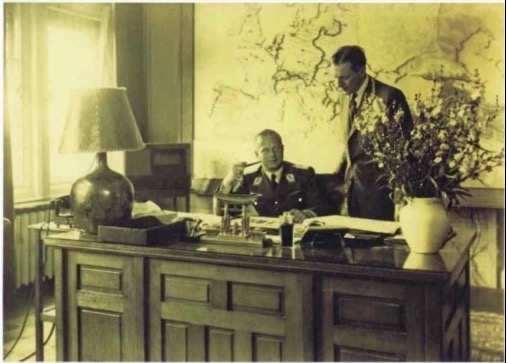
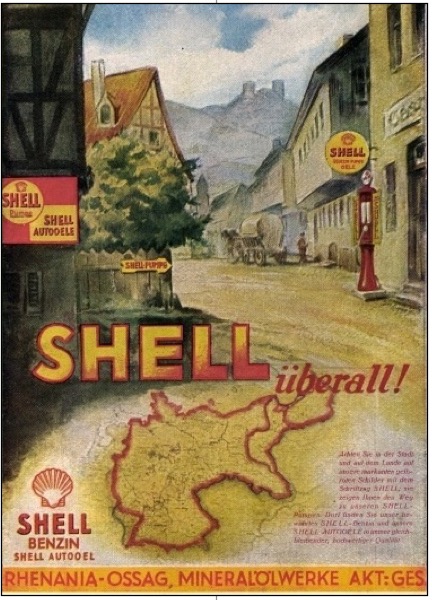
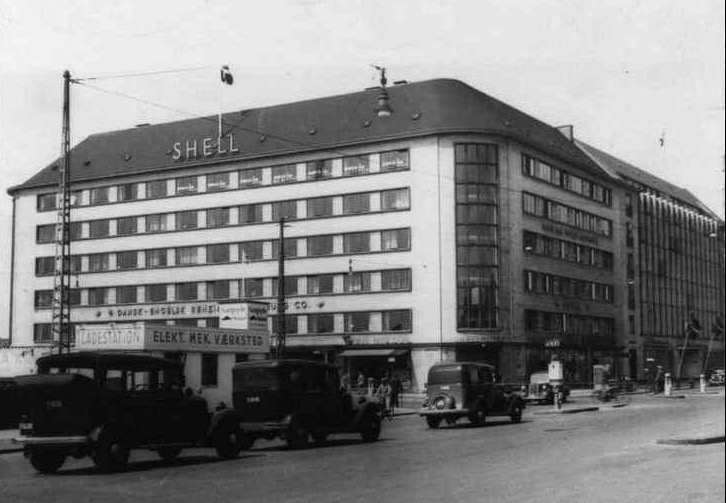
Following the Nazi invasion of the Netherlands, Hauptmann Eichardt von Klass, the former research director of Rhenania-Ossag, was appointed in January 1940 as Verwalter to administer Royal Dutch and Bataafsche, another company within the Royal Dutch Shell Group. He appointed the Dutch Nazi and Shell general manager J. H. W. Rost van Tonningen to a new pro-German board. Rost had previously held the post of Shell Group technical inspector, visiting installations in Italy, Austria, Hungary, Yugoslavia, and Romania. He had developed a keen interest in fascism, joining the Dutch Nazi party. He was at one point suspended from work because of his political allegiance before being reinstated, almost certainly due to the influence of his brother, a leader of the Dutch Nazi movement.
Articles in American newspapers published on 13 February266 and 15 February267 1940 said that Shell had continued to make deliveries of oil products to Germany until December 1939. Extract from a section that appeared in both articles: This operation caused no stir among insiders who know the background of the story. It all dates back to the operations of Sir Henri Deterding, the born Hollander with a French first name, knighted by His Britannic Majesty and buried on his beloved estate in Northern Germany. Deterding sewed up the German market by substantial cash payments to the rising Nationalist party before and after they came to power. The head offices of Royal Dutch, Bataafsche, and a string of other Shell Group companies officially moved on 10 May 1940 from The Hague to the Dutch West Indies colony of Curacao.268 According to Shell’s historians, the Verwalter, Hauptmann Eichardt von Klass, appointed shortly thereafter, had full powers to act on behalf of the concern, meaning the Group, in occupied Europe.269 The unambiguous claim of “full powers” is, however, undermined by the wording of this extract from page 78 of “A History of Royal Dutch Shell Volume 2”:270 “Meanwhile the relationship between parent company and subsidiary had to some extent been reversed by the appointment of Rhenania-Ossag’s research director as Verwalter over Bataafsche’s Amsterdam laboratory, to ensure that it would contribute to the German war effort.” I draw attention to the phrase “to some extent.” It is unclear precisely what this means, but it suggests that Shell did not in fact suffer a total loss of influence or control. Shell’s paid historian offers no information about the evidence found in the archive that led to the inclusion of this possibly significant phrase. Further evidence of a continuing special relationship between the Royal Dutch Shell Group and the Nazi regime271 comes from a report prepared by the British Intelligence Objectives Sub-Committee entitled “RHENANIA OSSAG A.G. HAMBURG-GERMANY. FUELS AND LUBRICANTS”. A team of four people from the U.S. Petroleum Administration for War and the British Ministry of Fuel and Power prepared the report. The information in it was obtained during a visit by a combined British-American team to the Hamburg area in October 1945. Senior employees at Rhenania-Ossag, including Prof. Dr. Zerbe, were interviewed. One of the objectives of the investigation was to ascertain the wartime activities of Rhenania-Ossag A.G. Shell and I.G. Farben are mentioned many times in the report. The following is an extract from page 66: In reply to a question as to why Rhenania-Ossag had not participated fully in the German development of petroleum products, it was stated that because this company was regarded as of “foreign ownership”, it was not taken into the confidence of the German Government. Most of this development work was done either at the laboratories of the Ministries concerned or by the I.G. Farbenindustrie A.G. This left the laboratories of the Rhenania-Ossag free to work on problems allied to their own production. So, although the Verwalter was said to have full control, it does not appear to have been exercised in practice. Quite clearly the Nazi regime did not consider Rhenania-Ossag to be under its absolute control, but a separate foreign-owned and run entity free to work on its own production. The fact that it was not considered safe to entrust the foreign-owned company with petroleum product development plans of the German government reinforces this conclusion. It suggests a degree of autonomy at variance with the ruthless dictatorial control normally associated with Nazi rule in annexed and invaded countries.
The Nazis appear to have respected Shell’s ownership and, to some degree, the independence of the Rhenania-Ossag management, which enjoyed continuity before and after World War II. After the war, Shell rehired former Rhenania-Ossag management who had helped fuel the Nazi war machine and were involved in forced-labour programmes. I have already mentioned Robert Finn, who joined Rhenania-Ossag in 1929 and became a Nazi supporter. He was far from alone. Many employees of Royal Dutch Shell companies in Germany and the Netherlands became active Nazis. In 1933, all Jewish shareholders, supervisors, and employees of Rhenania-Ossag were dismissed. During the war Finn was appointed head of the “Association for the lubricating oil supply” (ASV), helping to fuel the Nazi war machine. According to a Hamburg Morning Post article published in February 2007,272 concerning Robert Finn, the ASV had to keep the wheels rolling for the “final victory” by coordinating the supply of lubricants to the Nazi forces using thousands of forced laborers. Finn re-joined Shell after the war as a director of Deutsche Shell Chemie, the German Shell chemical company. The controversial rededication of a sports hall first named in his honour in 1976 as “Robert Finn Hall of Eimsbütteler gymnastics federation” attracted adverse coverage by campaigners and German news media focused on his Nazi past, including his close association with Shell/Rhenania-Ossag. According to a news report in March 2010,273 there was also concern about swastika-like symbols called “Turner crosses”274 on display at the sports hall. Shell was evidently not deterred by his wartime role.
It may be the case that Shell is not legally responsible for everything that happened at its German subsidiaries while the Verwalter was administering the companies on behalf of Royal Dutch Shell. However, the moral question remains. The use of slave labour and the wider collaboration took place in Shell’s name, and apparently under managers who still considered themselves to be working for Shell. It also took place under one of the most recognisable corporate emblems in the world. In 1904, the scallop shell, or pecten, replaced Shell Transport’s first marketing logo. In various forms275 it has remained in use ever since. The above information is taken from “The beginnings”,276 which forms part of a shell.com277 online feature, “Our history”,179 covering Shell from its inception to the new millennium. A whole page is devoted to “The History of the Shell logo”278 and there is more information in a downloadable document, “The History behind the Shell emblem,”279 in which this slogan appears: “The Shell emblem – or Pecten – remains one of the greatest brand symbols of the 20th Century”. The authors of this carefully selected online history unsurprisingly neglected to mention the Nazi association with the pecten. The Nazis continued to use the Shell pecten logo in Germany after the appointment of a Verwalter for Rhenania-Ossag in January 1940. In fact, it was used by Rhenania-Ossag280 in the years before, during, and after World War II. This included the entire period when it was in partnership with I.G. Farben.
An advertisement281 from the March-April 1941 issue of Der Ring, house magazine of the Group’s company Rhenania-Ossag, shows the pecten still in use after January 1940 “under German control.” Motoring tourist maps were also produced by Rhenania-Ossag for German drivers.282 One example carries the claim in red text of the “importance of Shell as a contributor to the German economy.” Another example is provided.283 Examples of Shell logos used by Rhenania-Ossag284 from 1926 and 1935 also survive in reference material on the company,285 and I have included references to two further Rhenania-Ossag Shell-branded items.286 287 The broader point is that the Shell brand remained visible throughout this period. That strengthens, rather than weakens, the moral question about what took place in Shell’s name. I am unaware of any public apology by Royal Dutch Shell for what took place at the hands of Shell employees in Nazi Germany under Shell’s name and logo at Shell premises, which always remained Shell property.
Notes
265. Link to Wikipedia article “Forced labour under German rule during World War II” Source 1 ↩
266. Link to royaldutchshellplc.com webpage containing National Whirligig report published on the Editorial page 6 of The Bee newspaper in Danville VA, Tuesday 13 February, 1940. Search the article for “deterding”. ↩
267. Link to royaldutchshellplc.com webpage containing a syndicated article published on page 8 of the Morning Avalanche newspaper on 15 February 1940 ↩
268. Link to royaldutchshellplc.com webpage containing “A History of Royal Dutch Shell: Volume 2: See official announcement on page 30. ↩
269. Link to royaldutchshellplc.com webpage containing “A History of Royal Dutch Shell: Volume 2: See page 32 ↩
270. Link to royaldutchshellplc.com webpage containing “A History of Royal Dutch Shell: Volume 2: See page 78. ↩
271. Link to shellnews.net webpage containing a nal report by British Intelligence Objectives SubCommittee dated 1st - 31st October 1945 on RHENANIA OSSAG A.G. HAMBURG-GERMANY: FUELS AND LUBRICANTS ↩
272. Link to mop.de article “Wann wird diese Halle endlich umbenannt?” published 22 February 2007: Google translation ↩
273. Link to Google translation webpage for a German News website article published 11 March 2010: “Nazi as a name” ↩
274. Link to Google translation of a Zeit Online article from November 2010: “The Turner swastikas hang” ↩
275. Link to royaldutchshellplc.com webpage containing selection of Shell logos from 1900 to 1999. ↩
276. Link to shell.com webpage headlined “The beginnings” ↩
277. Link to home page of shell.com website ↩
278. Link to shell.com webpage headlined “The history of the Shell logo” ↩
279. Link to shell.com webpage headlined “100 years of the Pecten” ↩
280. Link to royaldutchshellplc.com webpage containing an advert featuring a photograph of a Rhenania-Ossag installation displaying the Shell logo ↩
281. Link to a royaldutchshellplc.com webpage containing a Rhenania-Ossag advertisement ↩
282. Link to royaldutchshellplc.com webpage containing extract pages from “A History of Royal Dutch Shell: Volume 1: See page 470 ↩
283. Link to royaldutchshellplc.com webpage containing a Rhenania-Ossag road map featuring the Shell logo ↩
284. Link to royaldutchshellplc.com webpage containing Shell logos used by Rhenania-Ossag. ↩
285. Link to Wikipedia article “Rhenania-Ossag” ↩
286. Link to royaldutchshellplc.com webpage containing a Rhenania-Ossag pam et from 1938 with the headline “Shell-Fuhrer” ↩
287. Link to royaldutchshellplc.com webpage containing a Rhenania-Shell branded item featuring the title: “SHELL POST” ↩
Chapter 13: Nazi connections
This chapter gathers several secondary but still revealing lines of connection around Deterding and Hitler: the Dutch royal link, the Georg Bell connection, and Alfred Rosenberg’s role as an intermediary. Not every item carries the same evidential weight, but together they show how persistently Deterding appeared in contemporary and later accounts of Nazi finance and influence.
Sir Henri was mentioned in the publisher’s annotations of an English translation of Mein Kampf288, Hitler’s infamous semi-autobiographical political tract.289 290 Mein Kampf by Adolf Hitler: Publisher: Reynal & Hitchcock. Place of publication into English: New York. First publication: 1939.291 The edition quoted below is dated 1941.292 Extract from the publisher’s annotation on page 184. Rosenberg and others have been convinced that British support could be gained for any serious attempt to undermine the Russian system and therewith stamp out the Third International as a fomenter of world revolution. Two reasons for this conviction are usually advanced. The first is the support received by White Russian revolutionists from English sources, which support has occasionally been deflected to Hitler. The second is the feud long since in progress between certain British financiers and the Soviet system. Sir Henry Deterding, the oil magnate, is the most manifest of the partisans of Germany; This provides further evidence that, at an early date, information had entered the public domain describing Sir Henri as one of Nazi Germany’s most prominent foreign supporters. The reference to a feud between “certain British financiers and the Soviet system” is almost certainly a further reference to Sir Henri Deterding.
Dutch Royal Family
Queen Wilhelmina of the Netherlands293 granted a royal charter to a small oil exploration company founded in 1890 by Jean Kessler, together with Henri Deterding and Hugo Loudon, which evolved into the Royal Dutch Petroleum Company. Queen Wilhelmina was a shrewd investor and became one of the wealthiest women in the world. At one time, the Dutch royals reportedly owned as much as 25% of the company. Crown Princess Juliana,294 the only child of Queen Wilhelmina, married Prince Bernhard, a former Nazi Storm Trooper.295 Extracts from a Time Magazine article published on 18 January 1937, 342: “Marked was the vigor last week of the Knickerbocker aristocracy of Manhattan in observing the joyous marriage day of Her Royal Highness Crown Princess Juliana of The Netherlands.” “Prince Bernhard zu Lippe-Biesterfeld, at the time his engagement to Crown Princess Juliana was announced (TIME, Sept. 14), was a minor salaried employee of the great German chemical trust I. G. Farben-industrie Aktiengesellschaft, and a Nazi Storm Trooper.” In March 2010, The Daily Telegraph published an article, “Dutch Prince Bernhard ‘was member of Nazi party’”:296 Extracts: Prince Bernhard, the father of Queen Beatrix of the Netherlands, was a member of the Nazi party, a new book has claimed, contradicting the German-born Dutch war hero’s lifelong denials. Annejet van der Zijl, a Dutch historian, found membership documents in Berlin’s Humboldt University that prove Prince Bernhard, who studied there, had joined Deutsche Studentenschaft, a National Socialist student fraternity, as well as the Nazi NSDAP and its paramilitary wing, the Sturmabteilung.
As “Wing Commander Gibbs”, an honorary rank he held in the RAF, the prince later flew Allied bombing raids over occupied Europe before returning in 1944 as a Dutch war hero. The Dutch royal family is also reportedly a major shareholder in Shell. Beatrix of the Netherlands297 reigned as Queen of the Netherlands from 1980 until her abdication in April 2013. She is the eldest daughter of Prince Bernhard and is said to be a billionaire in her own right. Extract from a Forbes.com article, “How Much Is Queen Elizabeth Worth,” published 26 June 2001:298 “…in the Netherlands, Queen Beatrix, 63, and the rest of the royal House of Orange share a much more respectable fortune of $3.2 billion. Most of the wealth comes from the family’s longstanding stake in the U.K. and Netherlands-based oil company, the Royal Dutch/Shell Group. At one time, the royals reportedly owned as much as 25% of the oil company;” Extract from a Sunday Times article published on 21 March 2004, 346, at the time of the scandal arising from the Royal Dutch Shell oil and gas reserves securities fraud: Shell’s management will be further embarrassed by the revelation that the Dutch royal family has lost nearly £250m through the collapse in the company’s share price. The family is one of the biggest single shareholders in Royal Dutch. The family’s spokesman said its stake was “not more than 5%”, a figure that would equate to a loss since January of £244m. Queen Beatrix abdicated in April 2013 in favour of her son, King Willem-Alexander, whose investiture ceremony was, according to an FT article,299 marred by the arrest of peaceful anti-monarchist protesters objecting to the royal family’s holdings in Royal Dutch Shell.
According to an April 2013 article in The Telegraph:300 “The Dutch monarchy is one of the wealthiest in the world, with Forbes magazine estimating that Queen Beatrix had a fortune in 2011 of £142 million, largely thanks to property and shares in Shell Oil.”
The Georg Bell Connection
Dr. Georg Bell,301 a German spy, was an agent of Sir Henri Deterding who acted initially as an intermediary between Deterding and Adolf Hitler in forming an alliance between the oil titan and the Nazi leader. This arrangement appears to have been useful in disguising what the public might have regarded as an unsavoury relationship.302 Bell later acted as a joint agent or delegate of Hitler and Deterding. On page 313 of “The Most Powerful Man in the World: The Life of Sir Henri Deterding”, it says: “Bell had useful connections with business and politics, and it is reported by Johannes Steel that he had attended a number of meetings of the ‘Ukrainian Patriots’ in Paris as joint delegate of Hitler and Deterding.”303 Bell was an intimate of Storm Troop leader Capt. Ernst Röhm304 and was allegedly involved with Deterding in a counterfeiting operation against the Russian rouble. Bell was murdered in Austria in April 1933 by a death squad of Nazi Storm Troopers and the SS after “making revelations about Deterding and the Nazis.”305 He apparently knew too much about matters the Nazis and their financiers wanted hushed up.
The Alfred Rosenberg Connection
Evidence indicates that Alfred Rosenberg had a role as a senior Nazi contact for Deterding. Rosenberg306 was an early and intellectually influential member of the Nazi Party.307 He was first introduced to Adolf Hitler308 by Dietrich Eckart309 and later held several important posts in the Nazi government. At Nuremberg310 he was tried, sentenced to death, and executed by hanging as a war criminal.311
Information and extracts from the book “Who Financed Hitler,”312 relating to Alfred Rosenberg, George Bell, and Johannes Steel:
Extract from the preface: Those who financed Hitler, both Germans and foreigners, are just as responsible for his coming to power as the active Nazis who spread anti-Semitic propaganda or fought in the streets. Yet, because of their influence and the power of money, few of them were prosecuted at Nuremberg.
Information and extract from page 319: This page contains reference to a weekend spent by Alfred Rosenberg as a guest at Sir Henri’s “palatial country home” at Buckhurst Park, near Windsor Castle. Extract from the reference on page 319 to Reynold’s Illustrated News, which published a news report about the meeting: In the light of the present European situation, this private talk between Hitler’s foreign advisor and the dominant figure in European ‘oil politics’ is of profound interest. It supports the suggestion current in well-informed political circles that the big oil interests have kept closely in touch with the Nazi Party in Germany.
Information from page 322:
This indicates that a trial took place in the 1930s, the “chervonetz forgery trial”, in which a number of individuals, including Georg Bell and Sir Henri Deterding, were allegedly implicated in a conspiracy involving currency counterfeiting, the ultimate objective of which was to create an uprising to break Ukraine away from Russia. Extract from the same page: Georg Bell, a mysterious German of Scottish origin, was said to be an agent of Deterding. He had attended a number of the “Ukrainian Patriots” meetings in Paris as a representative of both Hitler and Deterding.”
Extract from page 323: Johannes Steel, a German writer and former agent of the German Economic Intelligence Service, gave evidence at the Inquiry into the Reichstag Fire that Sir Henri Deterding was giving money to the Nazis. With regard to the forgery trial, the following is an extract from an article published by The Daily Express on 13 January 1930, under the headline “Mystery Document in German Forgery Trial”:313 Extract: The second denial came from Sir Henri Deterding, who is at present at St. Moritz. The oil magnate, interviewed by telephone, declared that he had never heard of the conspiracy against Russia until he read reports of the trial in the German newspapers and found to his amazement that his name had been dragged into it. “The first I knew of this case was when I saw reports in certain of the German newspapers,” Sir Henri said. “I was naturally astounded. I read the names of the accused and searched my mind in and out if I had ever met them. I can’t recall a single one. I am not connected with this case in any shape or form.”
Notes
288. Link to archive.org Mein Kampf (1941) webpage of American Libraries ↩
289. Link to Wikipedia article “Adolf Hitler” Source 1 ↩
290. Link to Wikipedia article “Mein Kampf” Source 1 ↩
291. Link to section of Wikipedia Meon Kampf article: “Reynal and Hitchcock translation" ↩
292. Link to royaldutchshellplc.com article “Extracts from Mein Kampf English Translation 1941” Source 1 ↩
293. Link to Wikipedia article “Wilhelmina of the Netherlands” Source 1 ↩
294. Link to Wikipedia article “Juliana of the Netherlands” Source 1 ↩
295. Link to Wikipedia article “Prince Bernhard of Lippe-Biesterfeld” Source 1 ↩
296. Link to article published in The Telegraph on 5 March 2010 under the headline: Dutch Prince Berhard ‘was member of Nazi party’ ↩
297. Link to Wikipedia article “Beatrix of the Netherlands” Source 1 ↩
298. Link to forbes.com article by John Pitman entitled “How Much Is Queen Elizabeth Worth?”: Published 26 June 2001. ↩
299. Link to an ft.com article by Matt Steinglass published 30 April 2013 under the headline: “Netherlands greets first king in 123 years” ↩
300. Link to an article by Harriet Alexander published 29 April 2013 by The Telegraph under the headline: “Willem-Alexander to become Europe's youngest king as Prince Charles watches on” ↩
301. Link to a Google Translation of a Wikipedia article “George Bell” ↩
302. Link to pages from a 1939 book by Joseph Gollomb “Armies of Spies” published by The Macmillan Company. ↩
303. Link to a royaldutchshellplc.com webpage containing two pages from the book by Glyn Roberts “The most powerful man in the world: The Life of Sir Henri Deterding”: Published by Hyperion Press Inc in 1938. ↩
304. Link to a time.com article “GERMANY: Co-ordination” published 17 April 1933. ↩
305. Link to shellnews.net webpage containing the entire book “The Secret War: The War for Oil”: By Frank C. Hanighen & Anton Zischka, published in London by George Routledge & Sons: 1935: Note webpage does take some time to load, even though the le is compressed. See page 99 of 123. ↩
306. Link to Wikipedia article “Alfred Rosenberg” Source 1 ↩
307. Link to Wikipedia article “Nazi Party” Source 1 ↩
308. Link to Wikipedia article “Adolf Hitler” Source 1 ↩
309. Link to Wikipedia article “Dietrich Eckart” Source 1 ↩
310. Link to Wikipedia article “Nuremberg trials” Source 1 ↩
311. Link to Wikipedia article “War crime” Source 1 ↩
312. From the book “WHO FINANCED HITLER” (The Secret Funding of Hitler’s Rise to Power) 1919-1933. By James E. Pool III and Suzanne Pool: Published in 1979 by Macdonald and Jane’s Publishers Limited: ISBN 0 354 04395 1 ↩
313. Link to royaldutchshellplc.com webpage containing a Daily Express article “Mystery Document in German Forgery Trial” published on 13 January 1930. Source 1 ↩
Chapter 14: Media coverage of the death of Sir Henri Deterding
Sir Henri Deterding died in St. Moritz, Switzerland, on 4 February 1939,314 several months before the outbreak of the Second World War. Given his global fame as an oil magnate and his reputation as a controversial political figure, his death prompted numerous obituaries. At the time of his death, he was still a director of several Royal Dutch Shell Group companies. What follows is a selection of contemporaneous news reports. SAN ANTONIO EXPRESS Dutch Shell Head Dies In Holland: Sunday 5 February 1939,315 EXTRACTS Sir Henri Wilhelm August Deterding was an outstanding figure in world financial affairs because of his role as guiding genius of the great Royal Dutch Petroleum Company, of which he remained a director after retiring from the post of director-general. He was known as a bitter foe of Soviet Russia and was named at a Moscow trial as having aided in a plot against the Soviet government. Daily Mirror: 9s.-a-Week to Millions: 6 February 1939 Page 7.316 Oil King Sir Henri Deterding, seventy-two, who died at St. Moritz, Switzerland, began as a nine-shillings-a-week bank clerk and rose to riches so great that eventually he matched dollar for dollar with Rockefeller. Sir Henri was a Dutchman. He was knighted by the British Government “for services rendered.” Hitler is said to have received his financial support. He hated the Soviet Government, admired Mussolini and aided France.
He was thrice married. His third bride was thirty-one years his junior. Daily Express: Deterding millions in Germany: 6 February 1939. Front page.317 THE personal fortune of Sir Henri Deterding, multi-millionaire oil king, who died after a heart attack on Saturday, is believed to be in Germany, where he went to live after his divorce in 1936. The Times: “Sir Henri Deterding Obituary”: 6 February 1939 366 Extract In the last few years he had spent much of his time in Germany, where he showed himself to be in sympathy with the German government’s attitude towards the Communists, whose main object, he wrote, was to permit as little cooperation between the nations as possible “because only then will their destructive principles succeed.” Three years ago he attracted some attention with a scheme for marketing the entire surplus of Dutch agricultural production in Germany and giving the proceeds to the Winter Help Organization. Although his first donation to the latter is believed to have amounted to more than £1,000,000, the scheme seems to have met with a rather mixed reception from the German authorities and little has since been heard of it. Daily Express: OIL KING MOVED HIS MILLIONS: 318 Feb 1939 Page 11.319 EXTRACTS Divorced, went to live in Germany Daily Express Staff Reporter SIR HENRI DETERDING, the oil king, once estimated to have a personal fortune of £25,000,000, has left practically nothing in England. The Montreal Gazette: SIR H. DETERDING, 72 DIES IN SWISS HOME: Monday 6 February 1939 Page 14.320
EXTRACTS
Netherlands-born Magnate Built Up Royal Dutch Petroleum Company Was Ardent Hitler Supporter and Foe of Soviet Sir Henri, who possessed a personal fortune estimated at between $150,000,000 and $200,000,000, had retired from the direction of the Royal Dutch Petroleum Company. He became an ardent Nazi after Adolf Hitler attained power in Germany. A practical token of his admiration for the anti-Communist regime of Hitler was given in 1937. He gave $5,000,000 with which to purchase Holland’s surplus food products. He stipulated that the proceeds should go to Germany’s “Winter Help Fund.” THE OSHKOSH NORTHWESTERN: Rockefeller of Europe, Sir Henry Deterding, Dies: MONDAY FEBRUARY 6, 1939 Page 7.321 EXTRACTS Son of Sea Captain Rises in Meteoric Career in Fashion Comparable to Horatio Alger Tales – Strong Pro-Nazi and Bitter Russia Opponent Carves Way to Success. He became an ardent Nazi after Adolf Hitler attained power in Germany. Deterding immediately saw the possibilities and set out to tie Royal Dutch and Shell together, the better to compete with Standard Oil. A practical token of his admiration for the anti-Communist regime of Hitler was given in 1937. He gave $5,000,000 with which to purchase Holland’s surplus food products. He stipulated that the proceeds should go to Germany’s “Winter Help Fund.” THE CALGARY DAILY HERALD: An Oil Napoleon: 7 February 1939 Page 4.322 EXTRACTS FEW careers in modern times have been more strange and eventful than that of Sir Henri Deterding.
An inveterate enemy of Soviet rule in Russia because of confiscation of the rich Caucasus oil fields, he later swung over to support for the Hitler movement in Germany and helped to finance it. Daily Express: Oil King will be buried in Germany: 7 February 1939.323 Oil king will be buried in Germany Daily Express Correspondent GENEVA. Monday.- The two sons of Sir Henri Deterding, the oil magnate, who died on Saturday, were expected to fly to St. Moritz yesterday, but arrived tonight by train with other relatives. After meeting Lady Deterding, they decided that their father should be buried on his estate at Dobbin, Mecklenburg, North Germany. The family will leave tomorrow morning. New York Times: DETERDING BURIAL PLANS: 7 February 1939,324 Extracts Oil Operator’s Body to Be Taken to His German Estate ST. MORITZ, Switzerland, Feb. 318 (AP).–The family of Sir Henri Deterding gathered at the Swiss villa where he died unexpectedly Saturday to take the body of the 72-year-old Netherlands-born oil operator back to his estate at Dobbin, Mecklenburg, Germany, for burial. New York Times: DETERDING HONORED BY NAZIS AT FUNERAL: 11 February 1939.325 As the coffin was lowered into the grave, a deputy of the Fuehrer stepped forth and, placing a wreath upon it, said: “In the name of Adolf Hitler, I greet you, Henri Deterding, the great friend of the Germans.” Field Marshal Goering sent a group of officers of the air corps to convey his respects. The Times: SIR HENRI DETERDING’S FUNERAL: 11 February 1939.326 Extract: Herr Hitler and Field-Marshal Goring, and the Dutch Government, sent wreaths to the funeral to-day of Sir Henri Deterding at his estate at Dobbin, Mecklenburg Daily Express: Hitler sends wreath: Front Page: 11 February 1939,327 Hitler sends wreath Daily Express Staff Reporter BERLIN, Friday.- Hitler has sent a wreath with a red, white and black ribbon worded “Adolf Hitler,” to the funeral today of Sir Henri Deterding, multimillionaire Dutch oil king, who died last Saturday. Time Magazine: Royal Dutch knight: 13 February 1939.328 Extract He backed Hitler in Germany, added a German residence to his English, Dutch and Swiss homes. THE ERA, BRADFORD, PA: TUESDAY, MARCH 7, 1939.329 Extract The last honors bestowed upon the late Sir Henri Deterding by high German officials furnish eloquent confirmation of the story that he was one of the original financial backers of the Nazi movement. A Dutchman by birth and nationality, he attained the chairmanship of the Royal Dutch (Shell) Oil Co. and was knighted by the British king. The same article was published the following day in the Twin Falls News, Idaho:330 and The Milwaukee Sentinel on 16 March 1939.331 Extract Sir Henri Deterding gave 7½ million marks to Hitler in 1929
Daily Mirror: £250,000 FOR A BABY: 20 March 1939: Page 13332 EXTRACT EIGHT weeks after the death, of her seventy-year-old millionaire husband, Lady Charlotte Deterding, aged forty, has given birth to a daughter in a Berlin nursing home. Under the terms of her oil-magnate husband’s will the child will inherit about a quarter of a million pounds. Sir Henri left more than £2,000,000, but the exact figure is not yet known. Lady Charlotte was Sir Henri’s third wife. They were married in 1936. She was formerly Fraulein Charlotte Knaack and acted for some time as his secretary.
Notes
314. Link to shellnews.net webpage containing an article published by The New York Times on 5 February 1939 under the headline: “HENRI DETERDING DIES IN ST. MORITZ” The article mentions the Cattle and farm products Sir Henri “presented” to Germany as his contribution to the ght against Bolshevism. ↩
315. Link to shellnews.net webpage containing page 4 from the San Antonio Express newspaper published Sunday, 5 February, 1939: See headline “Dutch Shell Head Dies in Holland” ↩
316. Link to royaldutchshellplc.com webpage containing a Daily Mirror article published 6 February 1939 under the headline “9s.-a-Week to Millions” ↩
317. Link to royaldutchshellplc.com webpage containing a Daily Express article published 6 February 1939 under the headline “Deterding millions in Germany” Source 1 ↩
318. Link to a Reuters article published 2 December 2009 under the headline: “Shell critic says oil major targeting his website” ↩
319. Link to an article published on page 11 of the Daily Express on Monday 6 February 1939 under the headline “OIL KING MOVED HIS MILLIONS” ↩
320. Link to royaldutchshellplc.com webpage containing an Obituary by The Montreal Gazette on page 14 of the edition published on 6 February 1939. ↩
321. Link to royaldutchshellplc.com article published Monday 6 February 1939 by The Oshkosh Northwestern under the headline “Rockefeller of Europe, Sir Henri Deterding Dies” Source 1 ↩
322. Link to royaldutchshellplc.com webpage containing an article published 7 February 1939 on page 4 go The Calgary Daily Herald under the headline “An Oil Napoleon” ↩
323. Link to a royaldutchshellplc.com webpage containing an article published on page 11 of the Daily Express under the headline “Oil king will be buried in Germany” Source 1 ↩
324. Link to royaldutchshellplc.com webpage containing a New York Times article published 7 February 1939 under the headline “DETERDING BURIAL PLANS” Source 1 ↩
325. Link to shellnews.net webpage containing New York Times article “DETERDING HONORED BY NAZIS AT FUNERAL “: Published 11 February 1939 ↩
326. Link to shellnews.net webpage containing an article published by The Times under the headline “SIR HENRI DETERDING’S FUNERAL” on 11 February 1939 ↩
327. Link to royaldutchshellplc.com webpage containing a Daily Express article published 11 February 1937 under the headline “Hitler sends wreath” Source 1 ↩
328. Link to time.com article published Monday 13 February 1939 under the headline “PETROLEUM: Royal Dutch Knight” ↩
329. Link to a royaldutchshellplc.com webpage containing an article published on page 3 of The Era, BRAFORD, PA, Tuesday, 7 March, 1939. Item in the fourth column under the heading “CAUSE”. ↩
330. Link to a royaldutchshellplc.com webpage containing an article by James McMullin published 8 March 1939 by Twin Falls News, Idaho. ↩
331. Link to royaldutchshellplc.com webpage containing a syndicated article by Walter Winchell published by The Milwaukee Sentinel on 16 March 1939 ↩
332. Link to royaldutchshellplc.com webpage containing an article published on page 13 of the Daily Mirror on Monday, 20 March 1939, under the headline “£250,000 FOR A BABY” Source 1 ↩
Chapter 15: Shell historians attempt to distance Deterding from Hitler
It is acknowledged in “A History of Royal Dutch Shell” (authored by historians paid by Shell) that “a great deal of public speculation went on about Deterding giving loans or donations, for amounts ranging from four million guilders to a fantastical £55 million, to the Nazi movement. In return, he was rumoured to have obtained promises of special advantages for the Group or even an oil monopoly under a Nazi regime. Such rumours circulated as early as 1931. They regularly resurface even today, but remain unsubstantiated.” Spin is evident from the inclusion of the word “fantastical” in this statement. As we have seen, the rumours were not baseless. In attempting to dismiss what is written off as “speculation”, the historians attach great significance to claims on pages 481 to 485 of “A History of Royal Dutch Shell: Volume 1,”333 that Deterding’s attempts to meet with Hitler were rebuffed. It is stated on page 483 that “Deterding was turned down without further ado” in March 1933. A statement attributed to Deterding himself on page 477, that he met with Hitler in November 1933, is dismissed without comment as being a mere “claim,” thereby placing doubt over his truthfulness or mental capability. I can only surmise that their research did not uncover newspaper articles, as I have, from October 1934 reporting that Deterding was the guest of Hitler during a four-day meeting at Berchtesgaden. Based on what Deterding said and taking into account the newspaper reports a year later, far from being rebuffed, Deterding met with Hitler on at least two occasions, one of them at a summit meeting as Hitler’s personal guest lasting four days. Information from a New York Times article, published on 26 October 1934 under the headline:334 “REICH OIL MONOPOLY SOUGHT BY DETERDING”. This article with the sub-headline “Hitler’s Terms for Control of Distribution Unsatisfactory to Royal Dutch and Shell” reported the content and outcome of the four-day summit meeting between Hitler and his guest, Sir “Henry” Deterding, held at Berchtesgaden335, Hitler’s mountain-top retreat known as the Berghof.336 THE CONTENT OF THE NEW YORK TIMES ARTICLE LONDON, Oct. 25.-It is reported confidentially from Berlin that the object of Sir Henry Deterding’s recent visit to Chancellor Hitler at Berchtesgaden, where he stayed for four days, was to discuss the conditions for granting a monopoly to the Royal Dutch and Shell Companies of petrol distribution in Germany for a long period of years. Chancellor Hitler’s terms were unsatisfactory and the negotiations have broken down temporarily. Three conditions advanced by the Germans were First-The companies were to supply oil on credit for the first year. Second-The companies were to build a network of distributing stations along strategic motor roads, these buildings to be protected against air attacks. Third-The companies were to invest their money, frozen in Germany, locally. As is clear from the New York Times/Reuters report, Deterding attended the meeting on behalf of the Royal Dutch Shell Group with the objective of securing a long-term monopoly position for Shell in German petrol distribution and retailing. Shell did subsequently offer to supply oil to Germany on long-term credit and did invest huge funds in its German subsidiary projects in Germany. The Montreal Gazette337 and The Daily Gleaner338 also reported the same news story. There was no subsequent retraction or correction by any of these newspapers.
There was a great deal for the two men to discuss. Hitler and Deterding shared an intense interest in Russia, not limited to the Russian oil fields. Both hated communism. The New York Times had reported339 just a few months earlier that Deterding wanted to destroy communism in Russia. The same article also reported on the parlous state of the German economy. Deterding’s objective of securing oil contracts by currying favour with Hitler was mentioned in an article published by Time magazine340 over a year earlier, in May 1933. That same month, Dr Alfred Rosenberg, Hitler’s envoy, had stayed as a guest at the Buckhurst Park home of Deterding in England.341 On 13 September 1935, a U.S. newspaper, the Meriden Record, published an article342 reporting: “Deterding now enjoys a monopoly in the Nazi state.” “Europe’s Oil Napoleon,” as they aptly described him, had achieved his objective. The Deterding/Hitler summit, combined with the personal message sent by Hitler to Sir Henri’s funeral, indicates a close relationship between Hitler and Deterding, the dominant figure within Royal Dutch Shell. Dr. Georg Bell, the mysterious individual said to have been a German spy, had already acted as a joint agent for Hitler and Deterding. Bell was an intimate of Storm Troop leader Capt. Ernst Röhm and, according to reports, was involved with Deterding in a counterfeiting operation against the Russian rouble. A death squad of Nazi Storm Troopers murdered Bell in Austria in April 1933 after Bell had made indiscreet revelations about Deterding and the Nazis. These events sit uneasily with the picture painted in “A History of Royal Dutch Shell” by Shell’s paid historians, who claim that the Nazis repeatedly rebuffed all overtures from Deterding for an audience with Hitler, keeping him firmly at arm’s length. That defence rests on a false premise.
Only an honoured personal guest would be rewarded with a private four-day meeting at Hitler’s mountain-top retreat. In contrast, British Prime Minister Neville Chamberlain’s face-to-face meeting with Hitler at Berchtesgaden on 16 September 1938, in an attempt to avoid war, lasted just three hours.343 Further evidence of the high regard Adolf Hitler had for Sir Henri Deterding comes from a former senior officer in German bomber command. It also provides independent evidence of a donation of one million Reichsmarks given to the Nazis by Sir Henri. On 28 April 1945, Lieutenant-Colonel Werner Baumbach,344 “General of the Bombers,” arrived at a country house located at Krakow, near Güstrow in Mecklenburg, for a meeting with Heinrich Himmler, Reichsführer of the SS.345 As overseer of the concentration camps and extermination camps, Himmler coordinated the murder of around 10 million people. It soon became apparent to Baumbach, after two portraits in silver frames were drawn to his attention, that the country house in which the SS was located was formerly the home of Sir Henri Deterding. The first portrait, signed by Hitler, contained the following inscription: Sir Henry Deterding – in the name of the German people, for your noble donation of a million Reichsmarks. Adolf Hitler The second photograph was of Reichsmarschall Hermann Göring, Commander in Chief of the Luftwaffe. The inscription said: To my dear Deterding, in gratitude for your noble gift of Rominten Hunting Lodge. Your Hermann Göring Göring’s hunting lodge at Rominten in East Prussia was known as “The Reichsjägerhof.”346
In 1939, Göring had, as previously stated, sent a wreath to Sir Henri’s Nazi funeral containing the tribute:347 In the name and on the instructions of the Fuhrer, I greet thee, Heinrich Deterding, the great friend of the Germans. As already mentioned, he also sent a group of air corps officers to represent him at the funeral.348 The information from Werner Baumbach comes from pages 235 and 236 of his book “The Life and Death of the Luftwaffe”, first published in 1949 and translated into English in 1960. Although only a passing reference consisting of a few paragraphs in a book devoted to “the story of an officer who served his country with distinction and risked reprisals to speak his mind”, it provides historically important evidence confirming Deterding’s financial support for the Nazis. Baumbach “spent nearly six months in an English interrogation camp. He was told that he would be charged as a war criminal on the ground that he had fired on shipwrecked people. After unending cross-examination and investigation Baumbach was able to prove conclusively that throughout the war neither he nor any unit under his command had committed any violations of the Hague Convention.”349 It is important to remember that Royal Dutch Shell continued its financial relationship with the Nazis after the resignation of Sir Henri350 as Director-General of the company and even after his subsequent death. The fact that he resigned in October 1936, but retained his seat on the board, was reported in a Daily Express front page article published at the time under the headline: “Daily Express: Sir Henri Deterding, Oil King, To Resign.”351
Notes
333. Information from pages 481 to 485 inclusive, of “A History of Royal Dutch Shell: Volume 1” ↩
334. Information from royaldutchshellplc.com webpage containing a New York Times articled published 26 October 1934 under the headline “REICH OIL MONOPOLY SOUGHT BY DETERDING” Source 1 ↩
335. Link to Wikipedia article “Berchesgaden” ↩
336. Link to Wikipedia article “Berghof (residence)” Source 1 ↩
337. Link to royaldutchshellplc.com webpage containing an article published on page 2 of The Montreal Gazette on 26 October 1934 under the headline: “Deterding Is Seeking Reich Oil Monopoly” ↩
338. Link to royaldutchshellplc.com webpage containing an article on page 6 World News published on 29 October 1934 by The Daily Gleaner under the headline “Reich Oil Monopoly Sought by Deterding” Source 1 ↩
339. Link to shellnews.net webpage containing an article published 29 July 1934 under the headline “BRITAIN WILL BAR CREDITS TO REICH” ↩
340. Link to time.com article “GERMANY: Co-ordination” published Monday, 17 April, 1933 ↩
341. Link to shellnews.net webpage containing a New York Times article published 9 May 1933 under the headline “HITLER ENVOY TALKS WITH BRITISH OFFICIAL” and a sub-headline “Rosenberg Sees Under-Secretary for Foreign Affairs- Stay at Deterding Home” ↩
342. Link to google.com search webpage containing an article published on page 4 of the Meriden Record on 13 September 1935 under the headline “Europe’s Oil Napoleon Seen Winner Over U.S. Rivals For World Trade As Ethiopian Concession Fades” ↩
343. Link to Wikipedia article “Neville Chamberlain.” See section “Preliminary meetings” Source 1 ↩
344. Link to royaldutchshellplc.com article “Adolf Hitler thanks Sir Henri Deterding for donation of a million reichs-marks” Source 1 ↩
345. Link to Wikipedia article “Heinrich Himmler” Source 1 ↩
346. Link to Wikipedia article “Carinhall” Source 1 ↩
347. Link to royaldutchshellplc.com article “Royal Dutch Shell Nazi Secrets Part 1: The Funeral” Source 1 ↩
348. Link to shellnews.net webpage containing New York Times article “DETERDING HONORED BY NAZIS AT FUNERAL “: Published 11 February 1939 ↩
349. Link to ww2f.com discussion webpage for “Werner Baumbach” ↩
350. Link to November 2010 article on royaldutchshellplc.com “Royal Dutch Shell Nazi Secrets Part 3: Relationship continued after Deterding retirement” Source 1 ↩
351. Link to royaldutchshellplc.com webpage containing a Daily Express article published 28 October 1936 under the headline “Sir Henri Deterding, Oil King, To Resign” Source 1 ↩
Chapter 16: Why does it still matter?
The importance of this history does not lie only in the character of Sir Henri Deterding. It lies in what it reveals about one of the world’s best-known corporate brands at a decisive moment in European history. If a major multinational helped sustain, finance, and accommodate Hitler’s movement and later the Nazi state, that is not a trivial biographical footnote. It is a matter of legitimate public memory.
Time has not made the issue less serious. If anything, it has made the pattern easier to see. Later independent writers have reached similar conclusions. In 2021 James Marriott and Terry Macalister, in Crude Britannia, again drew attention to Shell’s Nazi entanglements and the conduct of Rhenania-Ossag. Related reporting described the company at the outbreak of war as effectively divided between an Allied arm and an Axis-supporting arm. Such later corroboration matters because it shows that the subject does not rest on one author’s interpretation alone.
The record assembled in this book points beyond the prejudices of one oil baron. The removal of Jewish board members at Rhenania-Ossag, the accommodation of Nazi expansion into occupied and annexed territories, the relationship with I.G. Farben, the Winterhilfswerk-linked donations, and the continued use of Shell’s name and assets in Nazi Europe suggest a wider corporate failure, even if Deterding remained its dominant personality.
Other institutions with Nazi-tainted histories have, however belatedly, acknowledged their role, apologised, or contributed to compensation. Shell did eventually allow some of the material into its official history, but the subject was buried inside a commemorative corporate work that few outside specialists would ever read. That is not the same as public acknowledgement. The issue remains historically and morally alive because corporate legacy does not disappear when the individuals concerned are dead. It remains part of the history attached to the Shell name.
Even in modern times, public reaction has shown how explosive such associations remain. The 2015 controversy over a Nazi-linked vessel name connected with Shell’s decommissioning work demonstrated that these questions still provoke outrage far beyond academic circles. The past is not dead. It continues to shape how corporations are judged, how victims and descendants remember, and how responsibility is discussed. That is why this history still matters.
Appendix A: Chronology of Deterding and Shell support for Nazi Germany
1931: Press reports linked Deterding to discussions over a possible benzine monopoly in Germany.1932: Dutch press speculation identified Deterding as a possible funder of the National Socialists while the Nazi Party was heavily in debt.1933: After Hitler took power, Shell’s German subsidiary Rhenania-Ossag issued touring maps and publicity stressing Shell’s contribution to the German economy.1933: Shell material claimed that the German economy had received170 million Reichsmarksfrom the Shell Group.1933: Contemporaries such as Johannes Steel described Deterding, George Bell, and Rosenberg as part of a wider anti-Soviet and pro-Hitler financing nexus.1934: Reuters reported a four-day meeting between Deterding and Hitler at Berchtesgaden involving monopoly and supply discussions.1934: Further reports suggested proposals involving very large loans or credit linked to petrol distribution in Germany.1935: Press reporting continued to connect Deterding with monopoly ambitions and long-term fuel arrangements inside Nazi Germany.December 1936: The first major Winterhilfswerk-linked food donation was announced before Deterding’s retirement as Director-General took effect on31 December 1936.December 1936: Reports described10 million guildersbeing made available to buy Dutch produce for shipment to Germany, with the proceeds linked to Winter Help.1936 to 1937: One report stated that7,000 railway wagonswere needed for the first immense delivery.1947: A Nuremberg-related tribunal document treated contributions to Winterhilfswerk as an important form of support to Hitler and the Nazi Party.