Chapter 1: Royal Dutch Shell and the Nazis
The founder and longest serving leader of the Royal Dutch Shell Group, Sir Henri Deterding, is presented here as having helped sustain the Nazi Party at a time of financial vulnerability and, personally and via Shell, as having provided significant support to Hitler’s regime. The Royal Dutch Shell Group became globally recognised as Shell, and for decades Deterding all but embodied that brand. Some directors had misgivings, but he ran the group in a highly personal, near-dictatorial manner and was referred to in the press as the “czar of the Royal Dutch Shell”42. Even after he was persuaded to retire as leader, he remained a director of multiple Royal Dutch Group companies until the day of his death on 4 February 1939. The case advanced in this book is not merely that Shell had an embarrassing founder with dangerous political sympathies. It is that Shell, under Deterding and through its German operations, became entangled with the Nazi project in ways that were financial, operational, and moral.
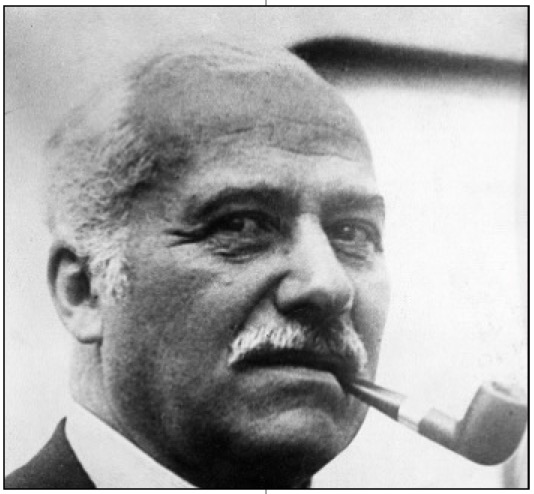
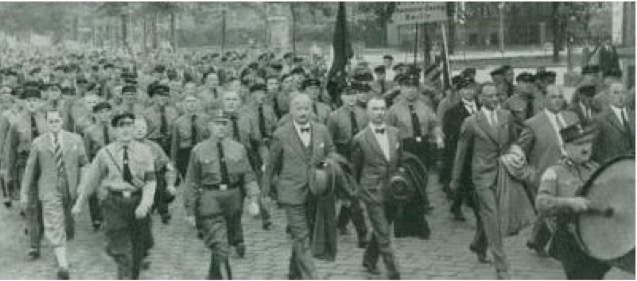
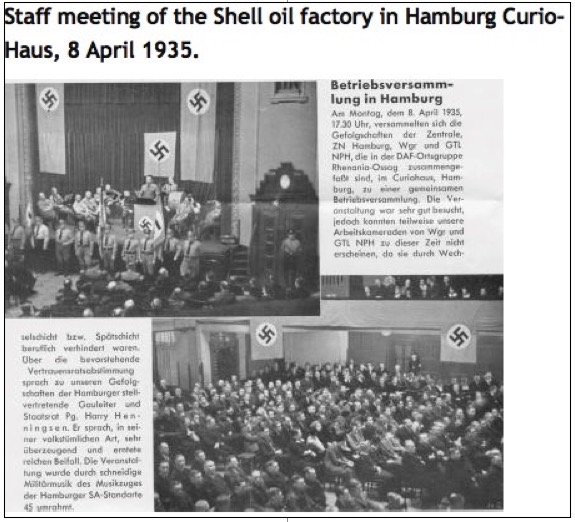
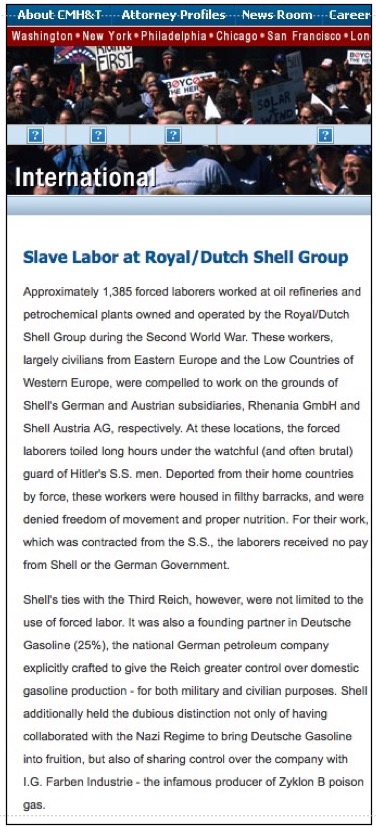
As was stated in the International Military Tribunal opinion after the end of World War II: “Hitler could not make aggressive war by himself. He had to have the co-operation of statesman, military leaders, diplomats, and businessmen.”43 Sir Henri was one of the most powerful oil men in the world, but he also became an ardent supporter of Hitler and an obsessive enemy of Soviet Russia. He was filmed exchanging a Nazi salute at a major sporting event.44 As we will see, he had a four-day meeting with Hitler as an honoured guest at Hitler’s mountain top retreat. An article published on 3 April 1933 by the Border Cities Star, a Canadian daily newspaper, reported allegations made in Pravda, the official political publication of the Soviet Communist Party in Russia, accusing Sir Henri Deterding, the “head of Royal Dutch Shell,” of funding Hitler. They described the Nazis as obedient agents of their benefactors, claiming: “Deterding orders-Hitler acts.”45 Even allowing for propaganda and exaggeration, the broad point of such contemporary reporting is important: Deterding’s support for Hitler was widely perceived at the time, not invented long after the event. The purpose of this book is to test that perception against the documentary record.
The relevant historians describe themselves as the researchers and authors of the work and say that what they produced was “the fruit of our independent research,” even though their progress was monitored by an editorial committee that included company representatives. Since the historians were paid by Shell and the project was supervised by senior Shell figures, complete independence is difficult to accept without qualification. Credit is due for the inclusion of damaging material in the published history at all. Yet the treatment of Deterding, Hitler, and the question of Nazi funding often softens, distances, or reframes the implications of the underlying evidence. That tension between archival disclosure and corporate spin is one reason why the subject required a separate investigation.
Notes
42. Link to royaldutchshellplc.com webpage containing an article dated Saturday 1 March 1930 published by The Sandusky Star-Journal under the headline: “Rise of Europe’s Oil King to Power Closely Parallels Life Story of Elder Rockefeller.” In the second paragraph of the article, Deterding was described as “czar of the Royal Dutch Shell.” ↩
43. Count in 9 pages of the Military Tribunals document dated 6 December 1947 inclusive of the first page, which has the heading “MILITARY TRIBUNALS”: United States of America Against Krauch and Others. It is a 108 page pdf le and although compressed, still takes a few minutes to load. ↩
44. Link to royaldutchshellplc.com webpage containing a YouTube.com video of a PBS TV Documentary adapted from Daniel Yergin’s book “The PRIZE: Epic Quest for Oil, Money and Power. Published in 1992 by FREE PRESS ISBN 0-671-79932-0 ↩
45. Link to royaldutchshellplc.com webpage containing an article published on 3 April 1933 on page 16 of The Border Cities Star, under the headline: “Soviet Paper In Bid for U.S. Trade.” The article contains the claim: “Deterding orders-Hitler acts.” ↩