Chapter 12: Control of Royal Dutch Shell Companies in Nazi Occupied Europe
This chapter addresses a crucial question. Royal Dutch Shell owned companies located in Germany and elsewhere in Nazi-occupied Europe before, during, and after World War II. German preparations for war proceeded at feverish pace in the years leading up to the invasion of Poland in September 1939, which triggered the Second World War. Royal Dutch Shell companies in Germany engaged in activities vital to fuelling the Nazi war machine, and Germany used forced labour in that period.265 As we have seen, there are both allegations and evidence that Shell companies in Germany used slave labour during World War II. The question here is one of control: to what extent did Shell remain in control of the relevant companies while a Nazi-appointed Verwalter was administering them?
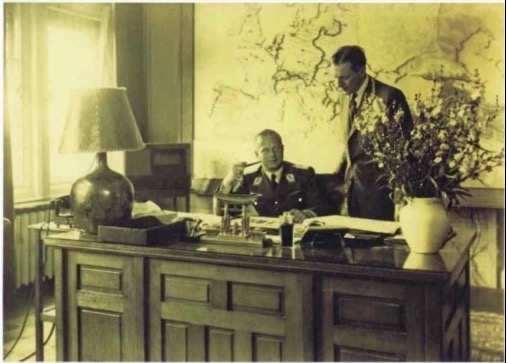
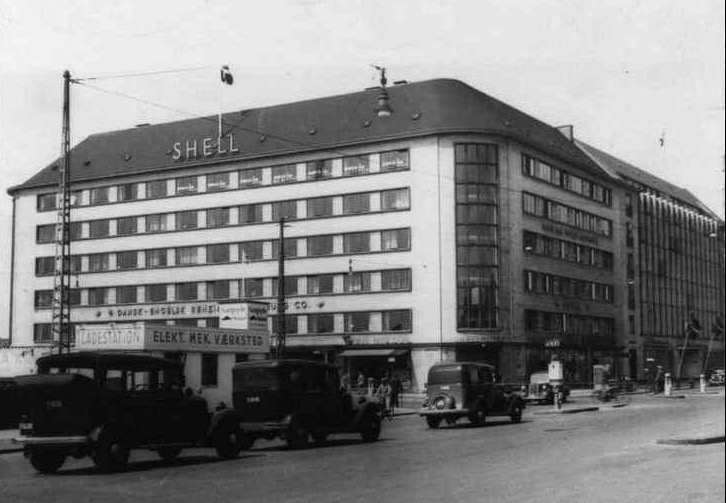
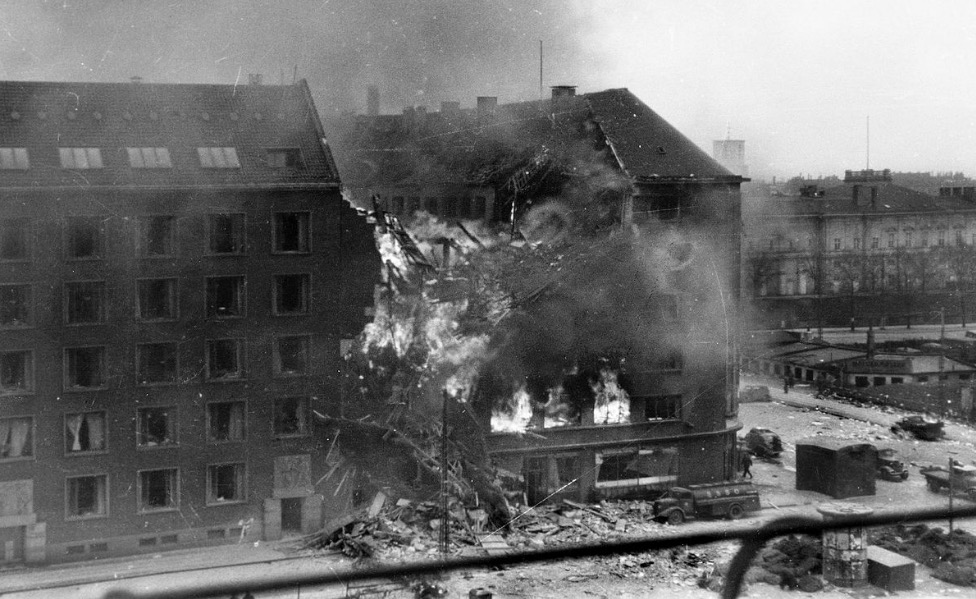
Following the Nazi invasion of the Netherlands, Hauptmann Eichardt von Klass, the former research director of Rhenania-Ossag, was appointed in January 1940 as Verwalter to administer Royal Dutch and Bataafsche, another company within the Royal Dutch Shell Group. He appointed the Dutch Nazi and Shell general manager J. H. W. Rost van Tonningen to a new pro-German board. Rost had previously held the post of Shell Group technical inspector, visiting installations in Italy, Austria, Hungary, Yugoslavia, and Romania. He had developed a keen interest in fascism, joining the Dutch Nazi party. He was at one point suspended from work because of his political allegiance before being reinstated, almost certainly due to the influence of his brother, a leader of the Dutch Nazi movement.
Articles in American newspapers published on 13 February266 and 15 February267 1940 said that Shell had continued to make deliveries of oil products to Germany until December 1939. Extract from a section that appeared in both articles: This operation caused no stir among insiders who know the background of the story. It all dates back to the operations of Sir Henri Deterding, the born Hollander with a French first name, knighted by His Britannic Majesty and buried on his beloved estate in Northern Germany. Deterding sewed up the German market by substantial cash payments to the rising Nationalist party before and after they came to power. The head offices of Royal Dutch, Bataafsche, and a string of other Shell Group companies officially moved on 10 May 1940 from The Hague to the Dutch West Indies colony of Curacao.268 According to Shell’s historians, the Verwalter, Hauptmann Eichardt von Klass, appointed shortly thereafter, had full powers to act on behalf of the concern, meaning the Group, in occupied Europe.269 The unambiguous claim of “full powers” is, however, undermined by the wording of this extract from page 78 of “A History of Royal Dutch Shell Volume 2”:270 “Meanwhile the relationship between parent company and subsidiary had to some extent been reversed by the appointment of Rhenania-Ossag’s research director as Verwalter over Bataafsche’s Amsterdam laboratory, to ensure that it would contribute to the German war effort.” I draw attention to the phrase “to some extent.” It is unclear precisely what this means, but it suggests that Shell did not in fact suffer a total loss of influence or control. Shell’s paid historian offers no information about the evidence found in the archive that led to the inclusion of this possibly significant phrase. Further evidence of a continuing special relationship between the Royal Dutch Shell Group and the Nazi regime271 comes from a report prepared by the British Intelligence Objectives Sub-Committee entitled “RHENANIA OSSAG A.G. HAMBURG-GERMANY. FUELS AND LUBRICANTS”. A team of four people from the U.S. Petroleum Administration for War and the British Ministry of Fuel and Power prepared the report. The information in it was obtained during a visit by a combined British-American team to the Hamburg area in October 1945. Senior employees at Rhenania-Ossag, including Prof. Dr. Zerbe, were interviewed. One of the objectives of the investigation was to ascertain the wartime activities of Rhenania-Ossag A.G. Shell and I.G. Farben are mentioned many times in the report. The following is an extract from page 66: In reply to a question as to why Rhenania-Ossag had not participated fully in the German development of petroleum products, it was stated that because this company was regarded as of “foreign ownership”, it was not taken into the confidence of the German Government. Most of this development work was done either at the laboratories of the Ministries concerned or by the I.G. Farbenindustrie A.G. This left the laboratories of the Rhenania-Ossag free to work on problems allied to their own production. So, although the Verwalter was said to have full control, it does not appear to have been exercised in practice. Quite clearly the Nazi regime did not consider Rhenania-Ossag to be under its absolute control, but a separate foreign-owned and run entity free to work on its own production. The fact that it was not considered safe to entrust the foreign-owned company with petroleum product development plans of the German government reinforces this conclusion. It suggests a degree of autonomy at variance with the ruthless dictatorial control normally associated with Nazi rule in annexed and invaded countries.
The Nazis appear to have respected Shell’s ownership and, to some degree, the independence of the Rhenania-Ossag management, which enjoyed continuity before and after World War II. After the war, Shell rehired former Rhenania-Ossag management who had helped fuel the Nazi war machine and were involved in forced-labour programmes. I have already mentioned Robert Finn, who joined Rhenania-Ossag in 1929 and became a Nazi supporter. He was far from alone. Many employees of Royal Dutch Shell companies in Germany and the Netherlands became active Nazis. In 1933, all Jewish shareholders, supervisors, and employees of Rhenania-Ossag were dismissed. During the war Finn was appointed head of the “Association for the lubricating oil supply” (ASV), helping to fuel the Nazi war machine. According to a Hamburg Morning Post article published in February 2007,272 concerning Robert Finn, the ASV had to keep the wheels rolling for the “final victory” by coordinating the supply of lubricants to the Nazi forces using thousands of forced laborers. Finn re-joined Shell after the war as a director of Deutsche Shell Chemie, the German Shell chemical company. The controversial rededication of a sports hall first named in his honour in 1976 as “Robert Finn Hall of Eimsbütteler gymnastics federation” attracted adverse coverage by campaigners and German news media focused on his Nazi past, including his close association with Shell/Rhenania-Ossag. According to a news report in March 2010,273 there was also concern about swastika-like symbols called “Turner crosses”274 on display at the sports hall. Shell was evidently not deterred by his wartime role.
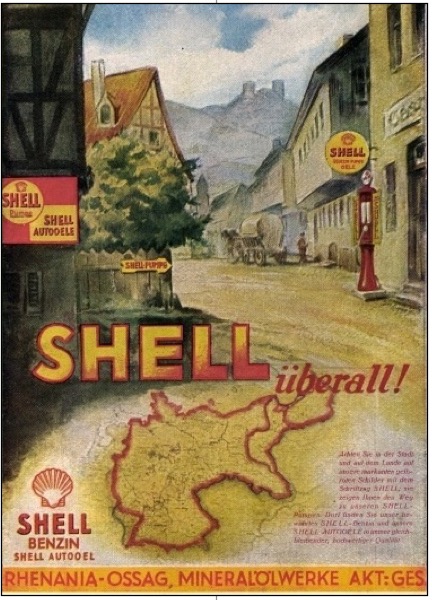
It may be the case that Shell is not legally responsible for everything that happened at its German subsidiaries while the Verwalter was administering the companies on behalf of Royal Dutch Shell. However, the moral question remains. The use of slave labour and the wider collaboration took place in Shell’s name, and apparently under managers who still considered themselves to be working for Shell. It also took place under one of the most recognisable corporate emblems in the world. In 1904, the scallop shell, or pecten, replaced Shell Transport’s first marketing logo. In various forms275 it has remained in use ever since. The above information is taken from “The beginnings”,276 which forms part of a shell.com277 online feature, “Our history”,179 covering Shell from its inception to the new millennium. A whole page is devoted to “The History of the Shell logo”278 and there is more information in a downloadable document, “The History behind the Shell emblem,”279 in which this slogan appears: “The Shell emblem – or Pecten – remains one of the greatest brand symbols of the 20th Century”. The authors of this carefully selected online history unsurprisingly neglected to mention the Nazi association with the pecten. The Nazis continued to use the Shell pecten logo in Germany after the appointment of a Verwalter for Rhenania-Ossag in January 1940. In fact, it was used by Rhenania-Ossag280 in the years before, during, and after World War II. This included the entire period when it was in partnership with I.G. Farben.
An advertisement281 from the March-April 1941 issue of Der Ring, house magazine of the Group’s company Rhenania-Ossag, shows the pecten still in use after January 1940 “under German control.” Motoring tourist maps were also produced by Rhenania-Ossag for German drivers.282 One example carries the claim in red text of the “importance of Shell as a contributor to the German economy.” Another example is provided.283 Examples of Shell logos used by Rhenania-Ossag284 from 1926 and 1935 also survive in reference material on the company,285 and I have included references to two further Rhenania-Ossag Shell-branded items.286 287 The broader point is that the Shell brand remained visible throughout this period. That strengthens, rather than weakens, the moral question about what took place in Shell’s name. I am unaware of any public apology by Royal Dutch Shell for what took place at the hands of Shell employees in Nazi Germany under Shell’s name and logo at Shell premises, which always remained Shell property.
Notes
265. Link to Wikipedia article “Forced labour under German rule during World War II” Source 1 ↩
266. Link to royaldutchshellplc.com webpage containing National Whirligig report published on the Editorial page 6 of The Bee newspaper in Danville VA, Tuesday 13 February, 1940. Search the article for “deterding”. ↩
267. Link to royaldutchshellplc.com webpage containing a syndicated article published on page 8 of the Morning Avalanche newspaper on 15 February 1940 ↩
268. Link to royaldutchshellplc.com webpage containing “A History of Royal Dutch Shell: Volume 2: See official announcement on page 30. ↩
269. Link to royaldutchshellplc.com webpage containing “A History of Royal Dutch Shell: Volume 2: See page 32 ↩
270. Link to royaldutchshellplc.com webpage containing “A History of Royal Dutch Shell: Volume 2: See page 78. ↩
271. Link to shellnews.net webpage containing a nal report by British Intelligence Objectives SubCommittee dated 1st - 31st October 1945 on RHENANIA OSSAG A.G. HAMBURG-GERMANY: FUELS AND LUBRICANTS ↩
272. Link to mop.de article “Wann wird diese Halle endlich umbenannt?” published 22 February 2007: Google translation ↩
273. Link to Google translation webpage for a German News website article published 11 March 2010: “Nazi as a name” ↩
274. Link to Google translation of a Zeit Online article from November 2010: “The Turner swastikas hang” ↩
275. Link to royaldutchshellplc.com webpage containing selection of Shell logos from 1900 to 1999. ↩
276. Link to shell.com webpage headlined “The beginnings” ↩
277. Link to home page of shell.com website ↩
278. Link to shell.com webpage headlined “The history of the Shell logo” ↩
279. Link to shell.com webpage headlined “100 years of the Pecten” ↩
280. Link to royaldutchshellplc.com webpage containing an advert featuring a photograph of a Rhenania-Ossag installation displaying the Shell logo ↩
281. Link to a royaldutchshellplc.com webpage containing a Rhenania-Ossag advertisement ↩
282. Link to royaldutchshellplc.com webpage containing extract pages from “A History of Royal Dutch Shell: Volume 1: See page 470 ↩
283. Link to royaldutchshellplc.com webpage containing a Rhenania-Ossag road map featuring the Shell logo ↩
284. Link to royaldutchshellplc.com webpage containing Shell logos used by Rhenania-Ossag. ↩
285. Link to Wikipedia article “Rhenania-Ossag” ↩
286. Link to royaldutchshellplc.com webpage containing a Rhenania-Ossag pam et from 1938 with the headline “Shell-Fuhrer” ↩
287. Link to royaldutchshellplc.com webpage containing a Rhenania-Shell branded item featuring the title: “SHELL POST” ↩